Nepenthes (Tropical Pitcher Plant)
Nepenthes are tropical vining plants whose leaf-tips swell into fluid-filled pitchers, from highland jewels to giant pitchers that have occasionally drowned small rodents.
Last reviewed: October 2026
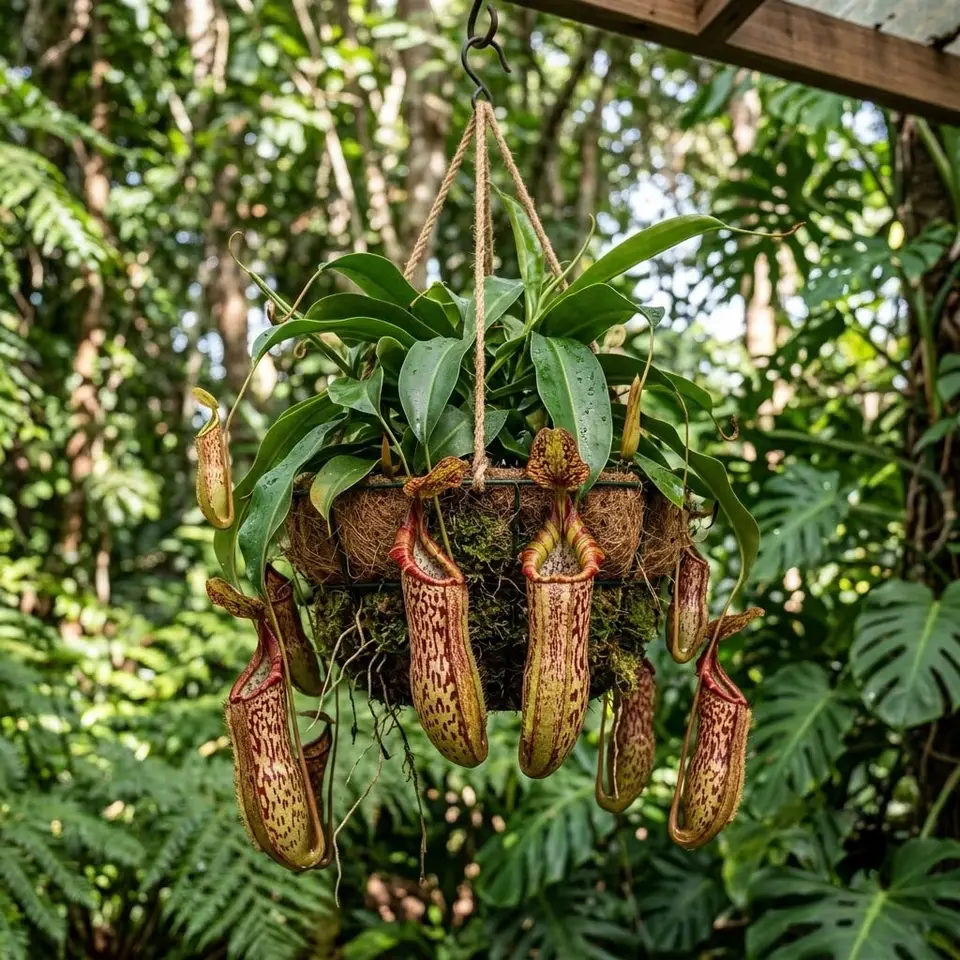 AI illustration
Overview
Nepenthes are tropical vining plants whose leaf-tips swell into fluid-filled pitchers, from highland jewels to giant pitchers that have occasionally drowned small rodents. The hanging-basket carnivore: no dormancy, no bog, just warmth, humidity and light: the houseplant-most of the whole guild. (Nepenthes.)
Origin & Natural Habitat
Southeast Asian tropics (Borneo, Sumatra, Philippines) - highland cloud ridges and lowland jungles; CITES-regulated in the wild, buy propagated.
Appearance
Vines 30 cm-3 m with pitchers dangling from leaf tendrils - green, speckled, blood-red, some toothed (villosa's fangs legendary); 'ventrata' the unkillable classic of garden centers.
Why People Grow It - Qualities & Benefits
- Hanging pitchers = living sculpture
- NO dormancy: year-round performer
- 'Ventrata' and hybrids are genuinely easy
- A deep collector ladder above the basics
Care
Light: Bright indirect with gentle sun - orchid-bright; deep shade = vines without pitchers.
Water: Pure water preferred (hybrids tolerate decent tap better than most carnivores); keep mix damp, never the tray-swamp of bog plants, since they're epiphyte-ish.
Soil: Airy: sphagnum moss + perlite/bark. Hanging baskets ideal.
Temperature & Dormancy: Warm 18-30°C for common hybrids (highland species want cool nights - research before buying); humidity 50%+ decides pitcher production more than anything.
Feeding: Pitchers catch their own indoors (the occasional fly wanders in); a dilute foliar orchid feed monthly is tolerated - unusual for carnivores. Never fertilize the soil.
Propagation
Stem cuttings of 2-3 nodes in damp sphagnum root in weeks - the vining habit begs for it.
Common Problems & Pests
- No pitchers = humidity or light, in that order
- Dried-out sphagnum killing fine roots
- Sudden cold drafts
- Highland species cooked in warm rooms (know your species)
Toxicity & Safety
Not on the ASPCA lists. The ASPCA Animal Poison Control Center's plant lists for cats and dogs have no entry for this plant, and we have no other checked source either way. If a pet chews it and seems unwell, call your vet or a pet poison helpline.
Pros & Cons
Pros
- The easiest 'wow' carnivore indoors
- No winter logistics
- Propagates readily
Cons
- Humidity-dependent pitchering
- Vines need space/hanging
- Rare species get demanding fast
Best Suited For
- Bright bathrooms and kitchens
- Hanging-basket spots
- Carnivore beginners (via 'ventrata')
- Collectors climbing to highlands
FAQ
Why did pitchering stop indoors?
Dry air, almost always - mist, group plants or hang near the shower window; pitchers return with humidity. Second suspect: light.
Should I fill new pitchers with water?
They arrive with their own fluid; if one spills in transit, a splash of pure water restarts it. Never add 'food' liquids.
Gear for growing nepenthes (tropical pitcher plant)
Links go to Amazon or a partner store (such as Adagio Teas) and may earn us a commission at no extra cost to you. As an Amazon Associate we earn from qualifying purchases. We link gear types, not sponsors' picks: you choose the exact product.