Sarracenia (American Pitcher Plant)
Sarracenias, the trumpet pitchers of American bogs, are tall nectar-baited funnels that drown insects by the thousand, in wine-reds, chartreuse and white-laced patterns that out-decorate most flowers.
Last reviewed: October 2026
 AI illustration
Overview
Sarracenias, the trumpet pitchers of American bogs, are tall nectar-baited funnels that drown insects by the thousand, in wine-reds, chartreuse and white-laced patterns that out-decorate most flowers. They're also, surprisingly, HARDY perennials: outdoor bog-pot plants, not terrarium pets. (Sarracenia.)
Origin & Natural Habitat
Peat bogs of the eastern USA and Canada - full sun, wet feet, real winters. Several species are threatened by bog drainage; buy nursery-propagated only.
Appearance
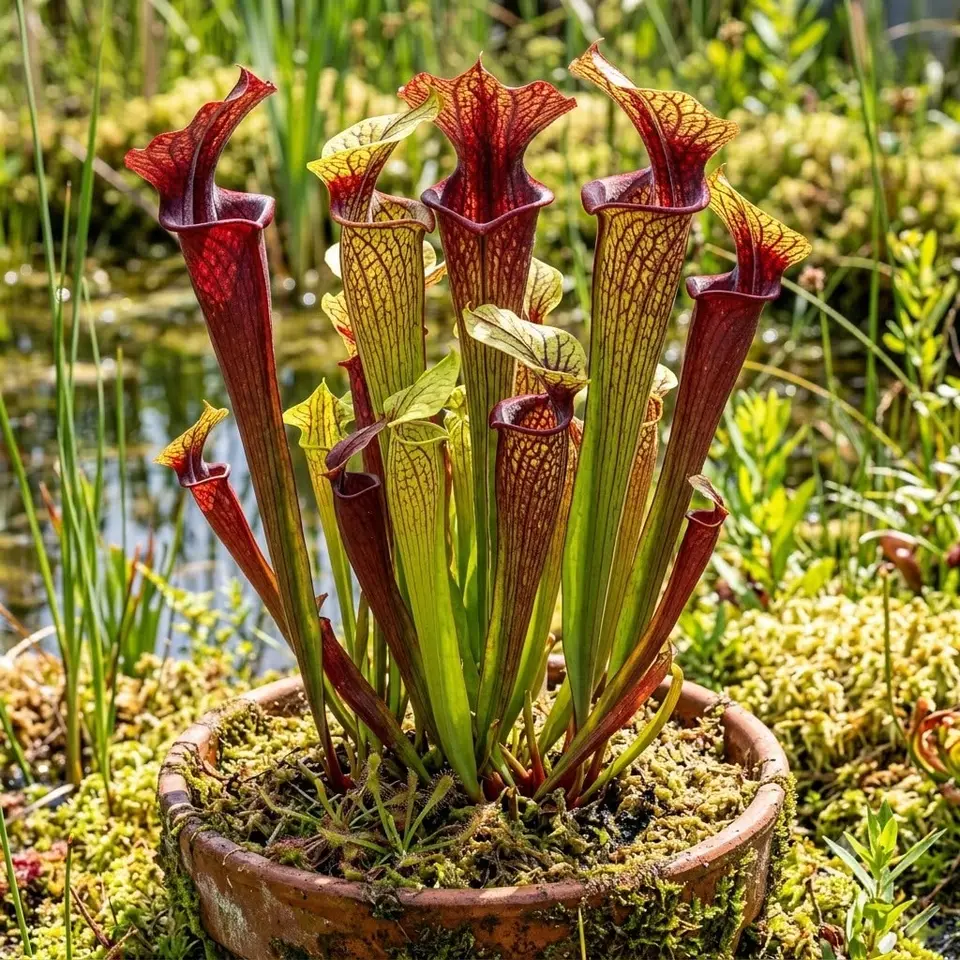
Upright pitchers 20-90 cm by species (purpurea squat, flava and leucophylla towering), veined and hooded, plus strange parasol flowers in spring. Traps ARE the leaves, all season.
Why People Grow It - Qualities & Benefits
- Spectacular architectural pitchers
- Genuinely effective wasp/fly control on patios
- HARDY (many to zone 5-6): a permanent outdoor bog
- Spring flowers as odd as the traps
Care
Light: FULL SUN - the most sun-hungry carnivore; 6+ hours outdoors. Windowsills produce floppy, colorless pitchers.
Water: Rain, distilled or RO water ONLY - tap-water minerals poison carnivorous roots within months. The tray method (pot standing in 1-2 cm of pure water) is standard.
Soil: Nutrient-FREE mix: sphagnum peat + perlite/silica sand (roughly 1:1). Never potting soil, never fertilized media - fertility burns their roots.
Temperature & Dormancy: Hardy perennials NEEDING winter dormancy: pitchers brown and die back in fall (normal!), crowns rest cold (many take zone 5-6 frozen in mulched bog pots). No dormancy = decline in 2-3 years.
Feeding: They feed themselves outdoors - no fertilizer, no hand-feeding needed; a summer Sarracenia fills with prey to the brim.
Propagation
Rhizome division in late winter; species from stratified seed (slow). Divisions establish fast in sun and pure water.
Common Problems & Pests
- Kept as houseplants (they're garden plants: the #1 mistake)
- Skipped dormancy = slow death
- Tap water mineral burn
- Cutting off fall's brown pitchers too early (let them feed the rhizome)
Toxicity & Safety
Not on the ASPCA lists. The ASPCA Animal Poison Control Center's plant lists for cats and dogs have no entry for this plant, and we have no other checked source either way. If a pet chews it and seems unwell, call your vet or a pet poison helpline.
Pros & Cons
Pros
- Hardy, permanent, spectacular
- Real pest control
- Easy in a sunny bog pot
Cons
- Needs outdoor sun + winter
- Fills with 'ugh' (prey) by August
- Browns messily each fall (by design)
Best Suited For
- Patio bog pots and mini-bogs
- Zone 5-9 outdoor gardens
- Wasp-plagued decks
- Collectors starting hardy carnivores
FAQ
Can I grow one on a windowsill?
Poorly - Sarracenia wants full outdoor sun and a cold winter rest. A plastic bog pot on a sunny patio beats any windowsill tenfold.
The pitchers are full of dead bugs - clean them?
No - that's dinner, digesting. Full pitchers are a healthy plant's trophy case; they'll brown normally in fall.
Gear for growing sarracenia (american pitcher plant)
Links go to Amazon or a partner store (such as Adagio Teas) and may earn us a commission at no extra cost to you. As an Amazon Associate we earn from qualifying purchases. We link gear types, not sponsors' picks: you choose the exact product.