Mexican Feather Grass
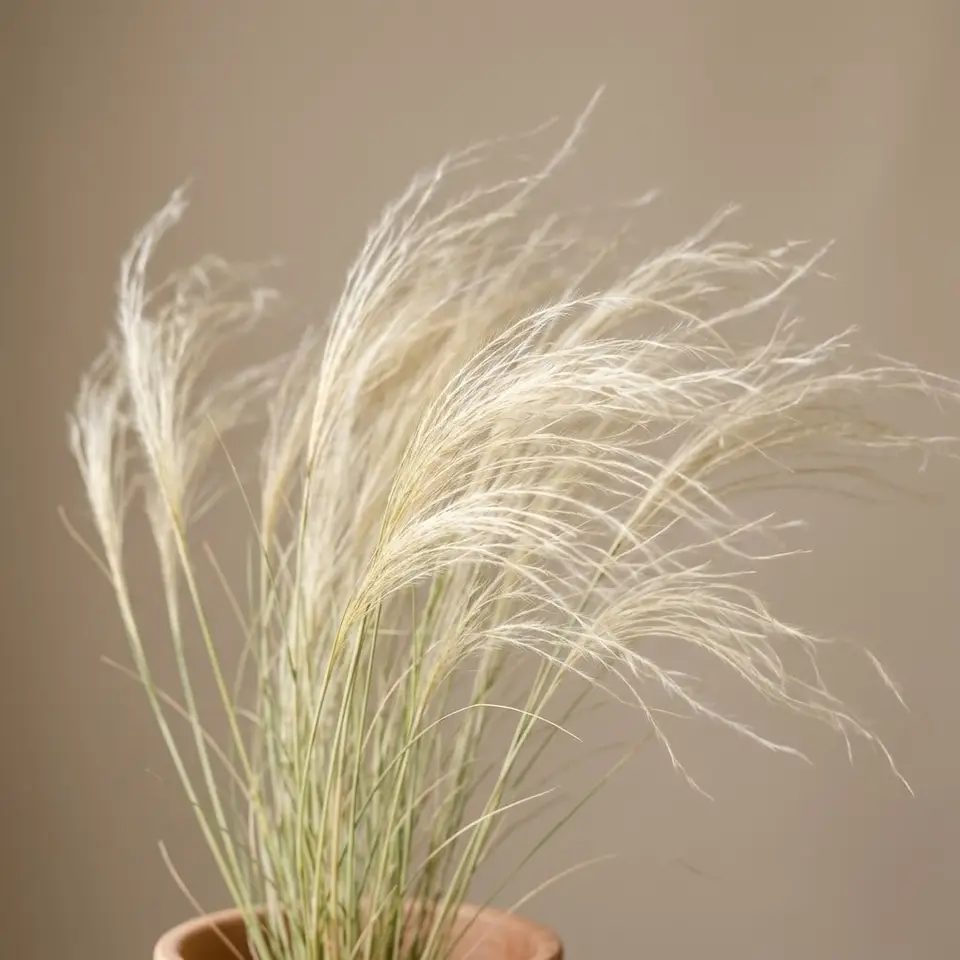
Mexican Feather Grass is pure motion - the finest-textured grass in cultivation, a blonde ponytail that ripples in air no other plant even notices.
Last reviewed: October 2026
 AI illustration
Overview
Mexican Feather Grass is pure motion - the finest-textured grass in cultivation, a blonde ponytail that ripples in air no other plant even notices. It is also a documented invasive escapee in several mild regions, so the honest profile is two-sided: irresistible where it behaves, irresponsible where it doesn't. (Nassella tenuissima.)
Origin & Natural Habitat
Rocky slopes of the southwestern USA, Mexico, Chile and Argentina. Hardy zones 7-10, short-lived colder.
Appearance
A fountain of hair-fine bright-green blades 40-60 cm tall, dissolving in early summer into silky blonde seed plumes; the whole plant moves continuously.
Why People Grow It - Qualities & Benefits
- The most delicate texture and movement in the catalog
- Silky blonde summer color
- Thrives on heat, sun and neglect
- Superb in containers (and safely contained there)
Care
Light: Full sun.
Water: Very low - overwatering shortens its already brisk life.
Soil: Lean and sharply drained.
Temperature & Hardiness: Zones 7-10 perennial; often grown as a cheap annual elsewhere.
Feeding: None.
Maintenance: INVASIVENESS FIRST: it self-seeds prolifically and is listed invasive in parts of California, Australia and elsewhere - check your regional invasive list BEFORE planting; we don't give legal advice. Where it's a risk, grow it in containers and deadhead, or choose prairie dropseed instead. Comb out dead foliage rather than shearing.
Planting & Propagation
Self-sows readily (that's the whole problem); transplant volunteers or sow seed. Individual plants live 3-5 years - colonies persist by seeding.
Common Problems & Pests
- Invasive escape in mild climates: the defining issue
- Short-lived individual clumps
- Summer dormancy browning in hot-dry sites (normal)
Toxicity & Safety
Not on the ASPCA lists. The ASPCA Animal Poison Control Center's plant lists for cats and dogs have no entry for this plant, and we have no other checked source either way. If a pet chews it and seems unwell, call your vet or a pet poison helpline.
Pros & Cons
Pros
- Unmatched movement and softness
- Effortless in dry heat
- Cheap and fast from seed
- Gorgeous backlit
Cons
- Genuinely invasive in mild regions
- Seeds ride on pets and socks
- Short individual lifespan
Best Suited For
- Containers (the responsible default)
- Enclosed courtyards away from wildland
- Dry gardens in regions where it's NOT listed
- Annual texture plant in cold climates
FAQ
How do I care for Mexican feather grass? Full sun to part shade and dry to well-drained soil: it is drought tolerant, though it may go dormant in the hottest months during drought, and overly wet soil causes root rot. It does poorly in the hot, humid conditions of the US Southeast. Before planting, check your area: it escapes gardens by producing thousands of seeds, is considered invasive in Australia and is becoming a problem in parts of California; in colder climates it can be grown as an annual in a pot or in the ground (NC State Extension).
Is it safe to plant?
Depends entirely on where you live: in listed regions (parts of California, Australia, NZ) - no, choose native alternatives; in cold-winter areas it behaves or dies. Check your local invasive-species list first.
What's a lookalike without the risk?
Prairie dropseed - similar fine texture and fountain habit, North American native, zero invasive record.
Why does it turn brown in midsummer?
Heat dormancy in dry sites - a survival trick, not death. A deep drink greens it; or accept the blonde phase as part of the look.
Gear for growing mexican feather grass
Links go to Amazon or a partner store (such as Adagio Teas) and may earn us a commission at no extra cost to you. As an Amazon Associate we earn from qualifying purchases. We link gear types, not sponsors' picks: you choose the exact product.