Miniature Roses
Miniature roses are true genetic dwarfs (not treated plants) with perfect little hybrid-tea blooms on 20-60 cm bushes, hardy on their own roots, at home in pots, edging and balconies.
Last reviewed: October 2026
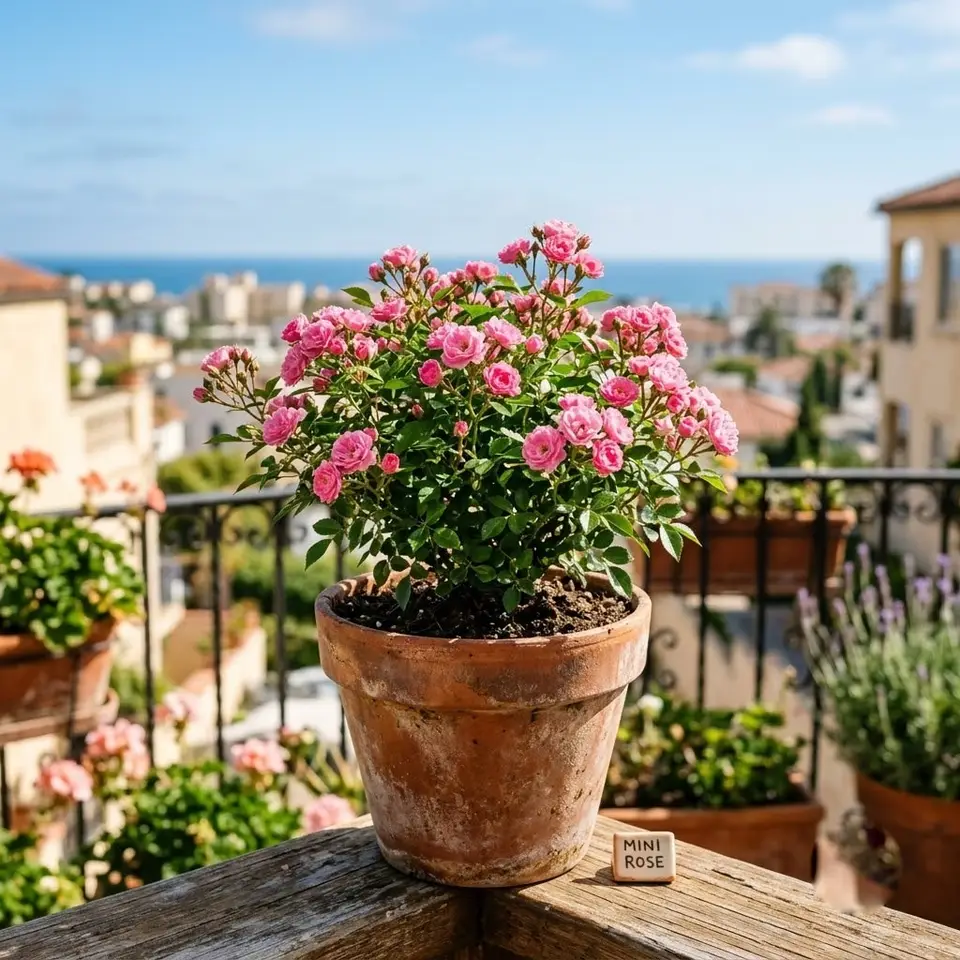 AI illustration
Overview
Miniature roses are true genetic dwarfs (not treated plants) with perfect little hybrid-tea blooms on 20-60 cm bushes, hardy on their own roots, at home in pots, edging and balconies. (Rosa: miniature class.)
Origin & Natural Habitat
Descended from a Chinese dwarf rose rediscovered on a Swiss windowsill in 1917 ('Rouletii'); bred into thousands of tiny cultivars since.
Appearance
20-60 cm bushes (Clemson Extension gives 8 to 24 inches) with proportionally tiny leaves and small, perfectly formed blooms (Clemson Extension) in every color; some micro-minis stay teacup-small.
Why People Grow It - Qualities & Benefits
- Real roses for pots, balconies, tiny gardens
- Own-root = hardier than expected (zones 5-9)
- Continuous bloom at knee height
- Affordable collectibles: lots of colors, little space
Care
Light: Outdoors, at least six to eight hours of direct sun a day. Morning sun matters most, because it dries the leaves and helps prevent disease (Clemson Extension). Indoors, potted miniatures need 14 to 16 hours of bright light every day to flower well (Texas A&M).
Water: Roses need lots of water. Water deeply rather than often, since frequent light watering keeps roots near the surface, and keep the leaves dry, especially late in the day; as the weather cools, water less, but never let the plant dry out completely (Clemson Extension). Pots dry out faster than the ground, so check potted minis more often.
Soil & Feeding: Feed when the plant first leafs out and again after each flush of bloom, with a rose fertilizer or a slow-release tree and shrub fertilizer at the label rate; halve the amount in June, July and August, stop six weeks before your first expected frost, and always fertilize moist soil and water it in (Clemson Extension). The full routine for garden roses is in the rose care guide, and every rose page is in the roses hub.
Temperature & Hardiness: Zones 5-9 in the ground (they're hardy little things); pots need winter protection or a plunge into soil. Potted miniatures rest in winter, lose all their leaves and need about two months below 45 °F (7 °C) (Texas A&M).
Pruning & Maintenance: At the end of the winter rest, use sharp scissors to remove up to half of the previous year's growth, and snip off faded flowers with scissors through the season (Texas A&M).
Planting & Propagation
The easiest class from cuttings - own-root softwood cuttings strike readily; the classic gift-plant rescue is repotting a supermarket mini into real soil and light.
Common Problems & Pests
- Spider mites indoors/dry (the #1 mini killer: they are NOT houseplants long-term)
- Blackspot in crowded damp pots
- Drying out in small containers
Toxicity & Safety
Roses are non-toxic to dogs and cats - the thorns are the only hazard.
Pros & Cons
Pros
- Roses where no rose fits
- Cheap to collect
- Surprisingly hardy own-root
Cons
- Mislabeled as houseplants (they need outdoor sun/dormancy)
- Pot-care vigilance
- Small blooms won't fill vases
Best Suited For
- Containers and window boxes
- Path edging
- Small urban gardens
- Grandma's teacup collection energy
FAQ
How much light does a potted miniature rose need?
Outdoors, six to eight hours of direct sun a day (Clemson Extension); indoors, 14 to 16 hours of bright light every day to keep flowering (Texas A&M), which is more than most windowsills give.
Can I keep the gift mini-rose indoors?
Not long-term: it's an outdoor plant needing sun and winter dormancy. Enjoy it inside a week, then plant it out; most 'dead' gift minis were killed by the windowsill.
How hardy are they really?
Own-root minis routinely survive zone 5 winters in the ground under mulch - hardier than most florist-rose expectations.
Gear for growing miniature roses
Links go to Amazon or a partner store (such as Adagio Teas) and may earn us a commission at no extra cost to you. As an Amazon Associate we earn from qualifying purchases. We link gear types, not sponsors' picks: you choose the exact product.