Smokebush (Cotinus coggygria)
The Smokebush, also called the smoke tree, is a deciduous shrub grown above all for one extraordinary trick: in summer it covers itself in great airy, hazy plumes of tiny flowers that catch the light and look for all the world like puffs of soft, colored smoke drifting over the foliage.
🗓️ Last reviewed: June 2026
Overview
The Smokebush, also called the smoke tree, is a deciduous shrub grown above all for one extraordinary trick: in summer it covers itself in great airy, hazy plumes of tiny flowers that catch the light and look for all the world like puffs of soft, colored smoke drifting over the foliage. On top of that show, the most popular cultivars carry rich, deep purple leaves all season, and almost every smokebush turns brilliant shades of orange, red, and gold in autumn. It is an easygoing, sun-loving, drought-tolerant shrub that asks for very little once it has settled in. For a plant that gives you smoky summer plumes, dramatic colored foliage, and a blaze of fall color all from the same easy shrub, the smokebush is hard to beat.
Origin & Natural Habitat
Cotinus coggygria is native to a wide sweep of southern Europe and central Asia, from the Mediterranean across to China, where it grows on warm, dry, sunny, often rocky hillsides and in open scrub on poor, well-drained ground. This origin tells you almost everything about how to grow it: it is built for heat, sun, and lean dry soil, and it dislikes wet feet and heavy, soggy ground. The wild plant is the green-leaved species; the famous purple-leaved forms such as Royal Purple are selected garden cultivars. Its tough, sun-loving, drought-tolerant nature in the garden is a direct inheritance from those hot, dry Mediterranean and Asian slopes.
Appearance
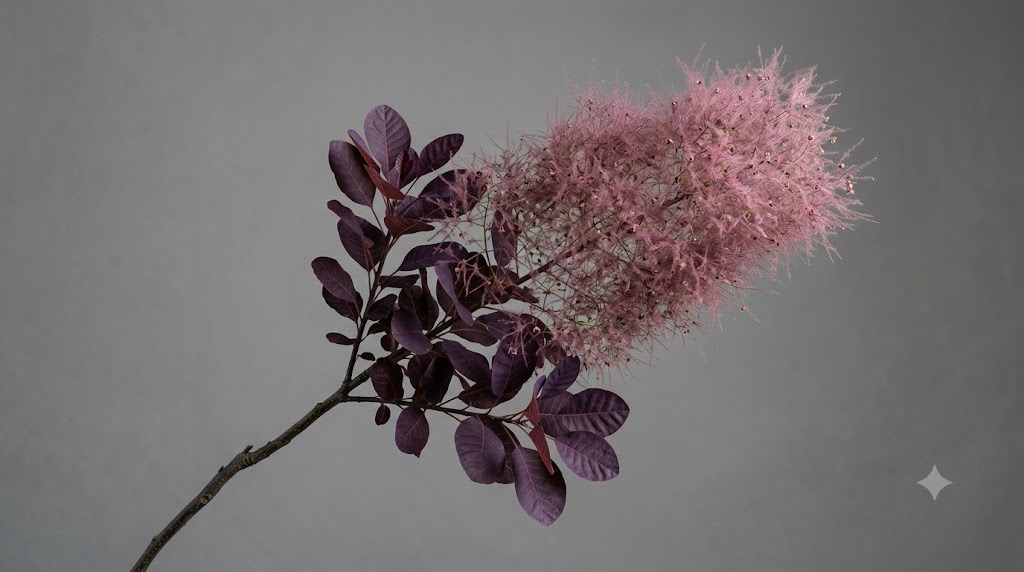
Smokebush is a rounded, bushy, multi-stemmed shrub, typically reaching around 3 to 5 m tall and wide if left unpruned, though it is easily kept smaller. The leaves are simple, smooth, and oval to nearly round, and it is the leaf color that defines the popular cultivars: rich plum-purple in forms like Royal Purple and Grace, or fresh green in the species, all of them blazing into vivid orange, scarlet, and gold in autumn. The "smoke" itself comes not from the flowers but from the flower stalks: after the tiny summer blooms fade, the elongating, finely hairy stalks form huge, feathery, billowing plumes in soft pink, purple, or smoky grey that hang over the bush for weeks, giving the unmistakable hazy, smoky effect.
Why People Grow It - Qualities & Benefits
- Smoky summer plumes: airy, hazy flower-stalk plumes that look like puffs of smoke.
- Dramatic purple foliage: cultivars like Royal Purple and Grace hold deep plum leaves all season.
- Brilliant fall color: vivid orange, red, and gold autumn display.
- Tough and drought-tolerant: thrives on heat and lean, dry soil once established.
- Low maintenance: easygoing and undemanding, with few pests.
- Flexible size: can be left large or hard-pruned to stay compact.
Care
Light & Position
Smokebush needs full sun to perform at its best - at least six hours of direct sun a day. Full sun gives the strongest, richest leaf color on the purple cultivars, the best display of smoky plumes, and the most brilliant autumn color. In shade the purple forms fade toward a muddy green, growth is looser, and both the plumes and fall color are disappointing. Give it an open, sunny, well-drained spot; it copes well with heat and reflected warmth.
Soil
This is a shrub that actively prefers lean, well-drained soil and dislikes rich, heavy, or wet ground. It grows on poor, dry, even rocky soil in the wild and is happiest in similar conditions in the garden. Good drainage is the single most important thing - waterlogged soil is its main enemy. It tolerates a wide range of soil types, including alkaline and chalky ground, and does not need fertile soil. Overly rich soil tends to produce soft, leafy growth at the expense of the smoky display.
Watering
Smokebush is genuinely drought-tolerant once established, thanks to its tough constitution and tolerance of dry ground. Water a newly planted shrub regularly through its first year or two to help it root in, then it will largely look after itself, needing extra water only in prolonged drought. Avoid overwatering and never let it sit in soggy soil, which it hates. For an established plant in reasonable ground, natural rainfall is usually enough.
Feeding
Smokebush needs very little feeding and generally grows well in poor soil with none at all. If anything, go easy: heavy or high-nitrogen feeding produces lush, soft, leafy growth, can dull the purple leaf color, and reduces flowering and the smoky plume display. At most, a light mulch of compost in spring is plenty. This is a shrub that genuinely thrives on neglect and lean conditions rather than rich feeding.
Pruning
Smokebush is flexible about pruning and offers a choice. Left alone, it grows into a large rounded shrub that flowers freely and produces the full smoky display. Alternatively, it can be hard-pruned, or "coppiced," cut back close to the base in early spring, which sacrifices that year's smoke plumes but pushes out vigorous new shoots with much larger, more intensely colored leaves - a popular technique with purple cultivars grown mainly for foliage. You can also simply prune lightly in spring to shape it and keep it to size. Decide whether you want the smoke (light pruning) or the big bold leaves (hard coppicing); you generally cannot maximize both at once.
Hardiness & Winter Care
Smokebush is a hardy deciduous shrub, reliable in roughly USDA zones 4 to 8 (some forms to zone 9), and needs little or no winter protection within its range. It loses its leaves in autumn after the fall display and is fully dormant and cold-hardy through winter. Good drainage matters far more than cold protection - the thing most likely to harm it is wet, waterlogged soil in winter rather than low temperatures. In very cold-edge areas a young plant appreciates a sheltered spot.
Planting & Propagation
Plant smokebush in a sunny, well-drained position, ideally in spring or autumn, giving it room to spread into its naturally rounded shape. It is most easily propagated from softwood cuttings taken in early summer from the soft new growth, rooted in free-draining compost with warmth and humidity. Semi-ripe cuttings later in summer can also work, and low branches can be layered into the soil to root. Cultivars such as Royal Purple and Grace are grown from cuttings rather than seed, because seed-raised plants will not reliably reproduce the parent's leaf color. Give a new plant a sunny home and steady water in its first season to establish.
Common Problems & Pests
- Waterlogged soil: by far the biggest risk - heavy, wet, poorly drained ground causes root problems and decline; sharp drainage is essential.
- Verticillium wilt: the main disease of note, a soil-borne fungus that can cause branches to wilt and die back; remove affected wood and avoid replanting in known infected soil.
- Fading leaf color: purple cultivars grown in too much shade or fed too richly lose their deep color.
- Powdery mildew: can occasionally appear on the foliage in some seasons.
- Loss of smoke plumes: hard pruning every spring, while giving bigger leaves, removes that year's smoky display.
- Few pests: smokebush is otherwise notably trouble-free and rarely bothered by insects.
Giving it full sun and excellent drainage prevents most of its potential problems.
Toxicity & Safety
Generally regarded as non-toxic to people and pets, though the sap can irritate sensitive skin. Smokebush is not listed among the dangerously poisonous garden shrubs and is widely grown in ordinary family and pet gardens. The main caution is contact-related: it is related to the sumacs, and the sap of some sensitive people can cause mild skin irritation or a rash on contact, much like a mild reaction to other members of that plant family. Wearing gloves and long sleeves when pruning is a sensible precaution, particularly for anyone with sensitive skin. It is grown purely as an ornamental shrub for its plumes, foliage, and fall color, not for eating.
Pros & Cons
Pros
- Unique, eye-catching smoky summer plumes.
- Rich purple foliage on cultivars like Royal Purple and Grace.
- Brilliant orange, red, and gold autumn color.
- Tough, drought-tolerant, and very low maintenance.
- Tolerant of poor, dry, and alkaline soil.
Cons
- Strongly dislikes wet, heavy, waterlogged soil.
- Can be susceptible to verticillium wilt.
- Purple color fades in shade or with overfeeding.
- Hard pruning for big leaves sacrifices the smoke display.
- Sap may irritate sensitive skin.
Best Suited For
- Sunny, well-drained borders and gravel gardens.
- Adding dramatic foliage color and a striking summer focal point.
- Hot, dry, low-water and Mediterranean-style plantings.
- Poor, lean, or alkaline soils where richer shrubs struggle.
- Low-maintenance gardens wanting big impact for little effort.
Not ideal for wet, heavy, poorly drained soils, deep shade, or gardens where verticillium wilt is a known problem.
FAQ
Why is it called a smoke tree, and where does the "smoke" come from? The smoky effect does not come from the leaves or even really from the flowers themselves, but from the flower stalks. After the tiny summer flowers fade, their stalks elongate and become covered in fine hairs, forming huge, feathery, billowing plumes in soft pink, purple, or smoky grey. Hanging in a haze over the whole bush for weeks, these plumes genuinely look like puffs of colored smoke, which is exactly how the plant got its name.
Why has my purple smokebush turned green? The deep purple cultivars like Royal Purple need full sun to hold their rich leaf color. Grown in too much shade, the purple fades toward a dull green. Overly rich feeding can have a similar effect, encouraging green, leafy growth. Move it into full sun, or stop feeding heavily, and the strong purple color should return on the new growth.
Should I prune my smokebush hard every spring? That depends on what you want from it. Hard pruning, or coppicing, close to the base in early spring produces vigorous shoots with much larger, more intensely colored leaves - excellent if you grow it mainly for bold foliage. But it removes that year's smoky plumes, because the smoke forms on older wood. If you want the smoke display, prune only lightly. You generally have to choose between maximum foliage and maximum smoke.
Is smokebush safe around pets and children? Yes, smokebush is generally regarded as non-toxic and is widely grown in family and pet gardens. The main caution is for skin: it is related to the sumacs, and its sap can cause mild irritation or a rash in sensitive people on contact, so it is sensible to wear gloves and long sleeves when pruning. It is an ornamental shrub and is not meant to be eaten.
How do I propagate smokebush? The easiest method is softwood cuttings taken from the soft new growth in early summer, rooted in free-draining compost with warmth and humidity. Semi-ripe cuttings later in summer can also succeed, and you can layer a low branch into the soil to root. Named cultivars such as Royal Purple are propagated this way rather than from seed, because seedlings will not reliably inherit the parent's leaf color.