Stock (Matthiola)
Stock is one of the most intensely fragrant flowers you can grow - a cool-season annual whose upright spikes of densely packed blooms fill the spring garden with a rich, sweet, spicy clove scent.
🗓️ Last reviewed: July 2026
Overview
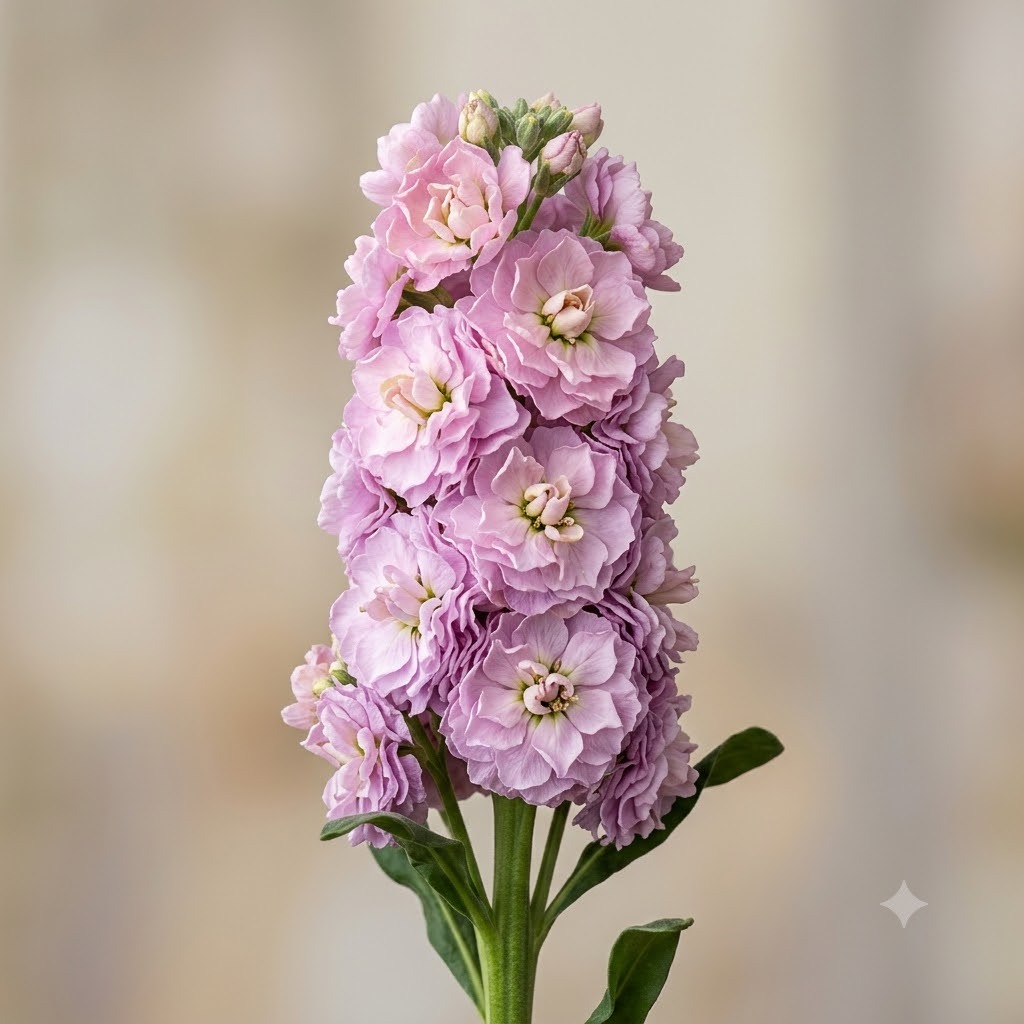
Stock is one of the most intensely fragrant flowers you can grow - a cool-season annual whose upright spikes of densely packed blooms fill the spring garden with a rich, sweet, spicy clove scent. The flowers come in soft, romantic shades of white, cream, pink, lilac, purple, and crimson, often in fully double, ruffled forms. Prized by florists and gardeners alike, Stock is a top scented cut flower, perfuming a whole room from a single vase. It thrives in the cool of spring and early summer and dislikes hot weather, making it a classic plant for the cool part of the growing year.
Origin & Natural Habitat
Stock belongs to the brassica family (Brassicaceae), the same family as cabbage and wallflowers, and is native to the Mediterranean region and parts of southern Europe. In the wild its relatives grow on coastal cliffs, rocky slopes, and dry open ground in a climate of mild, moist winters and warm, dry summers. This origin explains its garden preferences: it enjoys the cool, bright conditions of spring, grows through mild weather, and fades once real summer heat arrives. Recognising Stock as a cool-season plant is the single most important key to growing it well.
Appearance
Stock forms a neat, upright plant with grey-green, slightly downy, narrow leaves and stiff flowering spikes packed with individual four-petalled flowers. The blooms may be single or, in the most sought-after types, fully double and densely ruffled, giving a soft, cloud-like column of colour. Shades are gentle and romantic - white, cream, blush, pink, apricot, lilac, mauve, purple, and deep rose-red. Plants range from compact bedding types around 20-30 cm to tall cutting varieties reaching 60-75 cm. The whole plant carries the famous clove-like sweet perfume, strongest in warm, still air.
Why People Grow It - Qualities & Benefits
- Powerful fragrance: among the most intensely and sweetly scented of all garden flowers.
- Top cut flower: long-lasting in the vase and beloved by florists for its perfume.
- Romantic colours: soft pastels and rich jewel tones in ruffled, double forms.
- Cool-season bloom: flowers in spring and early summer when many annuals are not yet going.
- Cottage-garden appeal: classic, old-fashioned charm.
- Pollinator value: the scented flowers attract bees and butterflies.
- Good for containers and borders as well as dedicated cutting beds.
Care
Light & Position
Grow Stock in full sun to light shade. In cool spring conditions give it full sun for the best flowering and scent; where springs turn hot quickly, a little afternoon shade helps prolong the display. Good air circulation keeps the plants healthy.
Soil
Stock likes fertile, moist but well-drained soil enriched with compost, ideally neutral to slightly alkaline (it belongs to the cabbage family). It dislikes acidic, heavy, or waterlogged ground, which encourages rot.
Watering
Keep the soil consistently moist but never soggy. Regular, even watering supports strong spikes and good scent, especially as the weather warms. Water at the base to keep the foliage dry and reduce disease.
Feeding
Enrich the soil with compost before planting. A balanced feed as the plants build up supports strong flowering spikes. Avoid heavy nitrogen, which encourages leaves over flowers.
Temperature & Timing
This is the crucial point: Stock is a cool-season plant that dislikes heat. It performs best in the cool of spring and early summer and can be sown in autumn in mild-winter areas for early-spring bloom. Once hot summer weather sets in, plants stop flowering, run to seed, and decline. Timing the crop for the cool part of the year is essential.
Deadheading & Maintenance
Remove faded flower spikes to keep plants looking fresh, though as a fairly short-lived spring annual, Stock is often simply pulled and replaced once it finishes in the heat. Tall cutting types may need light support in windy spots.
Hardiness & Winter Care
Stock is usually grown as a cool-season annual or biennial. In mild-winter climates it can be autumn-sown to overwinter and bloom in early spring; in colder regions it is spring-sown for a late-spring display. It tolerates light frost and cool conditions far better than heat. Avoid relying on specific hardiness zones, as its performance depends chiefly on cool temperatures.
Planting & Propagation
Stock is grown from seed. Sow indoors in cool conditions in late winter to early spring, barely covering the seed as it needs some light to germinate, then harden off and plant out while the weather is still cool. In mild climates, sow in autumn for early-spring flowering. Direct sowing is possible in cool soil. Some strains allow growers to select double-flowered seedlings at the seedling stage by leaf colour, a traditional trick for maximising the prized double blooms. Space plants for airflow to reduce fungal disease.
Common Problems & Pests
- Heat stress: the biggest issue - hot weather stops flowering and causes rapid decline.
- Root and stem rot: in cold, wet, poorly drained soil - ensure good drainage.
- Downy mildew and fungal disease: in damp, crowded conditions - space plants and water at the base.
- Aphids: on soft new growth - hose off or squash.
- Cabbage-family pests: as a brassica, it can attract flea beetles and caterpillars.
- Club root: a brassica-family soil disease that can affect it in infected ground.
Growing Stock in cool weather with good drainage and airflow prevents most trouble.
Toxicity & Safety
Generally considered non-toxic. Stock (Matthiola) is not listed among the plants commonly poisonous to cats, dogs, or people, and as a member of the edible cabbage family it carries no notable toxicity. It is regarded as a safe ornamental to grow around pets and children. As with any ornamental plant, it is not intended for eating, and grazing on large amounts of garden foliage could cause mild stomach upset, so it is still sensible to discourage pets from chewing it. Overall, Stock is a safe, low-concern garden flower.
Pros & Cons
Pros
- Exceptionally strong, sweet clove-like fragrance.
- One of the best scented cut flowers.
- Soft, romantic colours in ruffled double forms.
- Flowers in cool spring when few annuals do.
- Non-toxic and pollinator-friendly.
Cons
- Dislikes heat - fades and stops flowering in hot summers.
- Often short-lived, ending once summer arrives.
- Needs cool-season timing to succeed.
- Prone to rot in wet, poorly drained soil.
- As a brassica, can attract cabbage-family pests and diseases.
Best Suited For
- Cutting gardens and scented bouquets.
- Cool-season spring and early-summer borders.
- Cottage and fragrance gardens near paths and doorways.
- Containers and pots for early-season colour and perfume.
- Mild-winter climates where it can be autumn-sown for early bloom.
Not ideal for hot summer displays, gardeners wanting a long-lived heat-tolerant plant, or very hot climates without a cool spring window.
FAQ
Why has my stock stopped flowering? Almost always heat. Stock is a cool-season plant, and once hot summer weather arrives it stops flowering, runs to seed, and declines. It is best timed for the cool of spring and early summer, or autumn-sown in mild climates for an early-spring display.
Which stock has the strongest scent? The fully double, ruffled types are the classic richly scented Stock, and the fragrance is strongest in warm, still air, especially in the evening. Planting it near a path, doorway, or seating area lets you enjoy the famous clove-like perfume.
Can I grow stock as a cut flower? Yes - it is one of the best scented cut flowers. Cut tall varieties when the lower flowers on the spike are open, and a single stem can perfume a whole room. It lasts well in the vase with fresh water.
Is stock safe for pets? Yes - Matthiola is generally considered non-toxic and is not on the common lists of plants poisonous to cats and dogs, being a relative of edible cabbage. As with any plant, it is still best to stop pets from eating large amounts to avoid mild stomach upset.
When should I sow stock? Sow in cool conditions - late winter to early spring for a late-spring display in colder areas, or in autumn in mild-winter climates so plants overwinter and bloom in early spring. The aim is always to have it flowering during the cool part of the year, before summer heat.