Snowdrop (Galanthus)
The Snowdrop is the flower that ends winter.
🗓️ Last reviewed: July 2026
Overview
The Snowdrop is the flower that ends winter. While the garden still sleeps and frost lingers on the ground, these small white bulbs push up nodding, bell-shaped blooms - often through snow itself. Each flower is tiny, barely 15-25 cm tall, but a drift of thousands turns a bare woodland floor into a river of white. Snowdrops are among the very first flowers of the year, treasured for their timing and their quiet, understated beauty. They are undemanding, long-lived, and once settled they multiply happily into sheets that return earlier every winter. For many gardeners they are the first sign that the growing year has begun again.
Origin & Natural Habitat
Snowdrops belong to the genus Galanthus, native to Europe and western Asia - from the woodlands of the Balkans and the Caucasus to Turkey and the mountains of southern Europe. In the wild they grow on damp, shaded woodland floors, along stream banks, and in cool, humus-rich soil beneath deciduous trees. This natural home explains everything about how to grow them: they thrive in the dappled shade of trees, in cool, moist but well-drained ground, and they flower early - before the tree canopy leafs out and steals the light. Understanding them as woodland-edge plants is the key to keeping them happy.
Appearance
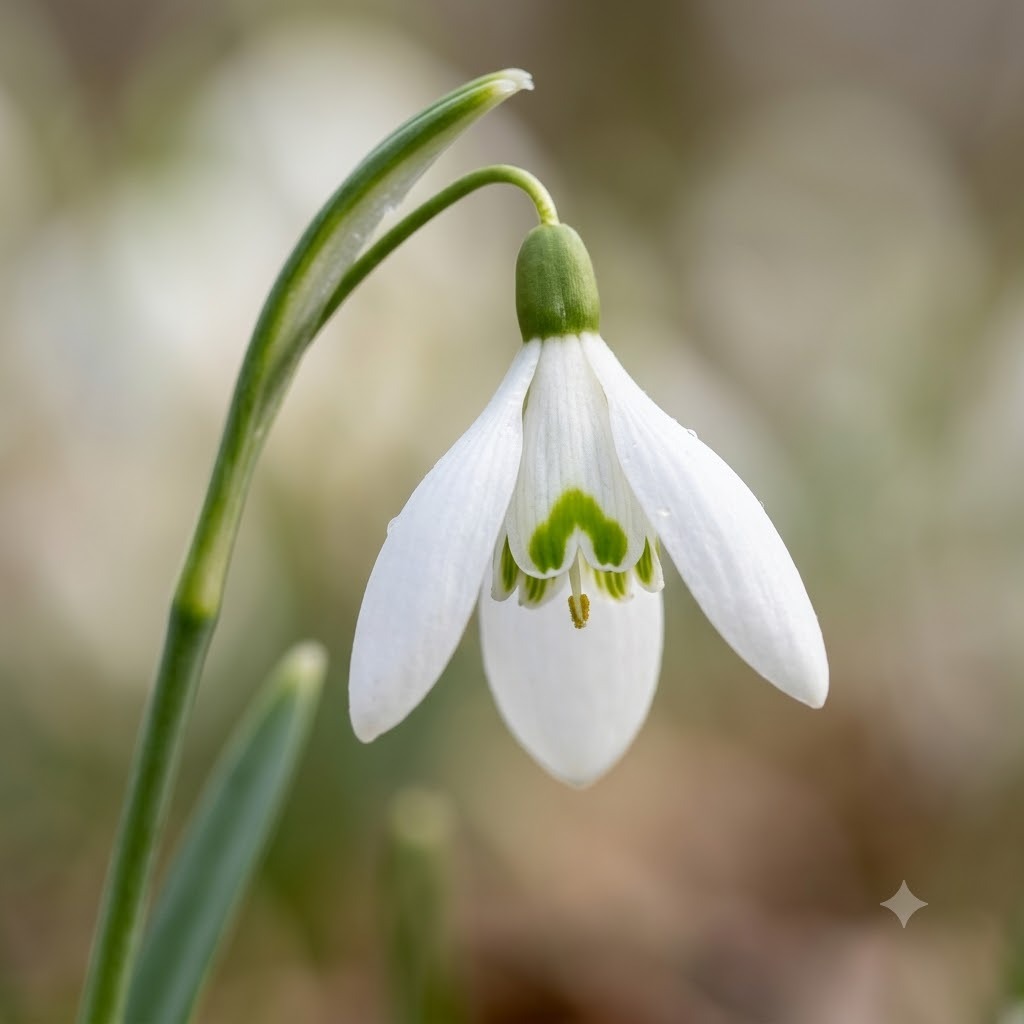
Snowdrops are small bulbous perennials with narrow, strappy blue-green leaves. Each stem carries a single pendant flower with three larger outer petals (technically tepals) that flare open like a tiny lantern, and three shorter inner segments, usually marked with a distinctive green horseshoe or heart shape. The most common garden snowdrop, Galanthus nivalis, reaches around 10-15 cm, but there are hundreds of named varieties differing in size, flowering time, green markings, doubling, and even faint scent. A few, such as the giant snowdrop, are noticeably larger. Enthusiasts (nicknamed "galanthophiles") collect the subtle variations obsessively, but for most gardeners the common single snowdrop is more than enough.
Why People Grow It - Qualities & Benefits
- First flowers of the year: they bloom in late winter to earliest spring, when almost nothing else does.
- Naturalizes beautifully: left undisturbed, they spread into breathtaking drifts and carpets.
- Tough and low-maintenance: hardy, reliable, and untroubled by cold once established.
- Shade-tolerant: perfect for the tricky ground beneath deciduous trees and shrubs.
- Long-lived: a planting can persist and expand for decades.
- Early pollinator value: they offer nectar and pollen to bees venturing out on the first mild days.
Care
Light & Position
Snowdrops love dappled or part shade, especially the ground beneath deciduous trees and shrubs. Because they flower and grow before trees leaf out, they get plenty of light early in the year, then rest in cool shade through summer. They tolerate more open positions if the soil stays cool and moist.
Soil
They want humus-rich, moisture-retentive but well-drained soil. Add leaf mould or compost to imitate a woodland floor. They dislike hot, dry, or waterlogged ground - both extremes cause bulbs to dwindle.
Watering
In their natural growing season (winter and spring) the soil is usually damp enough. The main risk is a dry spell during active growth. Once dormant in summer they need little, but the soil should not bake completely dry.
Feeding
Snowdrops are not hungry. A mulch of leaf mould or compost after flowering feeds the soil gently and keeps it cool and moist - that is usually all they need.
After Flowering
Let the foliage die down naturally after blooming. The leaves feed the bulb for next year, so never cut or tie them off while still green. This is the one rule that matters most for a lasting display.
Hardiness & Winter Care
Snowdrops are extremely hardy and thrive in cold winters - frost and snow do not harm the flowers. No winter protection is needed. They are true cold-climate plants and, if anything, struggle more in hot regions than cold ones.
Planting & Propagation
The classic advice is to plant and move snowdrops "in the green" - as growing plants with leaves, in late winter or early spring just after flowering, rather than as dry dormant bulbs in autumn. Dry snowdrop bulbs often fail because they dislike drying out; buying or dividing them in the green gives far better results. To plant in the green, dig clumps, tease them apart, and replant immediately at the same depth in fresh spots. Established clumps can be lifted and divided every few years to spread them around the garden - the simplest and most reliable way to increase your stock. They also self-seed slowly where happy.
Common Problems & Pests
- Bulbs drying out: the most common cause of failure, especially from dry autumn-sold bulbs - plant in the green instead.
- Grey mould (snowdrop grey mould / Botrytis): a fungal disease that can collapse foliage in damp clumps; remove and destroy affected plants.
- Narcissus bulb fly: larvae can occasionally tunnel into bulbs.
- Rodents: mice or voles may sometimes dig bulbs.
Snowdrops are generally trouble-free; most problems trace back to dryness or overcrowding, both solved by lifting and dividing in the green.
Toxicity & Safety
Toxic if eaten. Snowdrop bulbs and, to a lesser degree, the leaves and flowers contain alkaloids (including galantamine and lycorine) that can cause vomiting, drooling, and stomach upset if ingested. The bulbs are the most concentrated part and can be mistaken for edible bulbs. Keep bulbs away from curious pets and children, and wash hands after handling. Serious poisoning is uncommon, but they should not be eaten by people or animals.
Pros & Cons
Pros
- One of the very first flowers of the year.
- Naturalizes into stunning drifts over time.
- Hardy, long-lived, and low-maintenance.
- Thrives in shade beneath deciduous trees.
- Reliable in cold climates.
Cons
- Tiny flowers - best in quantity, not as single specimens.
- Very short flowering season.
- Dry bulbs often fail; best planted "in the green."
- Dislike hot, dry regions.
- Bulbs are toxic if eaten.
Best Suited For
- Woodland gardens and shady borders.
- Naturalizing under deciduous trees and shrubs.
- Lawns and grassy banks left uncut until foliage dies down.
- Cottage and cool-climate gardens.
- Front-of-border edges and rockeries with cool, moist soil.
Not ideal for hot, dry gardens, containers left to bake dry in summer, or gardeners wanting large, bold single blooms.
FAQ
When do snowdrops flower? In late winter to earliest spring - often January to March depending on climate - making them one of the first flowers of the year, frequently blooming through snow.
Why did my snowdrop bulbs fail to come up? Most likely they dried out. Snowdrop bulbs dislike being stored dry, so autumn-sold dormant bulbs often fail. Plant or move them "in the green" (as growing plants just after flowering) for far better results.
How do I get snowdrops to spread into a big drift? Leave them undisturbed to naturalize, and lift and divide congested clumps in the green every few years, replanting the pieces in new spots. Let foliage die back naturally each year so the bulbs stay strong.
Are snowdrops safe for pets? No - the bulbs, and to a lesser extent the leaves and flowers, are toxic if eaten and can cause vomiting and stomach upset. Keep bulbs especially away from pets and children.
Do snowdrops need sun? No - they prefer dappled or part shade, especially under deciduous trees. They flower before the canopy leafs out, so they get enough early light, then rest in cool summer shade.