Sweet Alyssum (Lobularia maritima)
Sweet Alyssum is a low, spreading annual grown for its dense carpet of tiny, honey-scented flowers that smother the plant from spring into autumn.
🗓️ Last reviewed: July 2026
Overview
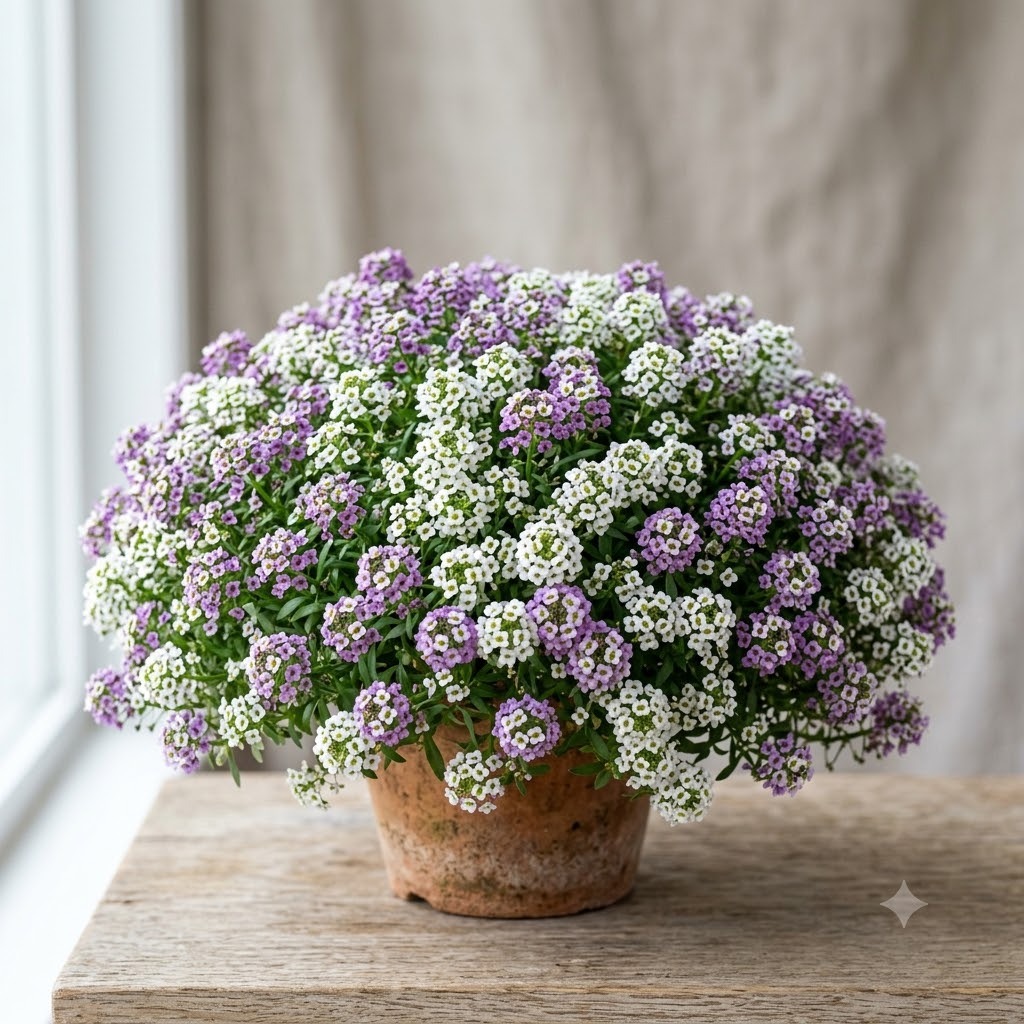
Sweet Alyssum is a low, spreading annual grown for its dense carpet of tiny, honey-scented flowers that smother the plant from spring into autumn. In white, and shades of purple, pink, and lavender, it forms a soft cushion or trailing mat only a few centimeters tall, perfect for edging paths, tumbling from containers, and filling gaps between paving and taller plants. Its sweet fragrance and clouds of small blooms make it a magnet for bees and other beneficial insects. Easy from seed, quick to flower, and undemanding, sweet alyssum is a classic finishing touch that softens edges and adds gentle scent wherever it grows.
Origin & Natural Habitat
Sweet alyssum comes from the Mediterranean region, where it grows wild along coastal areas, sandy soils, and rocky ground - reflected in its botanical name maritima, meaning "of the sea." Its natural home in open, sunny, free-draining coastal habitats explains its easy tolerance of poor, sandy soils and its preference for good drainage and sunshine. Like many Mediterranean plants, it grows and flowers most strongly in the milder parts of the year and can slow in extreme heat. Long grown as a garden ornamental, it is now a familiar low-growing flower in temperate gardens around the world. It was formerly classified under the genus Alyssum, which is the source of its common name.
Appearance
Sweet alyssum is a low, mounding or trailing plant, typically only 8 to 15 cm tall but spreading 20 to 30 cm or more across. It carries masses of tiny four-petaled flowers packed into rounded clusters, in white, cream, and soft shades of purple, lavender, rose, and pink. The leaves are small, narrow, and greyish-green, largely hidden beneath the flowers when the plant is in full bloom. The overall effect is a fine-textured, foamy carpet of bloom, and up close the flowers release a distinctive sweet, honey-like scent.
Why People Grow It - Qualities & Benefits
- Honey fragrance: the sweet, honey-like scent is one of its great charms.
- Carpet of bloom: thousands of tiny flowers create a soft, continuous mat of color.
- Excellent for edging: low habit is ideal for softening borders, paths, and container rims.
- Long season: flowers from spring into autumn, especially in cool weather.
- Pollinator magnet: the flowers attract bees, hoverflies, and other beneficial insects.
- Very easy: quick and reliable from seed, thriving even in poor soil.
Care
Light & Position
Sweet alyssum flowers best in full sun but tolerates light shade, which can help it keep going in hot climates. A sunny, open position gives the fullest, most fragrant carpet of bloom.
Soil
It grows well in average, well-drained soil and tolerates poor, sandy ground thanks to its coastal origins. Good drainage is more important than fertility; it does not need rich soil to flower well.
Watering
Water young plants to establish them and during dry spells, keeping the soil evenly moist but never waterlogged. Once established it is fairly drought-tolerant. Containers should drain freely and not be allowed to dry out completely for long.
Feeding
Little feeding is needed. In reasonable soil it flowers freely without fertilizer; occasional light feeding of container plants is enough to keep them going.
Maintenance
The key trick with sweet alyssum is shearing: when plants become tired, straggly, or stop flowering in midsummer, trim the whole mat back by about a third with scissors or shears. This tidies the plant and triggers a fresh flush of flowers within a couple of weeks. Regular light shearing keeps it blooming and neat all season.
Hardiness & Winter Care
Sweet alyssum is usually grown as an annual and is killed by hard frost, though it tolerates light frost and cool weather well. In mild climates it may overwinter or behave as a short-lived perennial, and it often self-seeds, giving new plants the following year.
Planting & Propagation
Sweet alyssum is grown from its small seeds, which germinate quickly and easily. Sow directly where it is to grow after the last frost, barely covering the fine seed, or start earlier indoors and transplant. It can also be bought as young plants for instant edging and container displays. Space plants around 15 to 20 cm apart to let the mats knit together. It self-seeds freely in favorable conditions, so volunteer seedlings often appear in following seasons.
Common Problems & Pests
- Midsummer decline: plants often become straggly and stop flowering in heat; shearing back revives them.
- Slugs and snails: can nibble young seedlings and soft growth.
- Aphids: may cluster on stems; hose off, squash, or let predators manage them.
- Damping off: seedlings in cold, wet, overcrowded conditions can rot; ensure good airflow and drainage.
- Root rot: in waterlogged soil or poorly drained containers.
Sweet alyssum is otherwise an easy, healthy plant.
Toxicity & Safety
Considered non-toxic. Sweet alyssum (Lobularia maritima) is generally regarded as non-toxic to cats, dogs, and humans, making it a safe choice for gardens with pets and children. It belongs to the cabbage (brassica) family. As always, discourage pets from eating large amounts of any ornamental plant, and if unusual symptoms occur after ingestion, consult a vet.
Pros & Cons
Pros
- Sweet honey fragrance.
- Dense, long-lasting carpet of tiny flowers.
- Ideal low edging and container filler.
- Excellent for bees and beneficial insects.
- Easy and quick from seed, tolerant of poor soil.
Cons
- Usually an annual - lasts one season in cold climates.
- Can become straggly and pause in midsummer heat.
- Needs shearing to keep it blooming and tidy.
- Can self-seed freely.
- Susceptible to rot in wet, poorly drained conditions.
Best Suited For
- Edging paths, borders, and beds.
- Container and hanging-basket edges and fillers.
- Gaps between paving and in rock gardens.
- Pollinator and fragrant gardens.
- Beginner and low-effort plantings.
Not ideal for waterlogged sites, or as a tall or structural plant in the border.
FAQ
Why has my sweet alyssum stopped flowering and gone straggly? This commonly happens in midsummer heat. Shear the whole plant back by about a third with scissors or shears, and it will usually put on a fresh flush of flowers within a couple of weeks.
Does sweet alyssum really smell of honey? Yes - its distinctive sweet, honey-like fragrance is one of the main reasons gardeners grow it, especially massed near paths, seating, and doorways where the scent can be enjoyed.
Is sweet alyssum good for bees? Very. The clouds of tiny open flowers are rich in nectar and attract bees, hoverflies, and other beneficial insects, making it a useful pollinator plant and companion around the garden.
Does sweet alyssum come back every year? In cold climates it is grown as an annual and killed by hard frost, but it often self-seeds, so new plants appear the following year. In mild climates it may overwinter and persist longer.
How far apart should I plant sweet alyssum? Space plants about 15 to 20 cm apart so the low mats grow together into a continuous carpet, which is ideal for edging and filling gaps.