Sweet Pea (Lathyrus odoratus)
The Sweet Pea is the most fragrant climbing annual of the cottage garden - a slender, fast-growing vine that hauls itself up supports by curling tendrils and rewards you with clusters of ruffled, butterfly-like flowers in soft pastels and rich jewel tones.
🗓️ Last reviewed: June 2026
Overview
The Sweet Pea is the most fragrant climbing annual of the cottage garden - a slender, fast-growing vine that hauls itself up supports by curling tendrils and rewards you with clusters of ruffled, butterfly-like flowers in soft pastels and rich jewel tones. What sets it apart is the scent: at its best, a sweet pea has an intense, honeyed, almost orange-blossom perfume that fills a whole room from a single small vase. Grown for cutting above all else, it is the quintessential English cut flower, valued for posies, weddings, and the simple pleasure of a jar of blooms on the kitchen table. Sweet peas are not difficult, but they have firm preferences - they love cool weather and full sun, they want to climb, and they will only keep flowering if you keep picking. Give them that, and few annuals are more generous.
Origin & Natural Habitat
The sweet pea, Lathyrus odoratus, is a member of the legume (pea) family and originates from the central Mediterranean, particularly Sicily and southern Italy. The wild species is a scrambling annual of warm but not scorching climates, climbing through other vegetation in open, sunny ground with cool springs. This heritage explains its garden character perfectly: it relishes full sun, it grows and flowers in the cool of spring and early summer, and it resents real heat, fading and stopping once high summer arrives. The modern garden sweet pea, with its larger, more ruffled, more varied flowers, was developed from this wild Sicilian plant through intensive Victorian and Edwardian breeding, though some heirloom varieties keep the strongest scent of the original.
Appearance
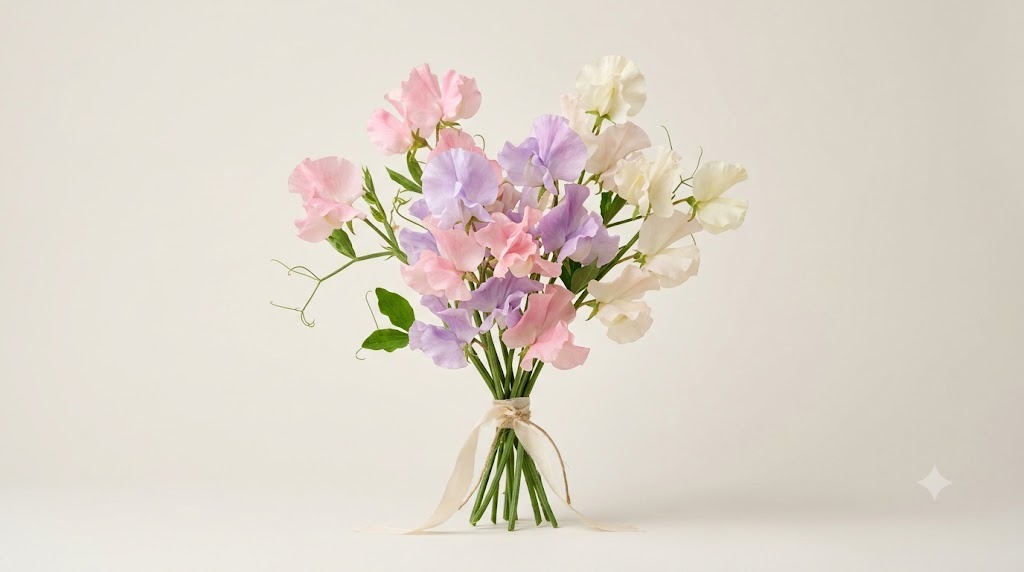
Sweet peas are climbing annuals that reach 1.5 to 2 m or more, scrambling upward by means of branched tendrils at the tips of their leaves, which coil around any thin support they touch. The stems are slightly winged and the foliage is soft green and pea-like. The flowers, carried in small clusters on long, upright stems, have the classic pea-flower shape - a large upright "standard" petal behind smaller "wing" and "keel" petals - but in garden forms they are larger, often beautifully waved and ruffled at the edges. Colors span the full pastel range of white, cream, pink, lavender, mauve, and pale blue, as well as deeper crimson, purple, and near-navy, often with delicate flushing, picotee edges, or bicolor patterns. After flowering, the plant forms flat, hairy green pods like miniature pea pods, which ripen to brown and split.
Why People Grow It - Qualities & Benefits
- Intense fragrance: at its best, one of the most powerfully and sweetly scented of all garden flowers.
- Superb cut flower: the classic annual for posies, bouquets, and bringing the scent indoors.
- Beautiful colors: a wide range of soft pastels and rich tones, often ruffled or picotee-edged.
- Long picking season: keeps producing flowers for weeks if cut regularly.
- Vertical charm: clothes obelisks, trellises, fences, and wigwams in a soft, romantic curtain of bloom.
- Easy from seed: grown cheaply and abundantly from a packet of seed each year.
Care
Light & Position
Sweet peas need full sun for the strongest growth, the most flowers, and the best scent - at least six hours of direct sun a day. They will grow in light shade but flower far less freely. The one nuance is heat: in very hot climates or during a hot spell, a position with some shade in the hottest part of the afternoon can prolong flowering, because what sweet peas really dislike is high heat rather than strong light. An open, sunny, airy position - cool at the roots, bright overhead - suits them best.
Soil
They do best in rich, deep, fertile, moisture-retentive but well-drained soil. As hungry, fast-growing annuals that put on a lot of growth in a short season, they appreciate generosity - traditionally gardeners dig in plenty of well-rotted manure or compost before planting, often into a deep trench or large hole. Good moisture retention matters because sweet peas hate to dry out, but the soil must still drain freely. A neutral to slightly alkaline soil is ideal; they dislike very acid ground.
Watering
Sweet peas are thirsty plants and must never be allowed to dry out, especially once they are growing strongly and flowering. Dry roots quickly cause buds to drop and flowering to stall, and stress brings the season to an early end. Water deeply and regularly, aiming the water at the base, and keep the soil consistently moist throughout the growing and flowering period. In hot, dry spells they may need watering every day, particularly when grown in pots, which dry out fast. A mulch helps lock in moisture.
Feeding
As hungry annuals racing to grow and flower in a single season, sweet peas respond well to feeding. With rich soil prepared at planting, they get off to a strong start; once they begin to flower, a regular high-potassium liquid feed (such as a tomato feed) every week or two encourages more and better blooms. Avoid feeding heavily with high-nitrogen fertilizer, which pushes leafy growth at the expense of flowers. Steady moisture plus a flowering feed keeps them productive.
Pruning
Sweet peas are not pruned in the usual sense, but two ongoing tasks keep them performing. First, pinch out the growing tip of each young seedling when it has a few pairs of leaves, which encourages bushier, more productive side shoots rather than a single weak stem. Second, and most important, pick the flowers constantly - sweet peas flower to make seed, so the moment pods are allowed to form, the plant slows and then stops flowering. Cutting every bloom (and removing any seed pods you missed) is the single biggest thing that keeps a sweet pea flowering for weeks rather than days. Tie in and guide the climbing stems onto their support as they grow.
Hardiness & Winter Care
Sweet peas are hardy annuals, not perennials - they complete their whole life in one year and die after setting seed. Young plants are fairly cold-hardy and tolerate light frost, which is why autumn or late-winter sowing is a common technique in milder areas to get earlier, stronger plants. They are not overwintered as mature plants; instead, the whole point is to start them early, flower them through the cool of late spring and early summer, and accept that heat will end them. In cold-winter regions, seed is sown under cover in late winter or early spring and planted out after the worst frosts pass.
Planting & Propagation
Sweet peas are grown from seed, and this is where a little technique pays off. The seeds have a hard coat, so germination is improved by soaking them in water overnight, or by carefully chipping or nicking the hard coat with a knife or sandpaper to let water in - especially helpful for the darker-seeded varieties. Sow into deep pots or root trainers (sweet peas make long roots and resent disturbance), typically in autumn or late winter under cover, or in early spring. Pinch out the seedling tips for bushiness, harden them off, and plant them out into rich, prepared soil at the base of their support after the worst frosts, spacing them and guiding the young tendrils onto the structure. They can also be sown directly where they are to grow once the soil warms. Because they are annuals, fresh seed is sown every year.
Common Problems & Pests
- Failure to climb / poor support: sweet peas climb only by tendrils and need thin supports (netting, twine, twiggy sticks, mesh) to grip; smooth thick poles defeat them, so they need help and tying in.
- Bud drop and stalled flowering: caused by dryness, heat stress, or letting pods form - keep them watered, cool, and constantly picked.
- Heat shutdown: once hot summer weather arrives, sweet peas fade, yellow, and stop; this is natural and marks the end of their season.
- Slugs and snails: love young seedlings and fresh shoots, especially early in the season.
- Aphids: cluster on tips and buds, weaken growth, and can spread viruses; blast or wipe them off.
- Powdery mildew: white coating on leaves later in the season, worsened by dry roots and poor airflow.
- Mice: sometimes dig up and eat newly sown seeds.
Keeping plants well-watered, cool-rooted, supported, and constantly picked prevents most of the disappointments.
Toxicity & Safety
The seeds and pods of the sweet pea are toxic if eaten - this is an ornamental flower, NOT the edible garden pea. Despite the pea-like pods, sweet peas (Lathyrus odoratus) are grown purely for their flowers and scent and must never be eaten. The seeds and pods contain compounds that are harmful if consumed, and eating quantities of seeds is associated with a condition affecting the nervous system and connective tissue. The plant is also listed as toxic to cats, dogs, and livestock, with the seeds being the most dangerous part. Because the pods look temptingly like edible peas, this is genuinely important in family gardens: teach children that sweet pea pods are not for eating, and keep pets from chewing the plants. Grow sweet peas for the vase and the perfume - never confuse them with the vegetable pea (Pisum sativum), which is a different plant.
Pros & Cons
Pros
- Outstanding, intense fragrance, the best of any cut flower for many gardeners.
- Beautiful ruffled flowers in a huge range of pastels and rich tones.
- Long, generous picking season if cut regularly.
- Cheap and easy to raise from a packet of seed each year.
- Charming vertical cover for obelisks, trellises, and fences.
Cons
- Toxic seeds and pods - not edible, a real caution around children and pets.
- Short season - they hate heat and stop once summer turns hot.
- Thirsty and hungry - must never dry out and need feeding.
- Need support and tying in to climb properly.
- Must be picked constantly or they quickly stop flowering.
Best Suited For
- Cutting gardens and anyone who wants fragrant flowers for the house.
- Cottage gardens and romantic, old-fashioned planting schemes.
- Clothing obelisks, wigwams, trellises, and fences with seasonal color and scent.
- Cool spring and early-summer displays in temperate climates.
- Gardeners happy to sow fresh seed and pick flowers regularly.
Not ideal for hot-summer gardens hoping for season-long bloom, low-maintenance "plant and forget" planting, very dry sites, or households unwilling to keep toxic pods away from children and pets.
FAQ
Why have my sweet peas stopped flowering? The two usual causes are heat and seed pods. Sweet peas are cool-season plants that naturally fade and stop once hot summer weather arrives - this is the end of their season and is unavoidable. The other cause is allowing seed pods to form: sweet peas flower in order to set seed, so the moment pods develop, the plant slows down and then stops. Picking every single flower (and removing any pods) keeps them blooming for far longer, and keeping them well-watered and cool-rooted delays the heat shutdown.
Do I need to soak sweet pea seeds before sowing? It helps, especially for the darker-coated varieties. Sweet pea seeds have a hard coat, and soaking them in water overnight, or lightly chipping or sanding the coat to let water in, speeds and improves germination. Pale, swollen seeds after soaking are ready to sow; any that have not swelled can be gently nicked. It is not strictly essential, but it gives more reliable, even germination.
Are sweet peas edible like garden peas? No - and this is important. Despite the pea-like pods, sweet peas (Lathyrus odoratus) are an ornamental flower, not the edible vegetable pea (Pisum sativum). The seeds and pods of sweet peas are toxic and must never be eaten, and the plant is also toxic to cats and dogs. Because the pods look like edible peas, take care that children do not eat them. Grow sweet peas only for their flowers and scent.
How do I keep sweet peas climbing up their support? Sweet peas climb by curling tendrils, so they need thin supports they can actually grip - netting, twine, mesh, or twiggy branches - rather than thick smooth poles. Plant them at the base of the support, and as the young stems grow, gently guide and tie them in until the tendrils take hold and they begin climbing on their own. A little early help and regular tying in gives a full, well-covered display.
When should I sow sweet peas? In milder climates, many gardeners sow in autumn or late winter under cover, which produces stronger, earlier-flowering plants. In colder regions, sow under cover in late winter or early spring and plant out after the worst frosts, or sow directly where they are to grow once the soil warms. The aim is always to get them growing early so they flower through the cool of late spring and early summer before the heat ends their season.