Weigela (Weigela florida)
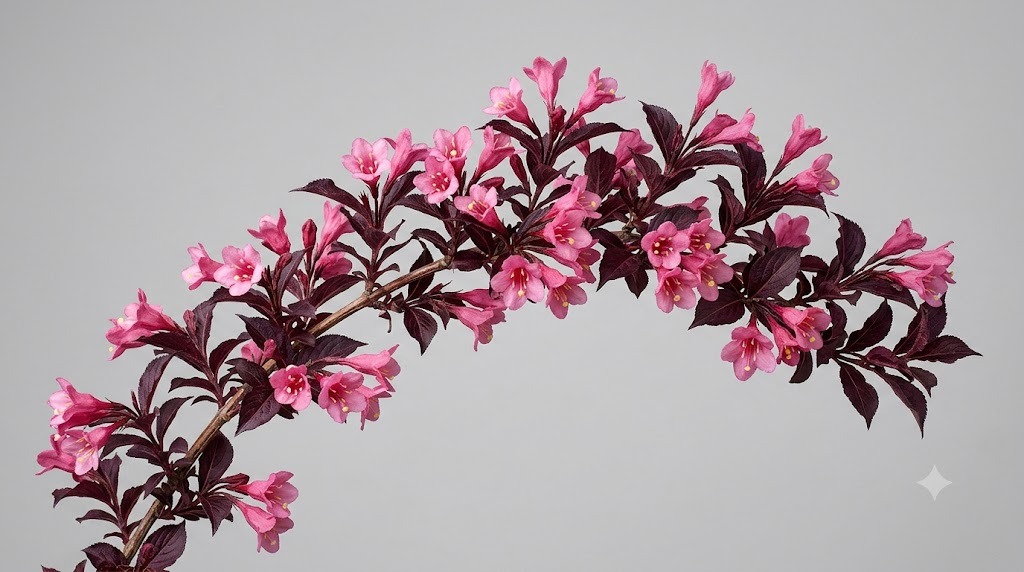
Weigela is one of the most generous and easygoing of the old-fashioned flowering shrubs - a graceful deciduous bush whose arching branches bend right down under the weight of countless trumpet-shaped flowers in late spring.
🗓️ Last reviewed: June 2026
Overview
Weigela is one of the most generous and easygoing of the old-fashioned flowering shrubs - a graceful deciduous bush whose arching branches bend right down under the weight of countless trumpet-shaped flowers in late spring. The blooms, in shades of rose-pink, deep red, white, and soft apricot, are funnel-shaped and held in clusters all along the stems, turning the whole shrub into a fountain of color for several weeks. Hummingbirds and bees adore them. Modern compact cultivars, especially the wine-leaved ones like "Wine & Roses," add deep burgundy-purple foliage that looks good all season long, so the shrub earns its place even after the flowers fade. Tough, hardy, and almost foolproof, weigela is a wonderful choice for a relaxed, reliable splash of late-spring bloom.
Origin & Natural Habitat
Weigela florida is a member of the honeysuckle family, native to eastern Asia - northern China, Korea, and the Russian Far East - where it grows on woodland edges, scrubby slopes, and rocky hillsides. This origin explains its garden character: it is fully hardy and used to cold winters, it likes a position in the open with plenty of light, and it copes with ordinary soil on a slope or bank. As a plant of woodland margins rather than deep forest, it wants sun for the best flowering but tolerates a little shade, and it has the tough, undemanding constitution of a hardy temperate shrub. Many of today's garden plants are hybrids and selections bred for more compact size, richer flower color, and the dark purple foliage that the wild species does not have.
Appearance
Weigela forms a rounded, spreading deciduous shrub with gracefully arching branches, typically 1 to 2.5 m tall and wide depending on the cultivar, though modern compact selections stay much smaller, around 0.6 to 1.2 m. In late spring the branches are wreathed along their length with clusters of funnel-shaped, five-lobed flowers, usually 2.5 to 4 cm long, in pink, red, white, or apricot. The arching habit means the flowering stems cascade outward like a fountain. The leaves are oval, pointed, and finely toothed; in the popular dark-leaved cultivars such as "Wine & Roses" they are a striking deep wine-purple that contrasts beautifully with the rose-pink flowers and holds its color through summer. There is little autumn interest and no winter structure to speak of, so weigela is grown above all for that spectacular late-spring flush and, in the modern forms, its handsome foliage.
Why People Grow It - Qualities & Benefits
- Generous late-spring bloom: arching branches smothered in trumpet flowers for weeks.
- Hummingbird and bee magnet: the tubular flowers are a wildlife favorite.
- Beautiful modern foliage: wine-leaf cultivars look good all season, not just in flower.
- Tough and hardy: reliable in cold winters, hardy through zones 4 to 8.
- Easy and low-maintenance: undemanding, with simple after-flowering pruning.
- Compact options: newer cultivars suit small gardens, borders, and containers.
Care
Light & Position
Weigela flowers best in full sun, ideally six hours or more of direct light a day, which gives the heaviest bloom and, in the purple-leaved forms, the richest foliage color. It will grow and flower in partial shade, but flowering is noticeably reduced and the dark-leaved cultivars turn greener and lose their depth of color in too much shade. Give it an open, sunny position with room for its arching branches to spread naturally. It is not fussy about shelter and copes well in an open border.
Soil
Weigela is adaptable and grows in most ordinary garden soils, but it does best in moderately fertile, moist but well-drained ground. It tolerates a range of soil types, including clay, as long as it is not permanently waterlogged. Adding organic matter such as compost at planting improves both moisture retention and drainage. It is not particular about pH and grows happily in slightly acidic to slightly alkaline soils. Avoid heavy, soggy ground where the roots may rot.
Watering
Newly planted weigela needs regular watering through its first year while it establishes, especially in dry spells, to settle in the root system. Once established, it is reasonably drought-tolerant and usually copes with normal rainfall, though it appreciates a deep watering during prolonged dry weather, particularly while flowering and in its main growing season. A mulch around the base helps conserve moisture. Avoid both drought stress and permanently wet soil.
Feeding
Weigela is not a heavy feeder. A single application of a balanced general-purpose fertilizer in early spring, as growth begins, is usually all it needs, along with an annual mulch of compost or well-rotted manure around the base. Avoid heavy, high-nitrogen feeding, which can encourage soft leafy growth at the expense of flowers. Feeding lightly in spring supports a strong flush of bloom without overdoing it.
Pruning
The key rule with weigela is to prune straight after flowering, because it blooms on growth made the previous year - prune at the wrong time, in winter or early spring, and you cut off the coming season's flowers. Once flowering finishes in early summer, cut back the stems that have just flowered, and remove around a quarter to a third of the oldest, thickest stems right down to the base to encourage fresh, vigorous flowering growth. This renewal pruning keeps the shrub from becoming congested and woody and maintains a steady supply of young flowering wood. Old, neglected plants can be rejuvenated by hard pruning, though this may cost a season's bloom.
Hardiness & Winter Care
Weigela is fully hardy and reliable through USDA zones 4 to 8, comfortably surviving cold winters with no protection needed across most temperate gardens. It is deciduous, dropping its leaves in autumn and resting bare through winter before leafing out again in spring. No special winter care is required for established plants in its hardiness range. In the very coldest areas, some tip dieback of the previous year's growth can occur over a hard winter; simply trim out any dead tips in spring, though this may slightly reduce flowering on the affected stems.
Planting & Propagation
Plant weigela in autumn or spring in a sunny, open spot in moist, well-drained soil enriched with organic matter, spacing plants according to the eventual size of the cultivar. Weigela is very easy to propagate, most reliably from softwood cuttings taken in early summer: take short, non-flowering shoot tips, remove the lower leaves, and insert them in moist, gritty compost to root over a few weeks. Semi-ripe cuttings later in summer and hardwood cuttings in autumn also work well, making weigela one of the simplest shrubs to multiply. Named cultivars, including the wine-leaved forms, must be grown from cuttings rather than seed to come true, as seedlings will not reliably reproduce the parent's flower or foliage color.
Common Problems & Pests
- Reduced flowering: almost always caused by pruning at the wrong time or by too much shade - prune only after flowering and grow in full sun.
- Tip dieback: the previous year's growth may die back at the tips after a hard winter; trim out dead wood in spring.
- Leaf spot and powdery mildew: occasional fungal problems, usually minor, encouraged by crowding and poor airflow.
- Aphids: can cluster on soft new growth but are rarely a serious threat.
- Scale insects and spider mites: sometimes appear, particularly on stressed or sheltered plants.
- Root rot: in heavy, waterlogged soil; ensure good drainage to avoid it.
Weigela is on the whole a remarkably trouble-free shrub, and correct pruning timing solves the single most common complaint of poor flowering.
Toxicity & Safety
Weigela is considered non-toxic to cats, dogs, and humans. It is not listed among the poisonous garden plants and is widely grown in family and pet-friendly gardens without concern. There are no toxic berries or irritant sap to worry about, and the flowers are a welcome source of nectar for hummingbirds and bees rather than a hazard. As with any plant, it is sensible not to let pets or children deliberately eat large amounts of foliage, since non-food plant material can cause mild stomach upset, but weigela poses no recognized poisoning risk and is regarded as a safe, garden-friendly shrub.
Pros & Cons
Pros
- Spectacular, generous late-spring flowering on arching branches.
- Excellent for hummingbirds and bees.
- Modern wine-leaf cultivars look great all season.
- Fully hardy and tough through zones 4 to 8.
- Easy to grow and very easy to propagate from cuttings.
Cons
- Flowering is brief, mostly a few weeks in late spring.
- Little autumn or winter interest; bare in the cold months.
- Must be pruned at the right time or you lose the flowers.
- Dark-leaved forms need full sun to keep their color.
- Can grow large and arching if the wrong cultivar is chosen for a small space.
Best Suited For
- Relaxed mixed and shrub borders wanting a reliable late-spring highlight.
- Wildlife and pollinator gardens, especially for hummingbirds and bees.
- Cottage and informal planting schemes with room for arching shrubs.
- Small gardens and containers, using the modern compact cultivars.
- Beginner gardeners wanting a tough, almost foolproof flowering shrub.
Not ideal for gardens needing year-round structure, very shady sites, permanently wet soil, or growers wanting a long, continuous flowering season from a single shrub.
FAQ
Why didn't my weigela flower this year? The most common reason is pruning at the wrong time. Weigela flowers on growth made the previous year, so if you cut it back in winter or early spring you remove the stems that were about to bloom. Always prune straight after flowering, in early summer. The other common cause is too much shade - weigela needs full sun for the best flowering, and a plant in deep shade will produce few flowers.
When and how should I prune weigela? Prune right after it finishes flowering in early summer, never in winter or spring. Cut back the stems that have just bloomed, and remove about a quarter to a third of the oldest, thickest stems down to the base. This renewal pruning keeps the shrub open and vigorous and ensures plenty of young wood to carry next year's flowers. Pruning at any other time risks cutting off the coming season's bloom.
Is weigela safe for pets and children? Yes, weigela is considered non-toxic to cats, dogs, and humans, and is widely grown in family and pet-friendly gardens. It has no poisonous berries or irritant sap. As with any ornamental plant, it is sensible to discourage pets or children from eating quantities of the foliage, since that can cause mild stomach upset, but weigela carries no recognized poisoning risk.
How big does weigela get, and is there a small one? It depends entirely on the cultivar. Traditional weigelas can reach 1 to 2.5 m tall and wide with arching branches, but modern compact selections such as the wine-leaved "Wine & Roses" types stay much smaller, often around 0.6 to 1.2 m, and are well suited to small gardens, the front of a border, or even a large container. Choose the cultivar to match the space you have.