Cymbidium Orchid
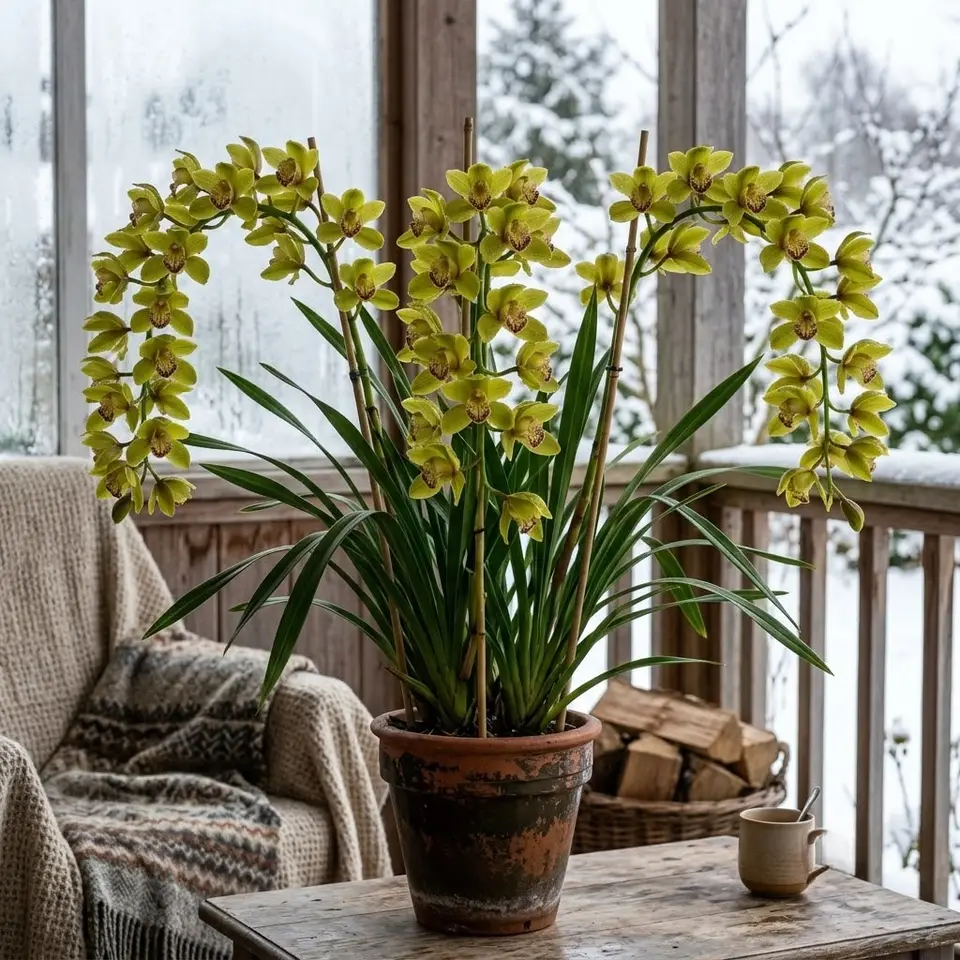
Cymbidiums are grassy-leaved orchids carrying tall spikes of 10-25 waxy blooms that last two months in winter, exactly when nothing else performs.
Last reviewed: October 2026
 AI illustration
Overview
Cymbidiums are grassy-leaved orchids carrying tall spikes of 10-25 waxy blooms that last two months in winter, exactly when nothing else performs. Their secret is contrarian: they WANT cold nights, and mild-climate porches suit them better than warm living rooms. (Cymbidium.)
Origin & Natural Habitat
Himalayan foothills through China, Japan and down to Australia - cool, bright, seasonal habitats; the 'boat orchids' of Asian horticulture for millennia.
Appearance
Arching grass-like leaves from fat pseudobulbs, 40-90 cm; winter spikes carry many 5-12 cm waxy blooms (greens, golds, pinks, whites) lasting 6-10 weeks.
Why People Grow It - Qualities & Benefits
- Two-month winter flower spikes
- Cold-tolerant to near-frost: porch and patio hardy in mild zones
- Cut spikes last weeks in a vase
- Old plants become bloom fountains
Care
Light: Very bright - outdoor bright shade or gentle sun most of the year; the summer-outdoors, autumn-chill routine IS the culture.
Water: Evenly moist in growth (they're thirstier than bark-orchids suggest); drier in winter rest.
Potting medium: Fine-to-medium bark mix; deep pots for their vigorous roots.
Temperature & Humidity: The trigger: autumn nights of 7-12°C for several weeks set the spikes - the reason indoor-only cymbidiums never flower. Hardy-ish to a light touch of frost briefly.
Feeding: Generous in summer growth (they're the heavy feeders of orchids), lean in autumn.
Rest & rebloom: Summer outside → autumn chill → winter bloom indoors or on a cool porch: the annual loop that makes them easy once learned.
Propagation
Division of big clumps (3+ bulbs per piece) at spring repotting; backbulbs (leafless old bulbs) can sprout new plants planted separately.
Common Problems & Pests
- No spikes = missed the autumn cold, the universal answer
- Red spider mite in hot dry spells
- Snails adore the spikes outdoors
- Sunburn if moved abruptly to full sun
Toxicity & Safety
Not on the ASPCA lists. The ASPCA Animal Poison Control Center's plant lists for cats and dogs have no entry for this plant, and we have no other checked source either way. If a pet chews it and seems unwell, call your vet or a pet poison helpline.
Pros & Cons
Pros
- Longest-lasting bloom spikes in the hobby
- Near-hardy toughness
- Winter color when it counts
Cons
- Needs the outdoor/chill routine
- Big plants, real estate
- Summer watering commitment
Best Suited For
- Mild-winter climates (zones 9-10 gardens)
- Cool porches and conservatories
- Cut-flower growers
- Patio-plant people
FAQ
Can I grow one purely indoors?
It will live but rarely flower - the autumn night-chill is the bloom trigger. Even a few weeks on a fire escape or cold windowsill in fall changes everything.
When do I divide?
Spring, after bloom, when pots are bursting - every 3-4 years. Fresh divisions sulk a season then return stronger.
Gear for growing cymbidium orchid
Links go to Amazon or a partner store (such as Adagio Teas) and may earn us a commission at no extra cost to you. As an Amazon Associate we earn from qualifying purchases. We link gear types, not sponsors' picks: you choose the exact product.