Almond Mushroom
The almond mushroom (Agaricus subrufescens), also called "the prince" and marketed in some countries as Agaricus blazei, is a warm-climate relative of the common button mushroom, prized for its distinctive sweet almond or marzipan aroma.
🗓️ Last reviewed: July 2026
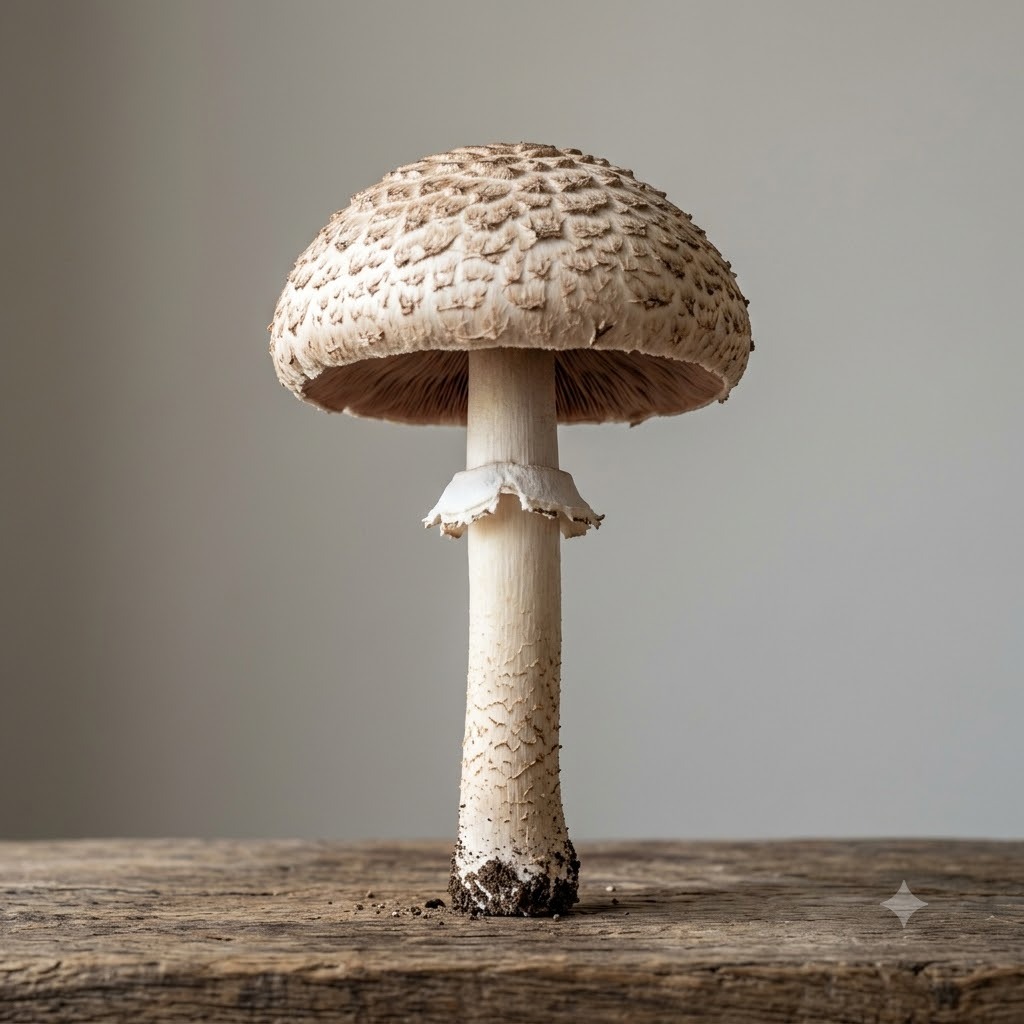
Overview
The almond mushroom (Agaricus subrufescens), also called "the prince" and marketed in some countries as Agaricus blazei, is a warm-climate relative of the common button mushroom, prized for its distinctive sweet almond or marzipan aroma. It is edible and pleasant, with a firm cap and a nutty scent that carries through into cooking. Unlike most mushrooms in this collection it can be found both wild and, unusually for an Agaricus of its type, is cultivated on a limited commercial scale for the health-food market. But wild collecting carries a real hazard: it sits in a genus that includes the toxic yellow-staining mushroom and shares a look with young deadly white Amanitas. Aroma and staining are the keys to telling it apart.
Identification & Appearance
The cap is 5-18 cm across, at first rounded then flattening, whitish to pale brown and covered in fine brownish fibrous scales, especially toward the centre. The gills start pale pinkish-grey and mature to chocolate-brown as the spores ripen - a hallmark of edible Agaricus. The stem bears a distinct ring and is white, bruising a slight yellow at the very base rather than the alarming bright chrome-yellow of its toxic cousin. The flesh is white and, crucially, smells strongly of sweet almonds or marzipan. Spore print is dark brown.
Where It Grows
Wild, it favours rich, composted ground - leaf litter, garden beds, mulch piles, compost heaps, and the edges of woods - in warm temperate and subtropical regions, originally noted in the Americas and now recorded widely, including parts of Europe. It is saprotrophic, feeding on decaying organic matter rather than living roots, which is exactly why (unlike the mycorrhizal boletes and matsutake) it can be cultivated. It fruits in warm, humid conditions, often in summer and autumn or year-round in mild climates. Gardeners sometimes find it appearing unbidden in well-rotted mulch or compost, which is often the first clue that the species is present in an area.
How to Grow at Home
Here is the honest picture: the almond mushroom is one of the few in this collection that can genuinely be cultivated, because it is saprotrophic rather than mycorrhizal - but it is not a beginner crop. It needs a properly prepared, composted substrate similar to that used for button mushrooms, plus consistent warmth (it likes it hotter than the common mushroom, around 23-27°C) and high humidity. Home growers can attempt it from spawn on pasteurised compost, but success takes experience with sterile technique and climate control. Most people encountering this mushroom will meet it wild or buy it dried as a supplement. If you do grow it, treat it as an advanced project, not a windowsill kit.
Growing Conditions
Light
As with other mushrooms, light does not feed it but helps trigger and shape fruiting. Low, indirect light is enough; never use direct sun. In the wild it simply fruits in shaded, rich ground.
Watering
High humidity is essential during fruiting, around 80-90%. Cultivated beds are misted and cased with a moist layer; wild fruitings follow warm rain. The compost should be evenly moist, never waterlogged.
Temperature & Substrate
It is a warmth-lover, fruiting best around 23-27°C - hotter than the button mushroom. The substrate is composted organic matter (straw-based mushroom compost) rather than living roots, which is what makes cultivation possible for experienced growers.
Culinary Use
The almond mushroom is a good edible with a firm texture and a gentle nutty sweetness. Clean it, slice, and always cook it thoroughly - never eat wild mushrooms raw. It suits sautes, soups, and stews, and its marzipan-like aroma stands out in simple dishes where it is not overwhelmed by strong seasonings. Older caps with fully brown gills can be strong, so many cooks prefer younger buttons for the table. It is also widely dried and sold as a supplement in some markets, and dried caps can be rehydrated for cooking. As with any wild find, eat a modest amount the first time to check personal tolerance.
Health & Nutrition
Low in calories, it provides protein, fibre, B vitamins, and minerals. It is best known in the supplement world for its beta-glucans and other polysaccharides, which have been studied for immune support - though marketing claims often outrun the evidence. Treat it as a nutritious food rather than a medicine, cook it fully, and enjoy it in moderation.
Common Problems
- Yellow-staining toxic lookalike - Agaricus xanthodermus stains bright chrome-yellow (especially at the stem base when cut or bruised) and smells of ink, phenol, or chemicals, not almonds. It causes stomach upset. If it stains vivid yellow and smells unpleasant, do not eat it.
- Deadly white Amanita confusion - young, unopened Agaricus can be mistaken for a white destroying-angel Amanita. Amanitas have WHITE gills that never turn brown, a cup-like volva at the base, and no marzipan smell. Always check gill colour and dig up the base.
- Off aroma - if it does not smell of sweet almonds, treat it as suspect.
- Maggot damage - check the stem and cap for tunnels in older specimens.
Pros & Cons
Pros
- Pleasant nutty, almond-scented flavour.
- One of the few here that can actually be cultivated (saprotrophic).
- Firm texture good for cooking and drying.
- Studied for immune-supporting compounds.
Cons
- Cultivation is an advanced project, not a beginner kit.
- Has a toxic yellow-staining Agaricus lookalike and resembles deadly white Amanitas when young.
- Wild collecting demands careful ID by smell and staining.
- Health claims are often overstated.
Best Suited For
- Experienced growers willing to manage compost, warmth, and humidity.
- Foragers who can confidently use aroma and staining to separate Agaricus species.
- Cooks who enjoy a nutty, aromatic mushroom.
Not ideal for absolute beginners hoping for an easy kit, or anyone who cannot reliably distinguish edible Agaricus from the yellow-stainer and from white Amanitas.
FAQ
Can I really grow the almond mushroom at home? Yes, in principle - it is saprotrophic, so it grows on composted substrate rather than tree roots. But it needs warmth, humidity, and sterile technique, so treat it as an advanced project, not a beginner kit.
How do I tell it from the toxic yellow-stainer? Smell and staining. The almond mushroom smells of sweet almonds and stains only a faint yellow at the base. Agaricus xanthodermus stains bright chrome-yellow and smells of ink or chemicals. If it stains vivid yellow and smells foul, discard it.
How do I avoid the deadly white Amanita? Check the gills and base. Edible Agaricus gills turn pink then chocolate-brown; deadly Amanitas keep white gills and grow from a cup-like volva. Always dig up the whole base and look.
Never eat an almond mushroom without 100% expert identification. Confirm the browning gills, the almond aroma, the ring, and the absence of chrome-yellow staining and a basal volva. If you cannot be certain, do not eat it. When in doubt, leave it out.