Wood Blewit
The wood blewit (Lepista nuda, sometimes listed as Clitocybe nuda) is a strikingly beautiful autumn and early-winter mushroom, prized for its lilac-to-violet colouring and its warm, faintly perfumed, almost sweet aroma.
🗓️ Last reviewed: July 2026
Overview
The wood blewit (Lepista nuda, sometimes listed as Clitocybe nuda) is a strikingly beautiful autumn and early-winter mushroom, prized for its lilac-to-violet colouring and its warm, faintly perfumed, almost sweet aroma. It is a saprotroph that recycles fallen leaves and garden debris, and unlike most gourmet species it appears late in the season when little else is fruiting. Foragers value it for its firm texture and its distinctive flavour once cooked. It is, however, a mushroom that demands care: it has toxic look-alikes, and it must always be cooked thoroughly before eating. This profile treats the blewit primarily as a species to identify and forage responsibly, not one to cultivate on a windowsill.
Identification & Appearance
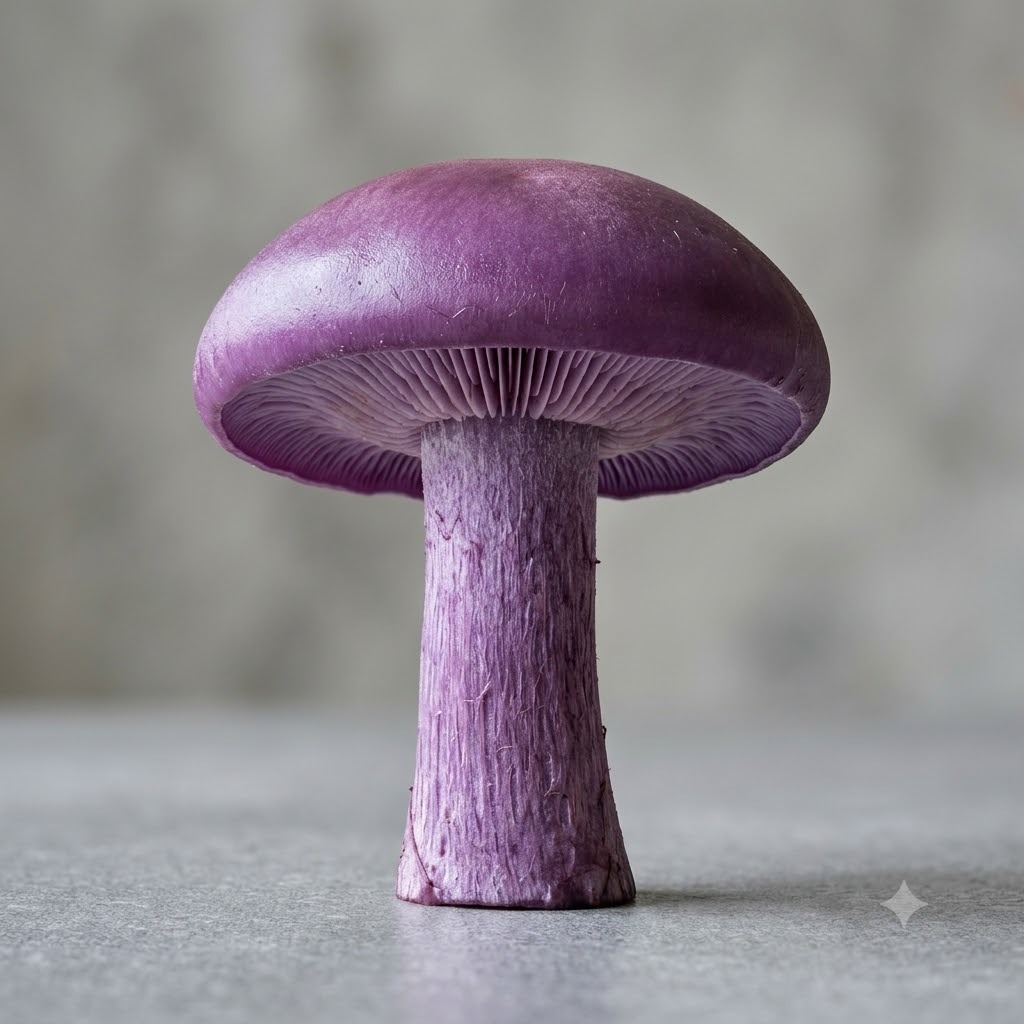
The wood blewit is defined by colour. Young caps are a rich violet to lilac-blue, becoming more tan or buff-brown with age as the pigment fades, especially in dry weather. Caps are 6-15 cm across, smooth, and roll under at the margin when young before flattening. The gills are crowded, notched at the stem, and start out the same lilac-violet as the cap. The stem is stout, fibrous, and typically flushed with the same violet tone, often with a slightly bulbous, cottony base. The flesh is thick and pale lilac-grey. The spore print is a distinctive pale pink to pinkish-buff - a critical identification feature. The whole mushroom carries a pleasant, slightly floral or fruity smell.
Where It Grows
Wood blewits are widespread across temperate Europe, North America, and parts of Asia. They grow in leaf litter under both deciduous and coniferous trees, in hedgerows, on compost heaps, in gardens, and along woodland edges. They often form rings or scattered troops. They are a late-season species, typically appearing from October into December, and they tolerate light frosts that finish off most other mushrooms. Rich, decaying organic matter is their preferred medium, which is why they turn up so readily in mulched flower beds and old compost.
How to Grow at Home
Honestly, the wood blewit is not a practical mushroom to cultivate at home, and most people encounter it by foraging. It is a saprotroph that can, in principle, be grown on composted leaf litter or spent mushroom compost, and some hobbyists have coaxed it to fruit outdoors by spreading spawn or spore-rich cap material onto a shaded, leaf-mulched garden bed. Results are slow, unreliable, and can take a year or more, if they come at all. There is no simple indoor kit. For nearly everyone, the realistic path is careful foraging: learn the species from an expert, identify it with total confidence, and gather only when you are certain. Never treat a garden "sowing" attempt as a shortcut around proper identification, because whatever fruits still needs the same rigorous checks.
Growing Conditions
Light
As a foraged woodland species, blewits need only the low, dappled light of leaf litter under a tree canopy. In an outdoor garden-bed attempt, a shaded, north-facing spot away from direct sun mimics their natural habitat best.
Watering
Blewits fruit after autumn rains when the litter layer stays damp. A garden bed attempt should be kept consistently moist but never waterlogged, much like the forest floor after steady autumn drizzle.
Temperature & Substrate
This is a cool-season mushroom, fruiting best at roughly 5-15°C and tolerating light frost. Its natural substrate is decaying leaf litter, compost, and other rich organic debris. A colonised outdoor bed of composted leaves is the only realistic "substrate" for a home attempt.
Culinary Use
Wood blewits must always be cooked thoroughly - never eaten raw, as raw blewits can cause stomach upset even in people who tolerate them cooked. Once cooked they are firm, meaty, and hold their shape well in stews, sautés, and creamy sauces. They pair beautifully with butter, garlic, and cream, and their gentle perfume suits slow-cooked dishes. Some people are sensitive to blewits even when cooked, so a first-time eater should try only a small portion. Discard the tougher stem bases and cook until fully softened and heated through.
Health & Nutrition
Like most mushrooms, cooked blewits are low in calories, provide some protein, B vitamins, and dietary fibre, and contain beta-glucans of general interest for immune and metabolic health. Their main nutritional value is as a low-calorie, flavourful vegetable-like ingredient. The health notes are secondary to the safety message: any benefit is irrelevant if the mushroom is misidentified, and blewits should only ever be eaten cooked.
Common Problems
- Confusion with toxic Cortinarius species - this is the gravest danger. Several Cortinarius species share a similar lilac or brownish colouring and can be deadly, causing irreversible kidney failure. Cortinarius have a rusty-brown spore print and a cobweb-like veil (cortina) on young specimens, whereas blewits have a pink spore print and no cortina. Always take a spore print.
- Fading colour with age or drought - older or dried-out blewits lose their violet tone and become brownish, making them far harder to identify. Gather only fresh, well-coloured specimens.
- Purple cort look-alikes - some purple Cortinarius look temptingly similar; when in any doubt, do not pick.
- Digestive upset - even correctly identified blewits upset some people, and they are toxic raw.
Pros & Cons
Pros
- Beautiful, distinctive violet colouring when young.
- Fruits late in the season when few other mushrooms are available.
- Firm, meaty texture that holds up well in cooking.
- Tolerant of frost and common in gardens and hedgerows.
Cons
- Dangerous toxic look-alikes, including potentially deadly Cortinarius species.
- Toxic if eaten raw and upsetting to some people even cooked.
- Not practically cultivated indoors.
- Colour fades with age, making older specimens hard to identify.
Best Suited For
- Experienced foragers with confident, expert-level identification skills.
- Cool-season foragers who enjoy late-autumn and early-winter woodland walks.
- Cooks who want a firm, aromatic mushroom for slow-cooked dishes.
Not ideal for beginners, anyone unable to take and read a spore print, or those wanting a simple indoor grow kit.
FAQ
How do I tell a blewit from a toxic Cortinarius? Take a spore print. Blewits give a pale pink print and have no cobweb-like veil; deadly Cortinarius give a rusty-brown print and often show a cortina on young caps. If the print is brown, do not eat it, and if you cannot be certain, discard it.
Can I eat blewits raw in a salad? No. Blewits are toxic raw and must always be cooked thoroughly. Even cooked, they disagree with some people, so try only a small amount the first time.
Can I grow blewits at home? Not practically. They are a saprotroph you might coax onto an outdoor composted-leaf bed over a year or more, but there is no reliable indoor kit. Almost everyone forages them.
Is the golden rule really that strict? Yes. Never eat any wild mushroom unless a 100% confident expert has identified it. Blewit look-alikes include deadly species, so there is no room for guessing.