Cauliflower Fungus
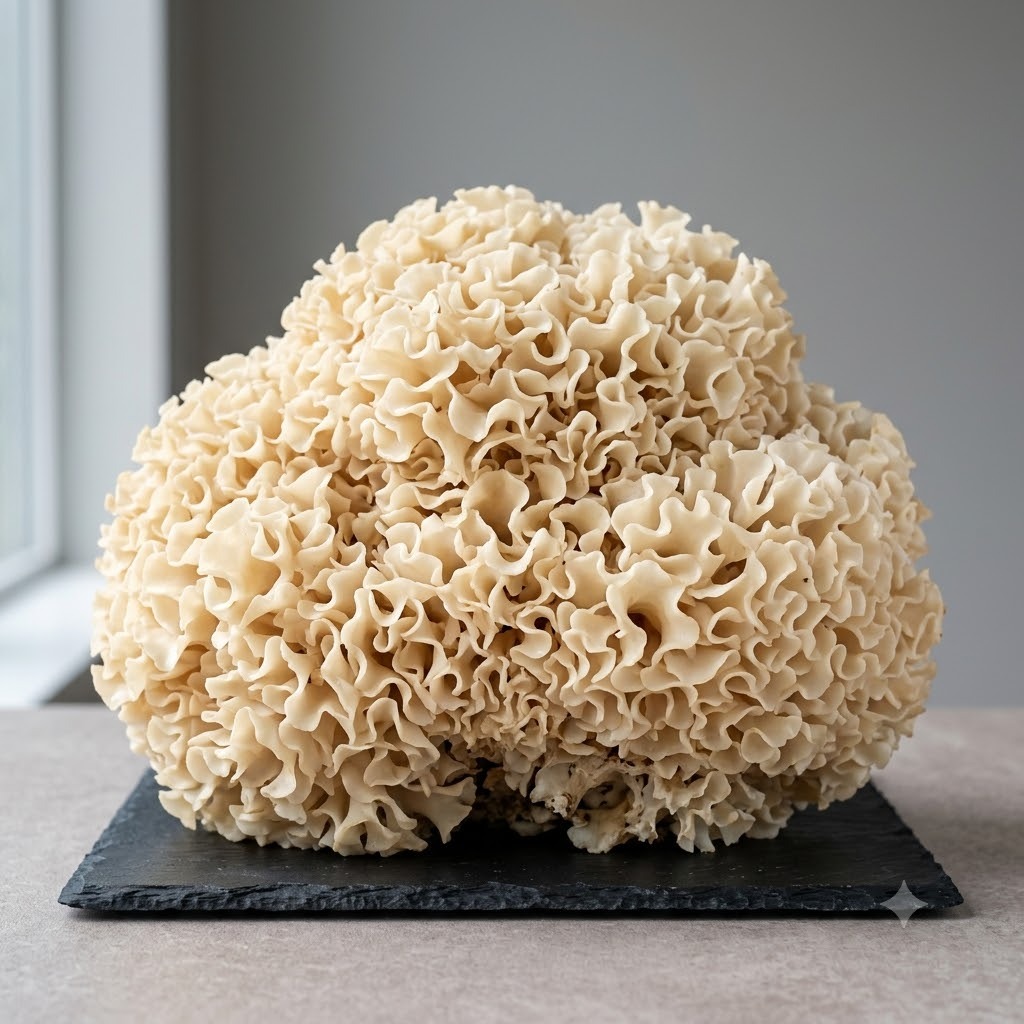
The cauliflower fungus (Sparassis crispa) is one of the most extraordinary-looking wild mushrooms in the forest - a large, pale, ruffled mass that genuinely resembles a cauliflower or a tangle of egg noodles growing at the base of a conifer.
🗓️ Last reviewed: July 2026
Overview
The cauliflower fungus (Sparassis crispa) is one of the most extraordinary-looking wild mushrooms in the forest - a large, pale, ruffled mass that genuinely resembles a cauliflower or a tangle of egg noodles growing at the base of a conifer. It can reach the size of a football and weigh several kilograms, making a single find a real prize. Its flavour is mild and pleasantly nutty, and its firm, wavy fronds hold up beautifully in cooking. Unlike cultivated mushrooms, it is a wild find tied to living or recently dead conifers, and while it has fewer dangerous look-alikes than many species, it still demands careful handling and correct identification.
Identification & Appearance
The cauliflower fungus is unmistakable once known. It forms a large rounded mass, 10-40 cm or more across, made of many flattened, wavy, ribbon-like lobes that curl and fold densely together, exactly like a cauliflower head or a mound of pale egg noodles. The colour ranges from creamy white and pale yellow when young to tan or brownish as it ages. It has no gills and no obvious cap-and-stem structure; instead the spore-bearing surface runs along the smooth undersides of the fronds. It grows from a tough, root-like base attached to conifer wood or roots. The flesh is firm and slightly rubbery, and the young mushroom has a pleasant, mild smell. The spore print is white to pale cream.
Where It Grows
Cauliflower fungus is a parasite and wood-decayer of conifers, especially pines, and is found at the base of living trunks, on stumps, or arising from buried conifer roots. It appears in coniferous and mixed woodland, pine plantations, and heathland with scattered pines, across temperate Europe, Asia, and North America. Fruiting runs from late summer into autumn. It often returns to the same tree base year after year, so a known specimen can be revisited across seasons.
How to Grow at Home
Being honest: the cauliflower fungus is not practically cultivated for home growers. It depends on an intimate relationship with living or recently dead conifer roots and wood, and there is no simple kit or substrate that reliably produces it the way oyster mushrooms grow on straw. While researchers have experimented with growing it on conifer sawdust, this is specialised, slow, and unreliable, and it is not a realistic project for a home cook. In practice, this is a mushroom you forage rather than farm. If you want it, learn to recognise it and its conifer habitat with an experienced guide, and note productive tree bases - the same spot often fruits again in future autumns.
Growing Conditions
Light
Not applicable to home cultivation. In the wild it grows in the dappled shade of coniferous woodland at the base of pines - a habitat clue rather than a growing instruction.
Watering
Not applicable to home cultivation. Wild fruiting follows warm, damp late-summer and autumn weather; moisture after warm spells brings out the fruiting bodies.
Temperature & Substrate
Not applicable to home cultivation. In nature the fungus lives on conifer wood and roots and fruits in the mild temperatures of late summer and autumn. No reliable home substrate reproduces this.
Culinary Use
Cauliflower fungus is an excellent edible with a mild, nutty taste and a firm, slightly crunchy texture that survives long cooking. Because its many folds trap grit, pine needles, and small insects, the most important step is thorough cleaning: tear the mass into smaller pieces and rinse or brush carefully, as debris hides deep in the ruffles. Once clean, it is delicious sliced and sautéed in butter, added to soups and stews, stir-fried, or used in creamy pasta dishes. Cook it well - never eat it raw - and use young, pale, firm specimens; older brownish ones turn tough and can taste sour.
Health & Nutrition
Cauliflower fungus is low in calories and fat and supplies protein, fibre, and B vitamins. It is a notably good source of beta-glucans, the fibres associated with immune support, and has been studied in traditional and modern contexts for these compounds. As with all mushrooms, its role is best seen as a wholesome seasonal food rather than a supplement. Eat a modest amount the first time to check for personal sensitivity, and always cook it thoroughly.
Common Problems
- Hidden grit and insects - the dense folds trap debris; clean it very carefully or the meal is ruined.
- Old, tough specimens - past-prime mushrooms turn brown, leathery, and sour; pick young and pale.
- Misidentification - although it has few dangerous look-alikes, never assume; confirm identity before eating.
- Undercooking - always cook the firm flesh thoroughly.
Pros & Cons
Pros
- Huge, unmistakable, and a single find feeds many.
- Mild nutty flavour and firm texture that holds up in cooking.
- Few dangerous look-alikes compared with many wild mushrooms.
- Reappears at the same conifer bases in future years.
Cons
- Cannot be reliably cultivated at home - forage only.
- Time-consuming to clean because of trapped debris.
- Short autumn season.
- Only young specimens are worth eating; older ones turn tough and sour.
Best Suited For
- Foragers with access to pine and conifer woodland.
- Cooks who want a firm, substantial mushroom for hearty dishes.
- Anyone who enjoys a spectacular, generous single find.
Not ideal for those without conifer habitat nearby, or anyone unwilling to clean the mushroom carefully.
Safety Warning - Dangerous Look-alikes
Compared with many wild mushrooms, the cauliflower fungus has relatively few dangerous look-alikes - its ruffled, noodle-like mass at the base of a conifer is quite distinctive. However, you must never eat any wild mushroom without 100% expert identification. Young specimens can occasionally be confused with other pale, lobed or bracket-like fungi, and inexperienced foragers should always confirm the key features: the dense mass of flattened wavy fronds, the creamy-to-tan colour, the growth from a tough base attached to conifer wood, the white spore print, and the mild smell. Even though the poisoning risk is lower here, the single most important habit for any forager is to verify every find with an expert and to reject anything that does not clearly match. And regardless of identification, clean this mushroom meticulously - the deep folds hide grit, needles, and insects that must be removed before cooking.
FAQ
Can I grow cauliflower fungus at home? Not practically. It depends on living conifer wood and roots, and there is no reliable home kit. It is a foraged wild mushroom found at the base of pines.
Why does it look like a cauliflower? Its fruiting body is a dense mass of flattened, wavy, ribbon-like lobes folded tightly together, resembling a cauliflower head or a heap of egg noodles.
How do I clean it? Tear it into smaller pieces and rinse or brush carefully, working into the folds to remove grit, pine needles, and insects that hide deep inside.
Can I eat it raw? No. Always cook it thoroughly, use young pale firm specimens, and only eat mushrooms you have identified with complete certainty.