Horse Mushroom
The horse mushroom (Agaricus arvensis) is a large, handsome relative of the field and button mushrooms, prized by foragers for its size, its firm flesh, and its distinctive sweet smell of almonds or aniseed.
🗓️ Last reviewed: July 2026
Overview
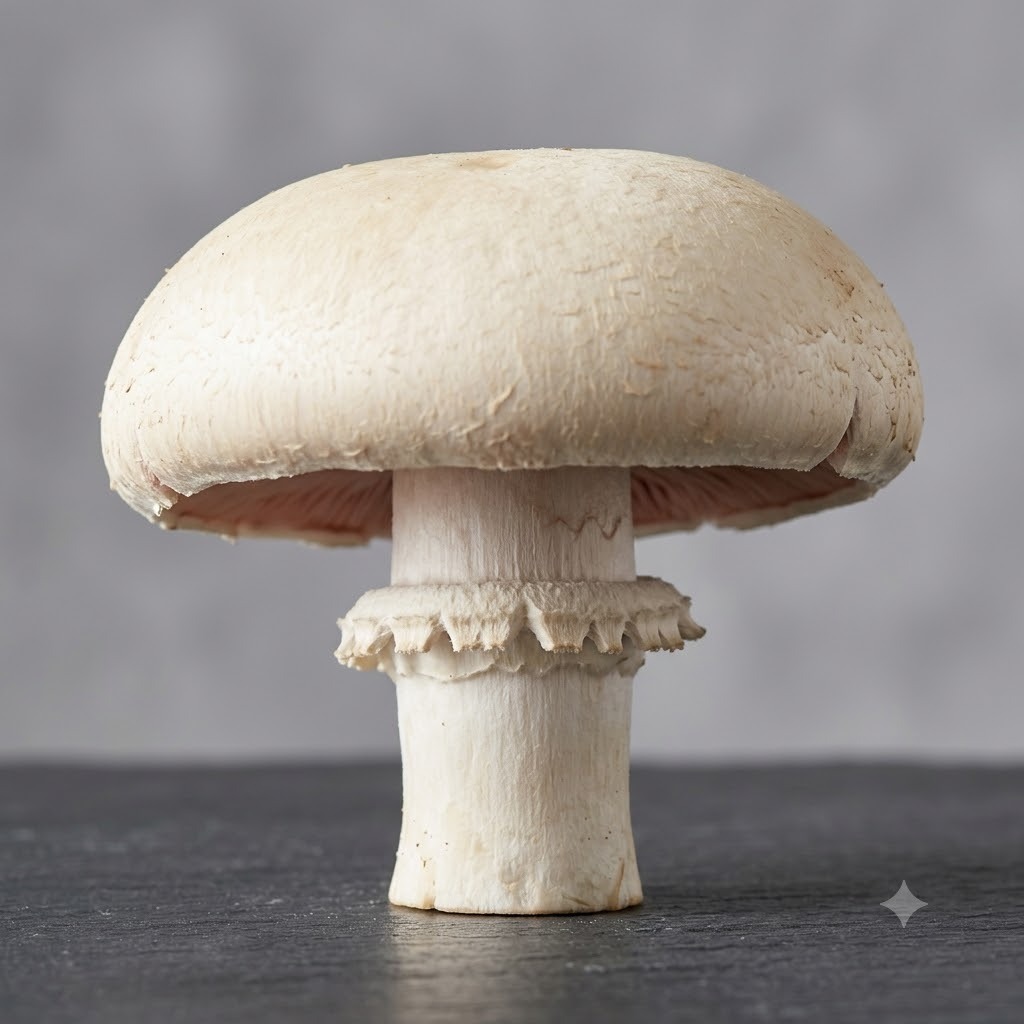
The horse mushroom (Agaricus arvensis) is a large, handsome relative of the field and button mushrooms, prized by foragers for its size, its firm flesh, and its distinctive sweet smell of almonds or aniseed. It fruits in rich grassland from summer into autumn, often in impressive rings, and a single cap can be broad enough to fill a frying pan. Like all wild Agaricus, though, it carries real risk: it must be told apart from deadly white Amanita species and from the toxic, yellow-staining Agaricus xanthodermus, which can look confusingly similar. This profile treats the horse mushroom as a foraging species and puts its identification and its look-alikes at the centre.
Identification & Appearance
The horse mushroom has a large white to creamy cap, often 8-20 cm across or more, smooth and rounded then flattening, sometimes ageing to a warm yellowish tone. Its most helpful feature is smell: fresh horse mushrooms give off a pleasant sweet aroma of almonds or aniseed, never anything chemical or ink-like. The gills start pale greyish-pink or off-white - paler than a field mushroom's - and darken through pink and grey-brown to chocolate as spores mature; they are never pure white in a mature specimen. The stem is stout and white with a large, distinctive double-layered ring that often shows a cog-wheel or star pattern on its underside. There is no volva or sac at the base. Bruising may bring a slight, slow, warm-yellow tinge, but not a vivid chrome-yellow. The spore print is dark chocolate-brown.
Where It Grows
Horse mushrooms grow in nutrient-rich, undisturbed grassland: old pastures, meadows, paddocks, grassy roadsides, and the edges of woodland, often where horses or cattle have grazed and manured the ground - hence the name. They are widespread across temperate regions and fruit from summer through autumn, especially after warm, wet spells. They frequently appear in large rings or troops on well-established turf. Like the field mushroom, they favour open grass rather than deep woodland, though this habitat clue is only ever a starting point and never a substitute for full identification.
How to Grow at Home
The horse mushroom is a grassland species and is not practically cultivated at home; it does not grow on the bags of straw or sawdust used for oyster mushrooms. For an indoor crop of this general style, the safe choice is the cultivated button or chestnut mushroom (Agaricus bisporus), sold as ready-made composted kits. For the true horse mushroom, foraging is the realistic path. A few enthusiasts scatter mature caps or spore slurry onto manured pasture hoping to seed future rings, but this is slow and unreliable, and whatever fruits still needs the full identification before eating. A garden "sowing" is never a licence to skip the safety checks - if anything, home-encouraged mushrooms deserve the same suspicion as any wild find.
Growing Conditions
Light
As an open-grassland mushroom, the horse mushroom fruits in full daylight out on the turf rather than in woodland shade. Any lawn or pasture attempt would sit in ordinary open light.
Watering
Horse mushrooms flush after warm summer and autumn rains soak the grassland. A manured lawn encouraged with spore slurry should stay naturally moist through the fruiting season, relying mainly on rainfall.
Temperature & Substrate
This is a summer-to-autumn species, fruiting in mild, warm-damp conditions of roughly 12-22°C. Its natural substrate is rich, manured grassland soil in undisturbed pasture and meadow; the cultivated relative instead uses composted, cased manure-and-straw substrate.
Culinary Use
Horse mushrooms are excellent cooked - large, meaty, and full of flavour, with a slightly richer taste than the field mushroom. The big flat caps are superb grilled, stuffed, or fried in butter, and they work well in soups, stews, and sauces. They release plenty of dark juice. Always cook them thoroughly and use them fresh, since like all Agaricus they spoil quickly. Older caps may be strong and can harbour insects, so choose firm, fresh specimens. Eat only a modest amount the first time to check personal tolerance.
Health & Nutrition
Cooked horse mushrooms are low in calories and provide protein, fibre, B vitamins, selenium, and potassium, along with beta-glucans. Because they grow in manured ground and can grow large, they may accumulate more heavy metals or nitrogen from the soil than smaller species, so it is wise not to eat them in great quantity or from polluted verges. As with every wild mushroom, nutrition is secondary to safety: value it only once you have identified it with confidence and cooked it well.
Common Problems
- Deadly Amanita confusion - the most serious risk. A young horse mushroom with pale gills and a closed white cap can superficially resemble a young destroying angel (Amanita virosa) or death cap. Amanitas have pure WHITE gills, a sac-like volva at the base, and a white spore print. Horse mushrooms have gills that mature through pink to chocolate-brown, a dark spore print, and no volva. White gills or any basal sac means do not eat it.
- Yellow-stainer (Agaricus xanthodermus) - the key toxic look-alike. It bruises bright chrome-yellow, especially at the cut stem base, and smells of ink, phenol, or chemicals rather than sweet almonds. It causes stomach cramps and vomiting. If the base flashes bright yellow or the smell is chemical, discard it.
- Yellowing caution - horse mushrooms can show a mild, slow yellowish tinge naturally, but a rapid, vivid chrome-yellow reaction on cutting the base points to the toxic yellow-stainer, not the horse mushroom.
- Rapid spoilage - like other Agaricus, they soften and turn quickly; use them the day they are picked.
Pros & Cons
Pros
- Large, meaty caps ideal for grilling and stuffing.
- Pleasant, distinctive almond or aniseed aroma when fresh.
- Common and often abundant in clean, manured grassland.
- Distinctive cog-wheel double ring helps confirm identity.
Cons
- Can be confused with deadly white Amanita species.
- The toxic yellow-staining Agaricus xanthodermus is a close look-alike.
- May accumulate soil contaminants because of its size and habitat.
- Not practically cultivated; spoils quickly after picking.
Best Suited For
- Experienced foragers confident in checking smell, gill colour, base, and staining.
- People with access to clean, unsprayed pasture and meadow.
- Cooks who want large, meaty caps for grilling and stuffing.
Not ideal for beginners, anyone who cannot distinguish the sweet almond smell from a chemical one, or those who cannot rule out Amanita and the yellow-stainer with certainty.
FAQ
How do I tell a horse mushroom from the toxic yellow-stainer? Smell and staining. A horse mushroom smells sweetly of almonds or aniseed and shows at most a mild, slow yellowing. The yellow-stainer (Agaricus xanthodermus) smells of ink or chemicals and bruises bright chrome-yellow, especially at the cut stem base. Chemical smell or vivid yellow means discard it.
How do I avoid the deadly Amanita look-alike? Check the gills, base, and spore print. Horse mushrooms have gills maturing through pink to chocolate-brown, a dark spore print, and no sac at the base. Deadly Amanitas have white gills, a white spore print, and a volva or sac at the stem base. White gills or a basal sac means do not eat it.
Can I grow horse mushrooms at home? Not practically. They are a grassland species; for an indoor crop grow the cultivated button or chestnut mushroom instead. The horse mushroom is a foraging species.
Is expert identification really essential? Yes, without exception. Never eat any wild mushroom unless a 100% confident expert has identified it. With deadly Amanitas and the toxic yellow-stainer in play, there is no safe guess.