St George's Mushroom
St George's mushroom (Calocybe gambosa) is a springtime treasure, traditionally said to appear around St George's Day in late April - which is how it earned its name.
🗓️ Last reviewed: July 2026
Overview
St George's mushroom (Calocybe gambosa) is a springtime treasure, traditionally said to appear around St George's Day in late April - which is how it earned its name. It is a plump, creamy-white mushroom with a firm texture and a strong, distinctive mealy aroma often compared to fresh flour or cucumber. Prized by foragers because it fruits early, when few other choice mushrooms are around, it is a genuine seasonal highlight. It is not something you grow on a windowsill: this is a wild grassland fungus, found rather than farmed, and one that demands careful identification because spring produces several dangerous white look-alikes.
Identification & Appearance
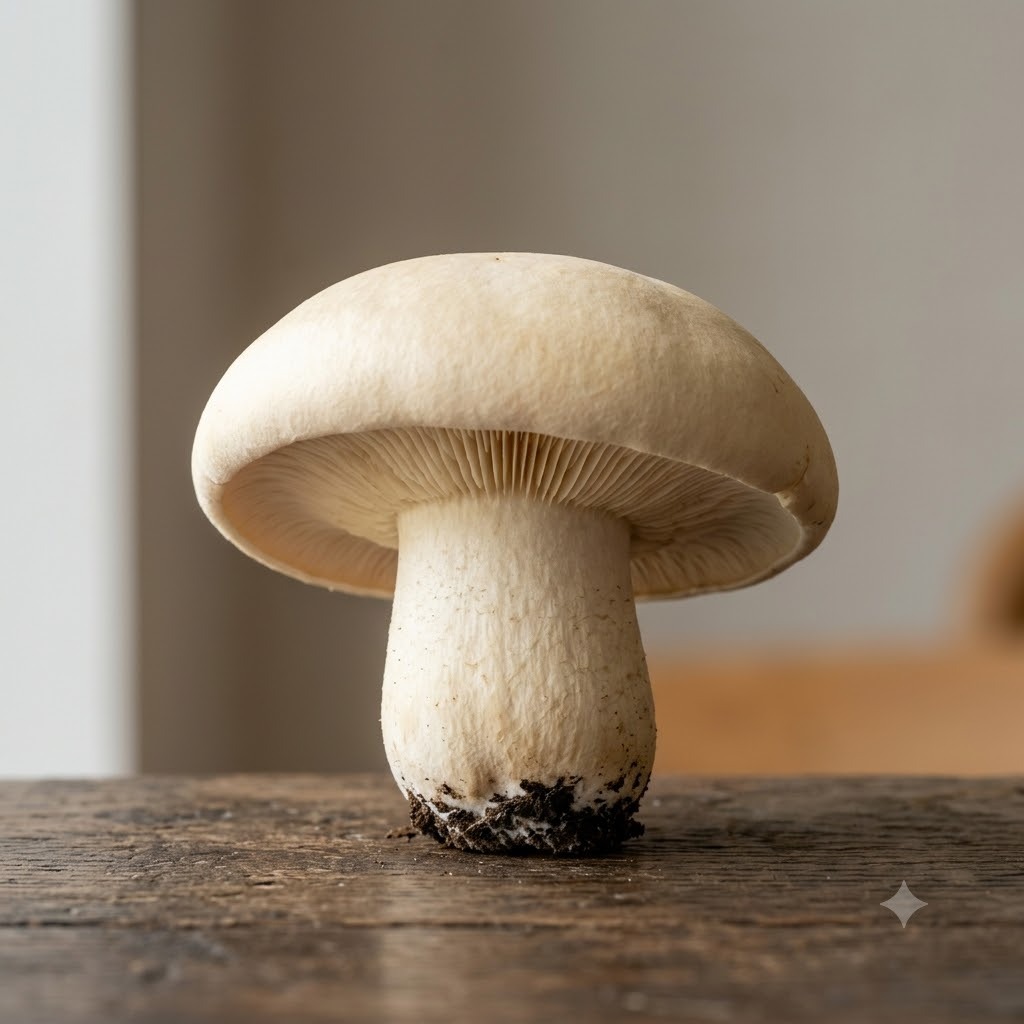
St George's mushroom is solid and chunky. The cap is 5-15 cm across, starting domed and flattening with age, coloured creamy white to pale buff, sometimes with a slightly wavy or irregular margin. The surface is smooth and dry, and can crack a little in dry weather. The gills are white to pale cream, crowded, and notched where they meet the stem. The stem is short, stout, and white, without a ring. The flesh is thick, firm, and pure white, and does not change colour when cut. The single most reliable field clue is the smell: a strong, unmistakable mealy or floury aroma. The spore print is white.
Where It Grows
This is a grassland and hedgerow species. It favours nutrient-rich, calcareous (chalky) soils and is found in pastures, meadows, roadside verges, garden lawns, and along the edges of hedges and woodland. It frequently grows in arcs or fairy rings, sometimes returning to the same rings for many years. Its range covers much of temperate Europe, and it fruits in a narrow spring window, roughly April to June, when soil temperatures rise but before summer heat sets in.
How to Grow at Home
It is important to be straightforward: St George's mushroom is not practically cultivated. It has intricate relationships with grassland soils and cannot be produced from a home kit, spawn bag, or substrate recipe in the way oyster or button mushrooms can. There is no reliable way to grow it indoors or in a garden bed on demand. If you want St George's mushroom, the honest route is foraging: learn its habitat, its season, and above all its distinctive mealy smell, ideally alongside an experienced guide. Because it forms long-lived rings, foragers who find a patch often note the location and return each spring rather than attempting to cultivate it.
Growing Conditions
Light
Not applicable to home cultivation. In the wild it grows in open, often sunny grassland rather than deep shade - useful to know when searching for it.
Watering
Not applicable to home cultivation. Wild fruiting depends on spring moisture and warming soil; a mild, damp spring produces the best flushes.
Temperature & Substrate
Not applicable to home cultivation. In nature the fungus lives in fertile, often chalky grassland soils and fruits in the cool temperatures of spring. No home substrate reliably reproduces these conditions.
Culinary Use
St George's mushroom is a firm, meaty mushroom that holds its shape well when cooked. Its strong mealy aroma mellows with heat into a savoury, slightly nutty flavour. It is excellent sliced and fried slowly in butter, added to spring stews and soups, folded into omelettes and scrambled eggs, or cooked with early-season vegetables. The firm flesh means it does not collapse the way delicate mushrooms do. Always cook it thoroughly and never eat it raw. Because it can have a very pronounced floury smell, some people prefer it in strongly flavoured dishes; use it in modest amounts the first time.
Health & Nutrition
Like other edible mushrooms, St George's mushroom is low in calories and fat while supplying protein, fibre, B vitamins, and minerals. It contains beta-glucans, the fibres associated with immune and gut health. Its main appeal, though, is culinary and seasonal rather than nutritional - it is enjoyed as one of the first wild delicacies of the year. As with any wild mushroom, try only a small portion the first time to rule out personal intolerance.
Common Problems
- Misidentification - the greatest danger, because several toxic white mushrooms appear in spring (see the safety section).
- Ignoring the smell test - the mealy aroma is a critical identifying feature; a specimen without it should be treated with suspicion.
- Contaminated locations - grassland verges may be sprayed or polluted; avoid roadsides with heavy traffic or chemical treatment.
- Not cooking properly - always cook thoroughly; never sample raw wild mushrooms.
Pros & Cons
Pros
- One of the earliest choice wild mushrooms of the year.
- Firm, meaty texture that holds up in cooking.
- Grows in reliable, long-lasting rings in known spots.
- Distinctive mealy smell aids identification.
Cons
- Cannot be cultivated at home - forage only.
- Dangerous white spring look-alikes make expert ID essential.
- Very short spring season.
- Strong floury aroma is not to everyone's taste.
Best Suited For
- Experienced spring foragers who know their local grassland.
- Cooks wanting a firm, savoury mushroom for spring dishes.
- People who can reliably relocate a fruiting ring each year.
Not ideal for beginners foraging unsupervised, or anyone hoping to grow it indoors.
Safety Warning - Dangerous Look-alikes
Spring is a hazardous time for white-mushroom confusion, and you must never eat a wild mushroom without 100% expert identification. St George's mushroom has several toxic white spring look-alikes. Most importantly, some Inocybe species (fibrecaps) fruit at the same time in similar grassland and contain muscarine, which causes serious poisoning; these tend to be smaller, more fibrous-capped, and lack the true mealy smell. Other pale, ringless mushrooms and young white-gilled species can also be mistaken for it. Deadly white Amanita species, while usually associated with trees, are a reminder that "plain white mushroom" is never a safe assumption. The mealy smell, firm white notched gills, chunky ringless stem, chalky grassland habitat, and spring timing must all line up before you consider eating one. If any feature is off, or the mealy smell is absent, do not eat it. Always learn this mushroom from an experienced forager first.
FAQ
Can I grow St George's mushroom at home? No. It is not practically cultivated and cannot be produced from a kit or substrate. It is a wild grassland mushroom that must be foraged.
How do I recognise it? Look for a chunky creamy-white cap, crowded notched white gills, a short stout ringless stem, and above all a strong mealy or floury smell, in spring grassland. Confirm with an expert.
Why is it called St George's mushroom? It traditionally appears around St George's Day in late April, marking the start of its spring fruiting season.
Can I eat it raw? No. Always cook it thoroughly, and only eat specimens you have identified with complete certainty.