Butterfly Pea (Clitoria ternatea)
Butterfly pea (Clitoria ternatea) is a slender tropical climbing vine famous for its vivid, deep-blue flowers, which are dried and steeped to make a striking electric-blue tisane.
🗓️ Last reviewed: June 2026
Overview
Butterfly pea (Clitoria ternatea) is a slender tropical climbing vine famous for its vivid, deep-blue flowers, which are dried and steeped to make a striking electric-blue tisane. The infusion is best known for its colour-changing trick - add a squeeze of citrus and the blue turns purple or pink. It is an easy, fast-growing climber for warm gardens or a sunny container, prized as much for its ornamental beauty as for the dramatic drink its petals produce.
Identification & Appearance
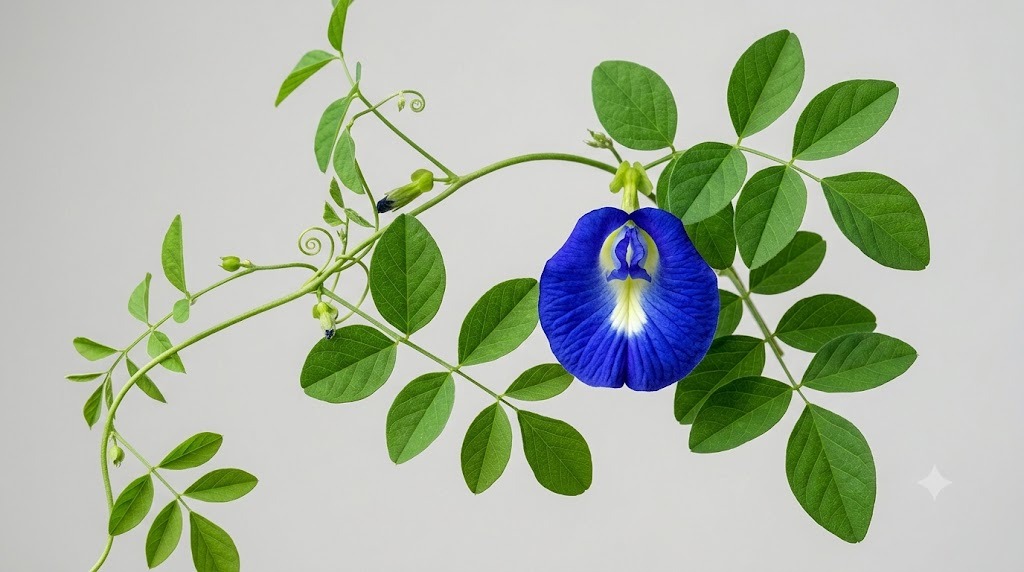
A twining herbaceous vine with slim stems that scramble up to two or three metres, clothed in soft, oval green leaflets. Its signature feature is the flower: a vivid royal-blue bloom, often with a small white or yellow throat, shaped like a pea flower turned on its side. There are also double-flowered forms. After flowering it forms flat, narrow seed pods typical of the pea family.
Where It Grows
Native to tropical Asia, butterfly pea is now grown throughout the tropics and subtropics, from Southeast Asia to parts of Africa and the Americas. It loves heat, humidity, and full sun, and as a legume it can cope with fairly poor soil. It is frost-tender, so in cooler climates it is grown as a warm-season annual or kept under cover.
How to Grow at Home
Butterfly pea is easy from seed, which germinates faster if soaked overnight; it can also be grown from cuttings. Give it a warm, sunny spot with a trellis, fence, or strings to climb, and free-draining soil. It is fast-growing in heat and flowers freely through the warm months. In temperate regions, start seed indoors and grow it in a large pot or against a sheltered sunny wall, or treat it as an annual.
Growing Conditions
Light
Full sun produces the strongest growth and the most abundant, deeply coloured flowers.
Watering
Keep the soil moist during active growth in warm weather, but ensure good drainage; it dislikes standing water.
Soil & Temperature
Free-draining soil; as a legume it tolerates lean ground. It is strictly frost-tender and thrives in warmth above 20°C; protect or grow under cover where frost occurs.
Harvesting & Brewing
Pick the flowers when fully open, ideally in the morning, and use them fresh or spread them to dry until papery for storage. For a tisane, steep a small handful of fresh blooms or several dried ones in hot water for a few minutes until the water turns a deep blue, then strain. The flavour is very mild and earthy, so the drink is enjoyed largely for its remarkable colour - and for the pink-purple shift it makes when citrus is added.
Composition & Character
The intense blue colour comes from anthocyanin pigments in the petals, the same class of plant compounds found in many blue and purple flowers and fruits. These pigments are pH-sensitive, which is why a splash of acidic lemon juice swings the colour toward purple and pink. As a tisane butterfly pea is naturally caffeine-free, and it is valued above all for its vivid, shifting hue and its long ornamental and culinary use across tropical Asia.
Common Problems
- Few flowers - usually too little sun; move it to the brightest, warmest spot available.
- Frost damage - the vine is killed by frost; grow it under cover or as a warm-season annual.
- Leggy, sparse growth - give it support to climb and pinch tips to encourage branching.
Pros & Cons
Pros
- Spectacular blue flowers and a colour-changing infusion.
- Fast-growing and easy from seed in warm conditions.
- Ornamental climber that flowers freely all season.
Cons
- Frost-tender; needs warmth or protection to survive.
- Very mild flavour - it is mostly about colour.
- Needs support to climb and look its best.
Best Suited For
- Warm or tropical gardens and sunny sheltered walls.
- Gardeners who love an ornamental climber with a talking-point drink.
- Container growers in temperate areas willing to treat it as an annual.
Not ideal for cold gardens without protection, or anyone wanting a strong-flavoured tea.
FAQ
Why does the blue tea change colour? The petals contain pH-sensitive anthocyanin pigments. Adding something acidic, like lemon juice, shifts the colour from blue toward purple and pink.
Does butterfly pea tea taste of much? Not really - it is very mild and faintly earthy. People brew it mainly for its dramatic blue colour and the colour-change effect.
Can I grow it in a cool climate? Yes, but treat it as a warm-season annual or grow it in a pot under cover, since it cannot survive frost.