Calendula
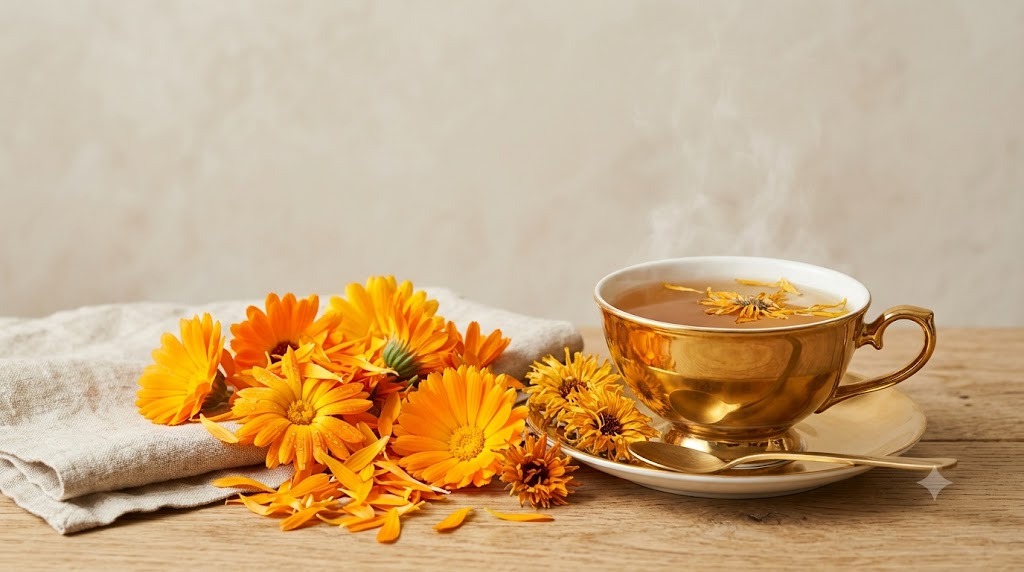
Calendula, the pot marigold, is a cheerful annual whose golden-orange petals brew into a mild, slightly earthy, sunshine-coloured tea.
🗓️ Last reviewed: June 2026
Overview
Calendula, the pot marigold, is a cheerful annual whose golden-orange petals brew into a mild, slightly earthy, sunshine-coloured tea. Long valued as a skin-soothing and digestive herb, calendula is also one of the easiest plants to grow from seed - sow it once and it will flower for months and return on its own. Few tea plants are as simple, or as bright.
Identification & Appearance
A bushy annual 30-60 cm tall, with soft, slightly sticky, pale green lance-shaped leaves and daisy-like flower heads in vivid yellow and orange, 4-7 cm across. The flowers open with the sun and have a faint resinous scent. It blooms continuously from early summer to the first frosts if regularly picked.
Where It Grows
Probably native to southern Europe, calendula has been cultivated for so long that its exact origin is unclear. It is grown worldwide as an easy garden and herb plant, thriving in sun and tolerating poor soil, and self-seeds reliably wherever it is happy.
How to Grow at Home
Sow calendula seed directly where it is to flower, in spring, in any sunny, well-drained spot. It germinates fast and flowers within weeks. Deadhead - or simply keep harvesting - to keep the blooms coming all season. It self-seeds, so once sown it tends to reappear year after year.
Growing Conditions
Light
Full sun gives the most flowers, though it tolerates light shade.
Watering
Water moderately; calendula is fairly drought-tolerant but flowers best with steady moisture.
Soil & Temperature
Average, well-drained soil; tolerates poor ground. Grown as a hardy annual; it withstands light frost.
Harvesting & Brewing
Pick the flower heads fully open, ideally on a dry morning. Pull the petals from the green base, as it is the petals (ray florets) that are used. Dry them in a single layer until papery. For tea, steep a tablespoon of dried petals in hot water for 5-10 minutes for a golden, mild, gently earthy cup.
Health & Benefits
Calendula is best known as a skin herb, but as a caffeine-free tea it has traditionally been taken to soothe the digestion and support general wellbeing. The petals are rich in carotenoids and flavonoids. The flavour is mild, so calendula is often blended with mint or chamomile.
Common Problems
- Few flowers - stop deadheading and they slow; keep picking to keep blooming.
- Powdery mildew late in the season - improve airflow; it is usually a minor end-of-year issue.
- Aphids on buds - rinse off or tolerate; rarely serious.
Pros & Cons
Pros
- Extremely easy from seed.
- Flowers for months; self-seeds.
- Bright, cheerful, pollinator-friendly.
Cons
- Mild flavour - often needs blending.
- Annual - relies on reseeding to return.
- Petals are a little fiddly to separate.
Best Suited For
- Absolute beginners wanting guaranteed success.
- Sunny borders, pots, and cutting gardens.
- Anyone who likes a gentle, pretty herbal tea.
Not ideal for those wanting a strong-flavoured tea on its own.
FAQ
Is calendula the same as the marigold I buy as bedding? No - calendula (pot marigold) is the herb. The common bedding "marigold" is Tagetes, a different, unrelated plant not used for tea.
Which part do I use? The petals - the ray florets. Pull them from the green base and dry them for tea.
Does it taste of much? Calendula is mild and gently earthy. It is valued as much for its golden colour and tradition as for flavour, and blends well with other herbs.