Chicory
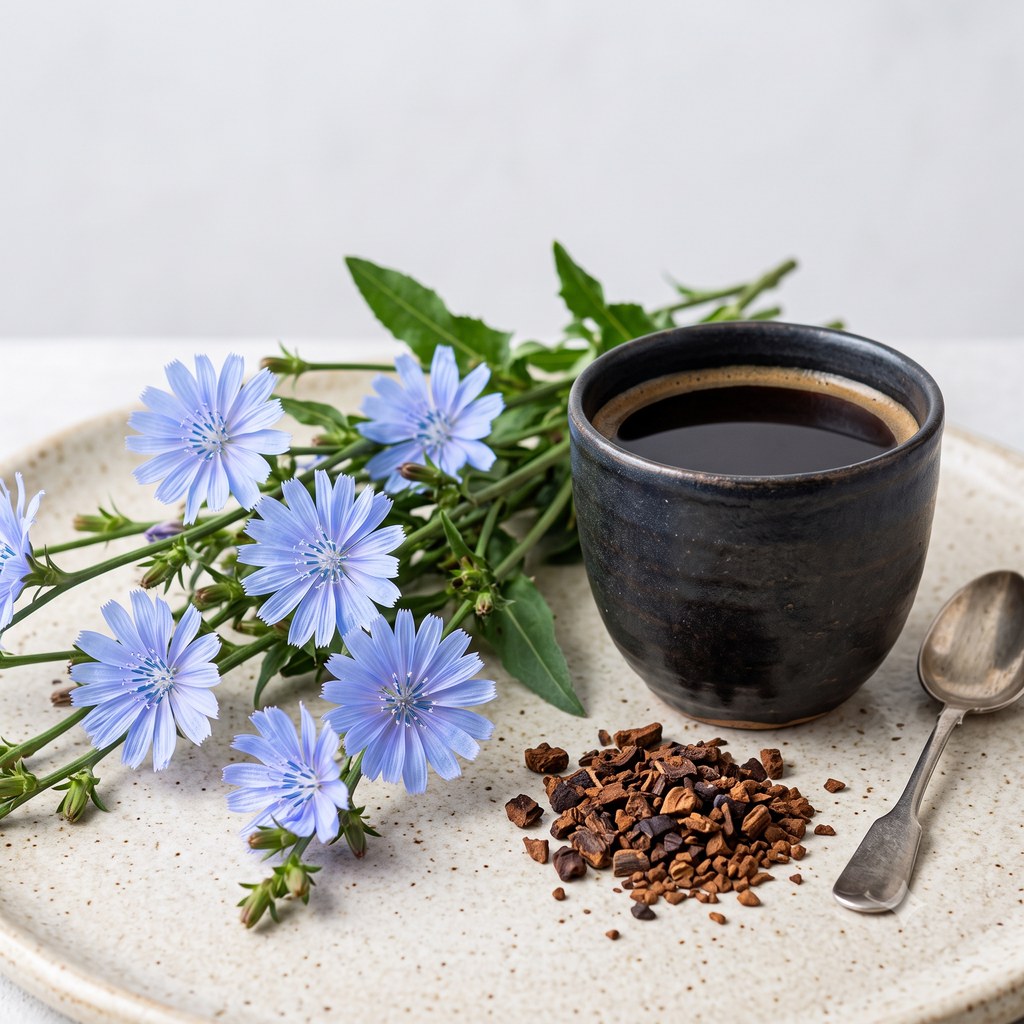
Chicory (Cichorium intybus) is a tough, cheerful roadside perennial with sky-blue flowers and a deep, carrot-like taproot.
🗓️ Last reviewed: July 2026
Overview
Chicory (Cichorium intybus) is a tough, cheerful roadside perennial with sky-blue flowers and a deep, carrot-like taproot. That root is its real treasure: dried and roasted, it becomes a caffeine-free coffee substitute with a deep, slightly bitter, coffee-like flavour that has been used for generations, especially in times and places where coffee was scarce or expensive. It became famous in the coffee traditions of Europe and the American South, where roasted chicory was blended with coffee to stretch it and to add body. The plant is also grown for its leaves, which appear in salads and as bitter greens, and it is closely related to endive and radicchio. For the home grower, chicory is generous and easy - it shrugs off poor soil, returns each year, and gives both a root harvest for a warm roasted brew and leaves for the kitchen, all from a plant that also looks lovely in flower.
Identification & Appearance
Chicory forms a rosette of toothed, dandelion-like leaves in its first stages, then sends up tall, wiry, branching flower stems reaching around 1-1.5 m. The flowers are its signature - clear sky-blue, daisy-like, with squared, fringed petal tips - opening in the morning and often closing by afternoon. Each stem carries many flowers over a long season. Below ground sits a stout, pale, deep-reaching taproot, similar in shape to a parsnip, which is the part roasted for the coffee substitute.
Where It Grows
Native to Europe and western Asia, chicory has naturalised widely across North America and other temperate regions. It is a familiar sight along roadsides, field edges, waste ground, and dry meadows, where its blue flowers stand out in summer. It favours open, sunny positions and copes with poor, dry, and stony soils, making it a hardy survivor in tough conditions.
How to Grow at Home
Chicory is easy from seed sown directly where it is to grow, in spring or early summer, in a sunny open spot. It transplants poorly because of its long taproot, so direct sowing is much better than raising it in modules. For good roots, give it loose, deep, stone-free soil so the taproot can grow long and straight rather than forking, and thin the seedlings to a hand's width apart so each has room to swell. It is a perennial and will return and self-seed, but it is often grown as an annual or biennial when the aim is a clean, single root harvest, since older roots become woody. Keep it weeded while young, then it largely looks after itself. Lift the roots at the end of the first or second growing season, once they are thick and well developed but before they turn tough and fibrous.
Growing Conditions
Light
Full sun - chicory flowers and roots best in an open, bright position.
Watering
Drought-tolerant once established thanks to its deep taproot; water young plants until settled, then leave largely to itself.
Soil & Temperature
Tolerates poor and stony soil, but deep, loose ground gives the best roots. Fully hardy, it dies back in winter and reshoots in spring.
Harvesting & Brewing
Dig the taproots in autumn, once the top growth is fading and the roots are large and fleshy. Lever them out with a fork, taking care not to snap the long root, then wash, scrub, and chop them into small, even pieces so they dry and roast uniformly. Dry them slowly in a low oven or dehydrator until hard, which also makes them easier to roast evenly. To make the coffee substitute, roast the dried root pieces in a dry pan or low oven, stirring often, until they turn dark brown and smell rich and toasted - watch closely near the end, as they move from perfectly roasted to scorched quickly. Let them cool, then grind the roasted root and brew it like coffee, on its own or blended with real coffee to soften the caffeine. The result is dark, malty, and pleasantly bitter, with a rounded, almost chocolatey depth and no caffeine at all. Store the roasted, ground root in a sealed jar and use it fairly fresh for the best flavour. Young leaves can also be picked for salads or lightly cooked as a bitter green, and blanching the crowns produces the pale, milder chicons prized in the kitchen.
Health & Benefits
Chicory root is naturally rich in inulin, a soluble fibre that acts as a prebiotic, feeding beneficial gut bacteria, and it has traditionally been valued for supporting digestion and appetite. The roasted root brew is caffeine-free, which makes it a traditional choice for those cutting down on coffee or avoiding caffeine in the evening, while still enjoying a dark, warming cup. These are traditional and dietary uses rather than proven medical treatments, and chicory is not a substitute for medical care. Because of its high inulin content, some people find that large amounts cause bloating, wind, or digestive upset, so it is worth starting with a modest cup and building up gradually. Anyone pregnant, breastfeeding, or managing a health condition such as gallstones should seek professional advice before using it regularly, and those allergic to other daisy-family plants should introduce it with care.
Common Problems
- Thin or forked roots - caused by shallow, stony, or compacted soil; grow in deep, loose ground for straight roots.
- Scorched roast - roasted root burns easily; roast low and slow and watch the colour.
- Self-seeding spread - deadhead flowers before they set seed if you want to limit it.
- Bitter leaves - the greens are naturally bitter; blanch or pick young for milder flavour.
Pros & Cons
Pros
- Easy, hardy, and tolerant of poor soil.
- Gives both a roasted-root coffee substitute and salad leaves.
- Caffeine-free brew with a rich, coffee-like flavour.
- Beautiful sky-blue flowers loved by pollinators.
Cons
- Roots take a full season or two to size up.
- Roasting takes care to avoid scorching.
- Can self-seed and spread if not managed.
- The brew and leaves are distinctly bitter - not to everyone's taste.
Best Suited For
- Gardeners wanting a caffeine-free, homegrown coffee alternative.
- Those with poor or dry soil looking for an easy, rewarding crop.
- Cooks who also enjoy bitter salad and cooked greens.
Not ideal for shallow, compacted soils or anyone who dislikes bitter flavours.
FAQ
Does chicory coffee contain caffeine? No. Roasted chicory root is completely caffeine-free, which is why it is often used as a coffee substitute or blended with coffee to reduce the caffeine.
Can I use the leaves as well as the root? Yes. Young chicory leaves are eaten raw in salads or lightly cooked as a bitter green, while the root is the part roasted for the brew.
Why is my roasted chicory bitter or burnt? Chicory is naturally bitter, and over-roasting makes it worse and can add a scorched taste. Roast low and slow until the pieces are evenly dark brown, then stop.