Dandelion
The dandelion is the lawn "weed" that turns out to be a generous tea plant.
🗓️ Last reviewed: June 2026
Overview
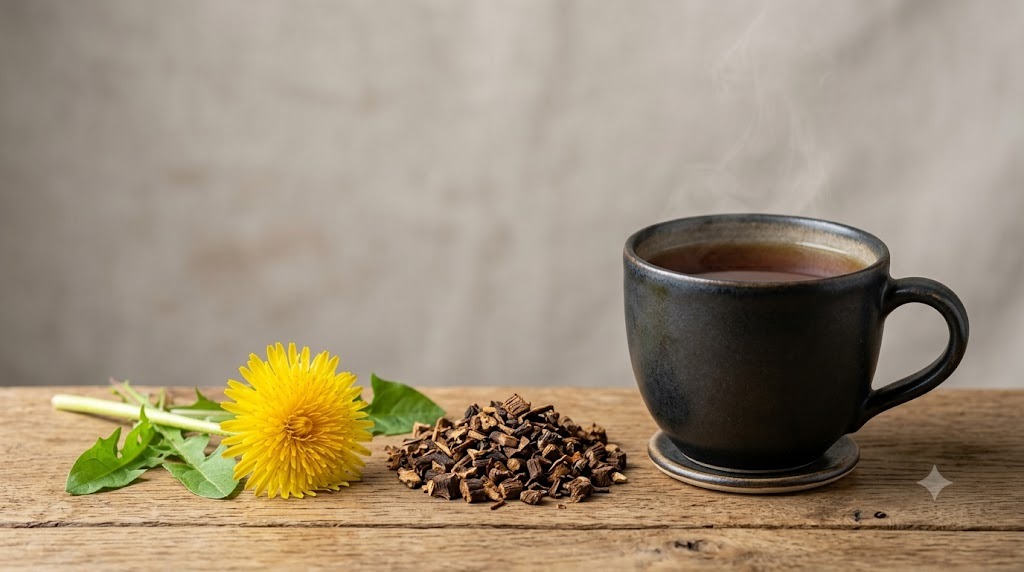
The dandelion is the lawn "weed" that turns out to be a generous tea plant. Its leaves, flowers, and especially its roots are all used: the leaves and flowers make a light infusion, while the roasted root brews a remarkable coffee-like, caffeine-free tea. Free, abundant, and entirely edible, the dandelion rewards anyone willing to look at it differently.
Identification & Appearance
A low perennial with a rosette of jagged, deeply toothed leaves - the name comes from "dent de lion," lion's tooth. Each leafless hollow stalk carries a single bright golden flower head, which closes into the familiar white seed clock. A stout, deep taproot anchors the plant and exudes white latex when cut.
Where It Grows
Native to Eurasia and naturalised across the entire temperate world, the dandelion grows in lawns, meadows, pavements, and waste ground almost everywhere. It is supremely adaptable, tolerating poor soil, drought, mowing, and trampling, and its deep taproot makes it hard to dislodge.
How to Grow at Home
You almost certainly do not need to "grow" dandelions - they arrive on their own. If you want a clean, dedicated supply, sow seed in a corner of good soil and let the plants build strong roots over a season. Otherwise, simply harvest from a clean, unsprayed part of the garden. The taproot deepens with age, giving a bigger root harvest.
Growing Conditions
Light
Full sun to partial shade; dandelions grow almost anywhere.
Watering
Water occasionally in drought for tender leaves; otherwise the deep taproot makes them very self-sufficient.
Soil & Temperature
Any soil, though deep, loose soil grows the best roots. Extremely hardy across temperate climates.
Harvesting & Brewing
Pick young leaves in spring (older leaves turn bitter) and flowers when fully open. For root tea, dig the taproot in autumn, scrub it, chop it, then roast the pieces in a low oven until dark and fragrant. Steep a teaspoon of roasted root in hot water for 10 minutes for a rich, coffee-like brew; leaves and flowers steep for 5 minutes.
Health & Benefits
Dandelion has long been used as a gentle tonic, traditionally to support the liver and digestion and as a mild diuretic - its old country name reflects that effect. The roasted-root tea is caffeine-free and a popular coffee substitute. All parts are nutritious, rich in vitamins and minerals.
Common Problems
- Bitter leaves - harvested too old; pick young spring leaves, or blanch them.
- Weak root tea - root not roasted dark enough; roast until deep brown and aromatic.
- Sprayed lawns - never harvest from areas treated with weedkiller.
Pros & Cons
Pros
- Free and abundant everywhere.
- Roasted root makes a fine coffee substitute.
- Every part of the plant is usable.
Cons
- Leaves turn bitter with age.
- Digging the taproot is hard work.
- Must avoid sprayed ground.
Best Suited For
- Foragers and thrifty gardeners.
- Anyone wanting a caffeine-free coffee-style tea.
- Wild and low-effort gardens.
Not ideal for anyone who wants a tidy lawn, or who has only sprayed ground to harvest from.
FAQ
Does dandelion root tea taste like coffee? Roasted well, it has a genuinely coffee-like roasted, slightly bitter flavour - caffeine-free - which is why it is a popular coffee substitute.
Which part should I use? Roots (roasted) for the richest, coffee-like tea; young leaves and flowers for a lighter infusion.
Is it safe to use lawn dandelions? Only from clean ground that has not been treated with weedkiller or other chemicals.