Echinacea
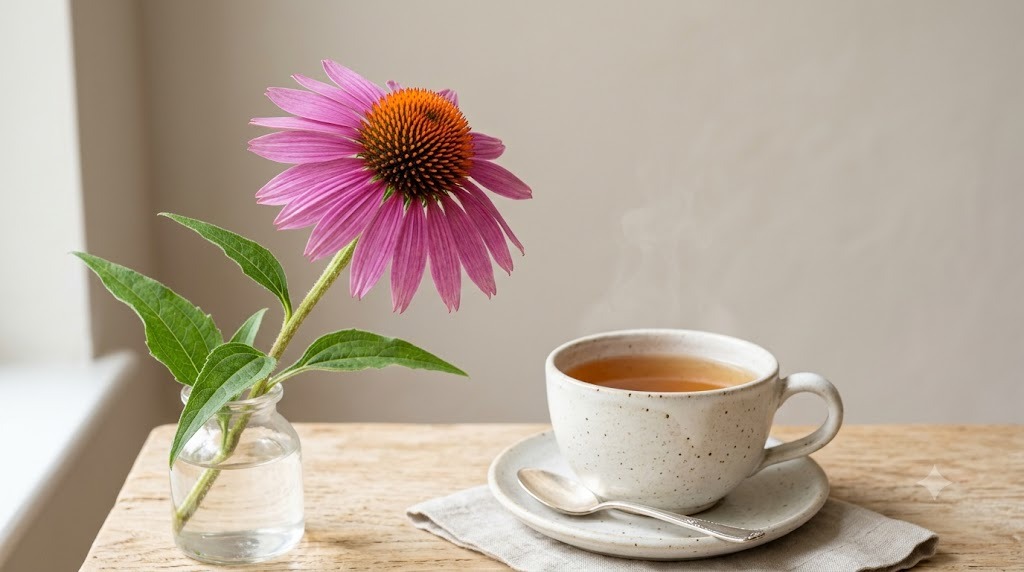
Echinacea, the purple coneflower, is both a striking garden perennial and a renowned medicinal tea plant.
🗓️ Last reviewed: June 2026
Overview
Echinacea, the purple coneflower, is both a striking garden perennial and a renowned medicinal tea plant. Its flowers, leaves, and roots are used to brew an earthy, mildly floral infusion long associated with supporting the immune system through the cold season. It is tough, drought-tolerant, beloved by pollinators, and one of the most ornamental herbs you can grow for tea.
Identification & Appearance
An upright clump-forming perennial 60-120 cm tall, with rough, lance-shaped leaves and bold daisy-like flowers - drooping pink-purple petals around a large, spiky, coppery-orange central cone. The cone is the feature that gives it its name (echinos, Greek for hedgehog). Sturdy stems hold the flowers well above the foliage.
Where It Grows
Native to the prairies and open woodlands of central and eastern North America, echinacea is a plant of well-drained, sunny grassland. It is widely grown in gardens worldwide and tolerates heat, drought, and poor soil once established.
How to Grow at Home
Echinacea grows from seed (which benefits from a cold spell), division, or a nursery plant. Give it full sun and well-drained soil; it dislikes rich, wet ground. It is slow to establish but long-lived and undemanding once settled. Leave some seed heads in autumn for the birds and for self-seeding.
Growing Conditions
Light
Full sun - echinacea flowers best with all-day light.
Watering
Water to establish, then only in prolonged drought; echinacea is drought-tolerant and resents soggy soil.
Soil & Temperature
Well-drained soil of average or poor fertility. A hardy perennial that withstands cold winters well.
Harvesting & Brewing
The flowers and leaves can be picked through summer; the roots are traditionally lifted from plants three or more years old, in autumn. For tea, steep a teaspoon of dried flowers and leaves - or a smaller amount of chopped dried root - in hot water for 10 minutes. The cup is earthy and mild, often blended with mint or lemon balm.
Health & Benefits
Echinacea is one of the most widely used herbal remedies, traditionally taken to support the immune system and shorten the duration of colds. It is caffeine-free. The root is considered the most potent part, though flowers and leaves are gentler and pleasanter for everyday tea.
Common Problems
- No flowers in year one - echinacea is slow to establish; be patient into its second year.
- Rotting crown - soil too wet; improve drainage.
- Floppy stems - too much shade or rich soil; give it sun and lean ground.
Pros & Cons
Pros
- Beautiful, long-flowering garden plant.
- Drought-tolerant and long-lived.
- Renowned immune-support herb.
Cons
- Slow to establish from seed.
- Root harvest means sacrificing a mature plant.
- Earthy flavour - many prefer it blended.
Best Suited For
- Gardeners wanting beauty and a useful tea in one plant.
- Sunny, well-drained borders and prairie-style plantings.
- Anyone keen on a traditional cold-season herb.
Not ideal for wet, shady gardens or those wanting a quick harvest.
FAQ
Which part do I use for tea? Flowers and leaves make a pleasant everyday tea; the root is stronger and traditionally favoured for medicinal use, but harvesting it means digging up a mature plant.
How long before I can harvest the root? Wait until a plant is at least three years old, so it has built a worthwhile root system. Harvest in autumn.
Does echinacea tea taste good? It is earthy and mild rather than delicious on its own - most people blend it with mint, lemon balm, or honey.