Fennel
Fennel is a tall, feathery herb whose seeds - and to a lesser extent leaves - brew into a sweet, aniseed-scented tea long valued for soothing the digestion.
🗓️ Last reviewed: June 2026
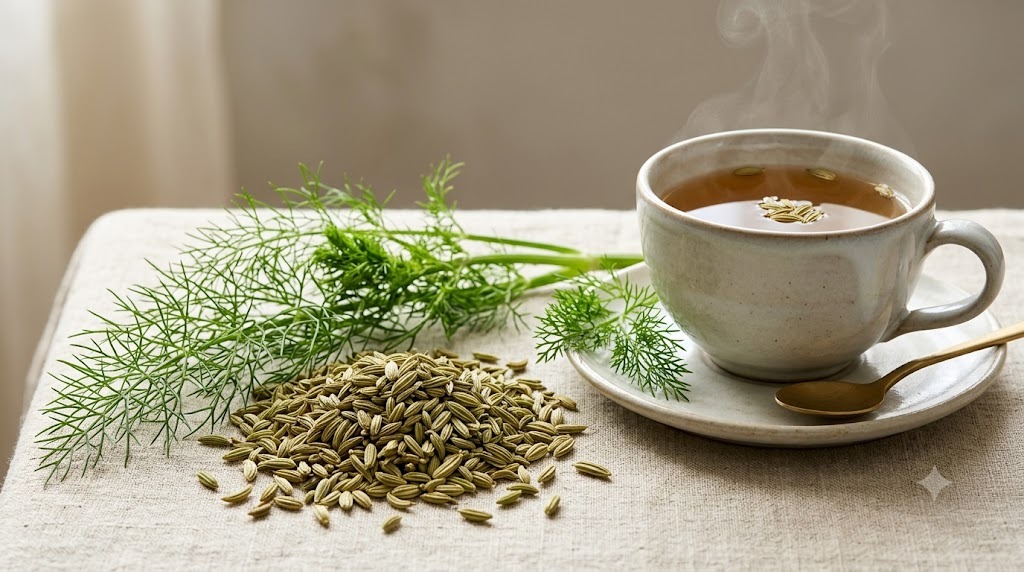
Overview
Fennel is a tall, feathery herb whose seeds - and to a lesser extent leaves - brew into a sweet, aniseed-scented tea long valued for soothing the digestion. Fennel tea is the classic after-dinner cup, gently warming and naturally sweet without sugar. The plant itself is statuesque and beautiful, with a haze of golden flowers loved by beneficial insects.
Identification & Appearance
A tall perennial herb, 1.5-2 metres in flower, with very fine, thread-like, bright green or bronze foliage and hollow ridged stems. Flat umbels of tiny yellow flowers appear in summer, ripening into ribbed, aromatic seeds. The whole plant smells strongly of aniseed. Bronze fennel is an especially ornamental form.
Where It Grows
Native to the Mediterranean, fennel has naturalised across temperate and warm regions worldwide, often on roadsides and dry, sunny ground. It thrives in well-drained soil and full sun and is drought-tolerant once established.
How to Grow at Home
Sow fennel seed directly where it is to grow, as it dislikes root disturbance, in spring in a sunny, well-drained spot. It is easy and long-lived. Note that this is herb fennel, grown for seed and leaf - not the swollen-bulb Florence fennel. Leave the plant to flower and set seed for tea.
Growing Conditions
Light
Full sun - fennel needs strong light to grow tall and flower well.
Watering
Water young plants to establish, then water sparingly; fennel is drought-tolerant.
Soil & Temperature
Well-drained soil of average fertility. A hardy perennial in most temperate climates.
Harvesting & Brewing
Pick the feathery leaves any time for a mild tea. For the prized seed, let the flower umbels ripen until the seeds turn from green to grey-brown, then cut the heads and dry them, rubbing the seeds free. For tea, lightly crush a teaspoon of seeds and steep in hot water for 8-10 minutes. The cup is sweet and aniseed-fragrant.
Health & Benefits
Fennel tea is a long-standing remedy for bloating, indigestion, and trapped wind, and is gentle enough to be a favourite after-meal drink. Its aromatic oils, mainly anethole, give both the sweet flavour and the soothing effect. It is caffeine-free.
Common Problems
- Seeds not ripening - season too short or plant too shaded; give it sun and time.
- Self-seeding everywhere - fennel seeds prolifically; cut heads before they scatter.
- Do not plant near dill - they cross-pollinate and can produce muddled seed.
Pros & Cons
Pros
- Sweet, soothing, well-loved digestive tea.
- Easy, hardy, drought-tolerant.
- Beautiful, pollinator-friendly plant.
Cons
- Self-seeds aggressively if not controlled.
- Needs a decent season to ripen seed.
- Tall - needs space and can need staking.
Best Suited For
- Anyone wanting a gentle after-dinner tea.
- Sunny, well-drained borders with room to spare.
- Pollinator-friendly and ornamental herb gardens.
Not ideal for small, cramped beds or gardeners who dislike self-seeding.
FAQ
Leaves or seeds for fennel tea? The seeds make the classic sweet, aniseed digestive tea. The feathery leaves give a milder, lighter infusion.
Is this the same as the fennel bulb I buy? No - that is Florence fennel, grown for its swollen base. Herb fennel is grown for leaf and seed and does not form a bulb.
How do I know when the seeds are ready? Wait until the seeds on the umbels turn from green to grey-brown and feel dry, then cut and finish drying the heads.