Feverfew
Feverfew (Tanacetum parthenium) is a cheerful, daisy-flowered herb with a long folk history, its very name - from "febrifuge," a fever-reducer - a reminder of its traditional reputation.
🗓️ Last reviewed: July 2026
Overview
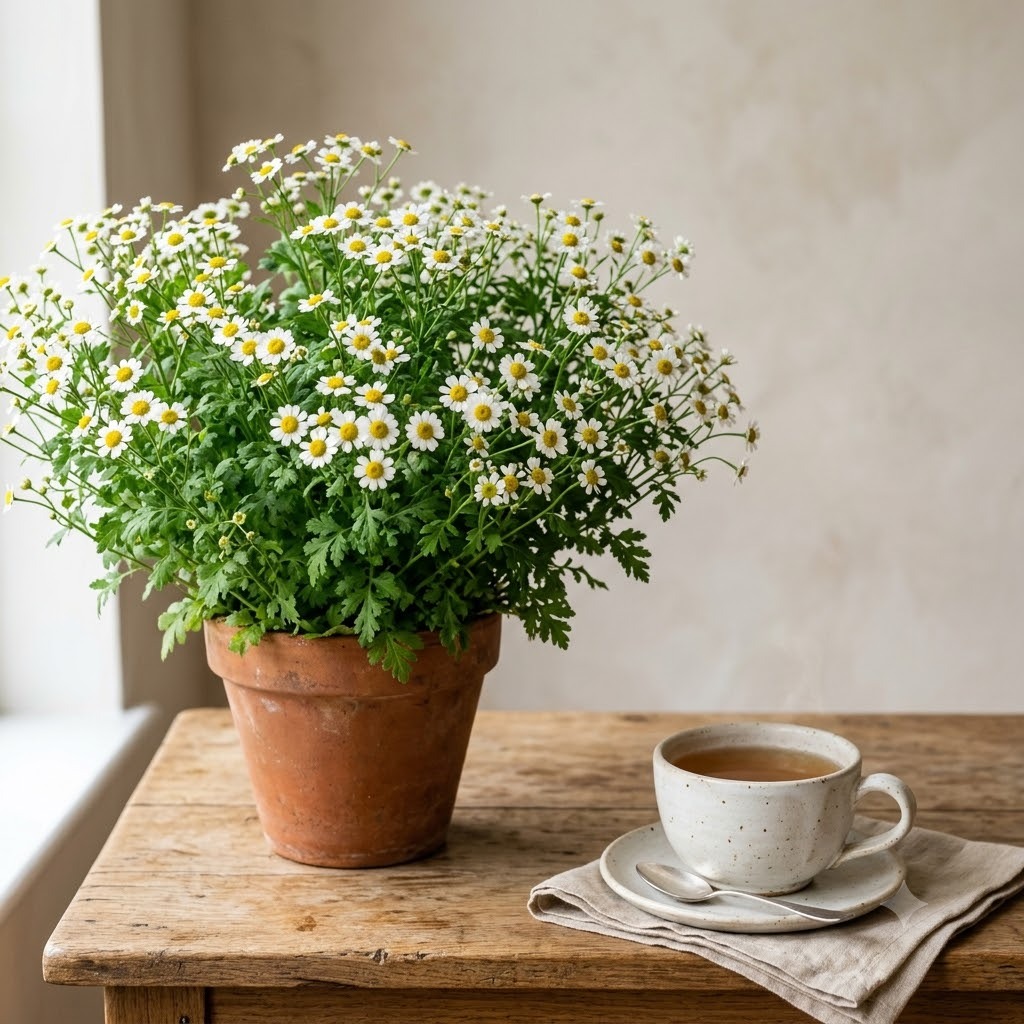
Feverfew (Tanacetum parthenium) is a cheerful, daisy-flowered herb with a long folk history, its very name - from "febrifuge," a fever-reducer - a reminder of its traditional reputation. Small white flowers with sunny yellow centres cover a bushy, aromatic plant that fills gaps in the border and self-seeds happily once established. Its finely divided leaves have a bitter, distinctly pungent taste and smell, and it is the leaf that carries feverfew's traditional herbal use - most famously in connection with headaches and migraine. It is an easy, forgiving plant to grow, cheerful in a cottage garden and loved by pollinators, but its strong bitterness and a few important cautions mean it is used thoughtfully rather than casually. This is a herb worth knowing well before you brew it, and one that rewards a light hand.
Identification & Appearance
Feverfew is a short-lived perennial, often grown as an annual or biennial, forming a rounded, bushy plant around 30-60 cm tall. Its leaves are yellow-green, soft, and deeply divided into rounded lobes, releasing a strong, slightly bitter, camphor-like scent when crushed. From summer onwards it produces masses of small daisy-like flowers, each with a ring of short white petals around a flat yellow disc, carried in loose clusters. The overall effect is of a neat, leafy bush smothered in little white daisies.
Where It Grows
Native to southeastern Europe and the Balkans and to parts of Asia Minor, feverfew has spread and naturalised across Europe, the Americas, and beyond. It is often found on waste ground, walls, roadsides, and old gardens, favouring sunny, well-drained sites. It is undemanding and copes well with dry, poor soils, which is part of why it establishes so readily and reappears year after year from self-sown seed.
How to Grow at Home
Feverfew is one of the easiest herbs to grow, and a good gateway plant for beginners. Sow the tiny seeds on the surface in spring - they need light to germinate, so do not cover them - or simply let an existing plant self-seed, which it does enthusiastically. Seedlings transplant well while small, so you can move volunteers to where you want them. It thrives in a sunny, free-draining spot and asks for very little in the way of feeding or watering. From an early sowing it usually flowers in its first year, and it returns readily thereafter, either as short-lived perennial clumps or from self-sown seedlings. Because it seeds so freely, it can pop up all over the garden; regular deadheading keeps it firmly in check, and a golden-leaved form is often grown as an ornamental. Give it good drainage and full sun, cut it back after its main flush to keep it tidy, and it will essentially look after itself.
Growing Conditions
Light
Full sun brings the best flowering and the most compact, healthy growth; it tolerates a little light shade.
Watering
Drought-tolerant once established; water young plants until settled, then only in prolonged dry spells. It much prefers to be on the dry side than sitting wet, which quickly causes rot.
Soil & Temperature
Prefers well-drained, even poor soil; dislikes heavy, wet ground. Hardy in cold winters, though individual plants are short-lived and renewed by self-seeding.
Harvesting & Brewing
Pick leaves and flowers through the growing season, ideally around flowering when the plant is at its most aromatic and its traditional constituents are thought to be at their strongest. Gather on a dry day and dry the material in a warm, airy place out of direct sun, then store it in a sealed jar. Feverfew leaf is intensely bitter and pungent, so a little goes a long way - far less than you would use of a mild herb. To brew, steep only a small amount of dried leaf and flower in hot water for a few minutes, then strain well; it is almost always combined with milder, sweeter herbs such as mint or a little honey to soften the sharp, penetrating taste. Chewing fresh leaves is a well-known traditional practice, but the raw leaf can cause mouth irritation or ulcers in some people, so brewing as a tea, well diluted, is the gentler option and easier on the mouth.
Health & Benefits
Feverfew has a long traditional reputation, particularly for the prevention of headaches and migraine, for which it has been one of the best-known folk remedies for centuries, and it has also been used historically for feverish and inflammatory complaints - the very source of its old name. These are traditional and folk uses, not proven medical treatments, and feverfew tea is not a substitute for medical care; if you suffer frequent or severe headaches, see a professional rather than relying on a herb. Several important cautions apply: it should be avoided during pregnancy and breastfeeding, and people allergic to daisy-family plants (such as ragweed or chamomile) may react to it. Fresh leaves can cause mouth irritation or ulcers in some people. Anyone taking medication or managing a health condition should seek professional advice before using it regularly.
Common Problems
- Overly bitter tea - use only a small amount and blend with sweeter herbs.
- Self-seeds everywhere - deadhead before seeds set if you want to control its spread.
- Leggy, sparse growth - usually too much shade; move to full sun for a compact, floriferous plant.
- Mouth irritation from fresh leaves - a known effect of chewing raw feverfew; brewing as tea is gentler.
Pros & Cons
Pros
- Very easy to grow and self-seeds reliably.
- Long season of pretty white daisy flowers.
- Aromatic, tolerant of poor, dry soil.
- Compact and useful for filling border gaps.
Cons
- Strongly bitter - not a pleasant tea on its own.
- Must be avoided in pregnancy and breastfeeding.
- Can trigger reactions in those allergic to daisy-family plants.
- Fresh leaves may irritate the mouth; self-seeds aggressively.
Best Suited For
- Easy-going gardeners who like a low-effort, self-renewing herb.
- Sunny, free-draining borders and cottage-garden styles.
- Herb enthusiasts interested in feverfew's traditional uses, used with care.
Not ideal for anyone pregnant or breastfeeding, those with daisy-family allergies, or gardeners wanting a mild, sweet tea.
FAQ
Why is feverfew tea so bitter? The leaves are naturally very bitter and pungent. Use only a small amount and blend it with milder, sweeter herbs to make it more palatable.
Is feverfew safe for everyone? No. It should be avoided in pregnancy and breastfeeding, and people allergic to daisy-family plants such as ragweed or chamomile may react to it. Fresh leaves can also irritate the mouth. Check with a professional if you are unsure.
Will feverfew come back every year? Individual plants are short-lived, but feverfew self-seeds so freely that it usually reappears reliably from year to year unless you deadhead it to keep it in check.