Ginger
Ginger is grown not for leaves but for its knobbly underground rhizome - the warming, spicy root that makes one of the most popular teas in the world.
🗓️ Last reviewed: June 2026
Overview
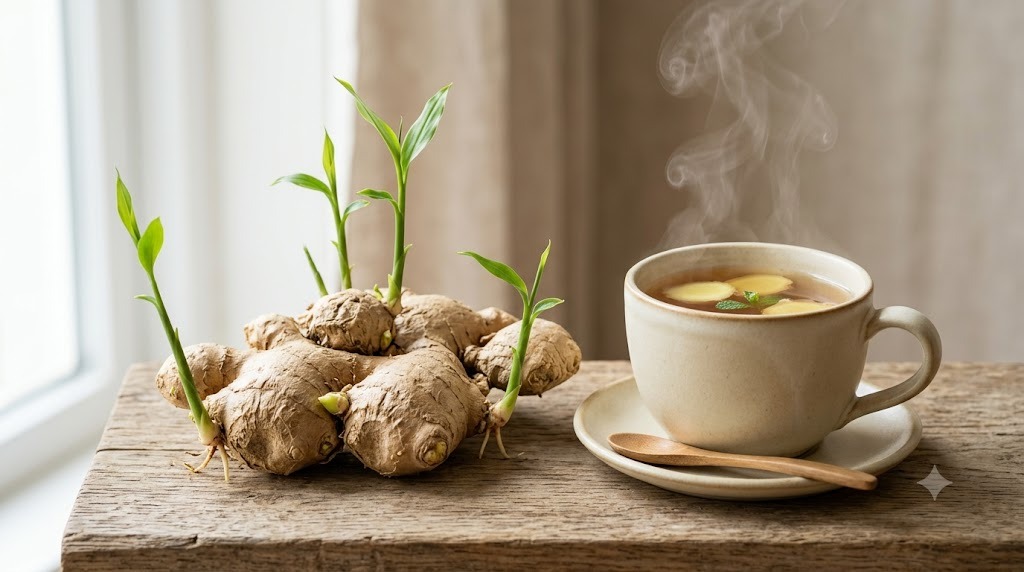
Ginger is grown not for leaves but for its knobbly underground rhizome - the warming, spicy root that makes one of the most popular teas in the world. Fresh ginger tea is hot, pungent, and reviving, a classic remedy for cold mornings, nausea, and sore throats. Best of all, you can grow it from a piece of supermarket ginger on a warm windowsill.
Identification & Appearance
A tropical perennial with upright, reed-like stems 60-120 cm tall, clothed in narrow, glossy, lance-shaped leaves. The edible part is the rhizome - a branching, beige, fibrous root with a fragrant, spicy yellow interior. It rarely flowers in cultivation outside the tropics.
Where It Grows
Native to tropical Asia, ginger has been cultivated for thousands of years and is now grown throughout the tropics. It needs warmth, humidity, and rich, moist soil, growing in the dappled light of forest edges and plantations rather than in baking sun.
How to Grow at Home
Choose a plump piece of fresh ginger with visible growth buds ("eyes"). Plant it just below the surface of a wide pot of rich, moist soil, eyes upward, and keep it warm. Shoots appear in a few weeks. Grow it through the warm season; when the leaves yellow and die back, the rhizome is ready to harvest.
Growing Conditions
Light
Bright, indirect light or part shade; ginger dislikes harsh, direct midday sun.
Watering
Keep the soil consistently moist during growth, then reduce watering as the foliage dies back.
Soil & Temperature
Rich, loose, moisture-retentive soil. Warmth-loving - keep above 15°C; grow indoors in cool climates.
Harvesting & Brewing
For tea you can take a little "young ginger" any time by digging gently at the edge of the clump, or lift the whole rhizome once the leaves die back. For tea, slice or grate a thumb-sized piece of fresh ginger, simmer in water for 10 minutes, and sweeten with honey and lemon if you like. It is hot, spicy, and warming.
Health & Benefits
Ginger tea is a celebrated remedy for nausea, motion sickness, and digestive upset, and is soothing for colds and sore throats. Its warmth comes from gingerol, a compound with anti-inflammatory and antioxidant properties. It is caffeine-free and intensely reviving.
Common Problems
- No shoots - too cold, or the piece had no live buds; use plump ginger with eyes and keep it warm.
- Rotting rhizome - soil too wet and cold; ease off watering and warm it up.
- Slow growth - ginger is simply slow; it needs a long warm season.
Pros & Cons
Pros
- Grows from a supermarket root.
- Warming, powerful, well-loved tea.
- Famous remedy for nausea and colds.
Cons
- Slow - needs a long warm season.
- Frost-tender; needs warmth throughout.
- Modest yield from a small pot.
Best Suited For
- Anyone who loves hot, spicy ginger tea.
- Warm windowsills and conservatories.
- Gardeners wanting an easy, fun project from kitchen scraps.
Not ideal for cold rooms or those wanting a fast harvest.
FAQ
Can I grow ginger from the supermarket? Yes - pick a plump piece with visible growth buds. Organic ginger is best, as some is treated to suppress sprouting.
How long until I can harvest? Young ginger can be taken after a few months; a full rhizome harvest comes when the leaves yellow and die back, often 8-10 months.
Do I use the root or the leaves for tea? The rhizome - the root. Slice or grate it and simmer it for a hot, spicy cup.