Lemongrass
Lemongrass is a tall tropical grass whose stems and leaves carry a clean, bright citrus aroma, brewing into a light, refreshing, lemon-fresh tea popular across Southeast Asia.
🗓️ Last reviewed: June 2026
Overview
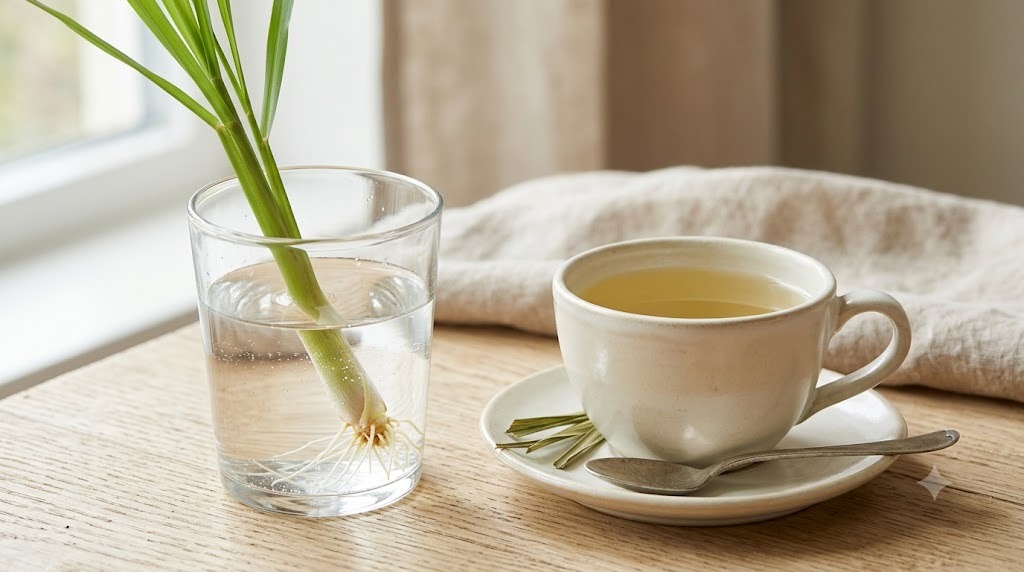
Lemongrass is a tall tropical grass whose stems and leaves carry a clean, bright citrus aroma, brewing into a light, refreshing, lemon-fresh tea popular across Southeast Asia. It is fast-growing, dramatic in a pot, and one of the easiest tea plants to propagate - a single supermarket stalk in a glass of water will often root and become a whole clump.
Identification & Appearance
A clump-forming perennial grass reaching 1-1.5 metres, with arching, strap-like blue-green leaves and a cluster of thick, pale, bulbous stem bases. The leaf edges are sharp enough to nick skin. The whole plant smells strongly of lemon when brushed or cut. It rarely flowers in cool climates.
Where It Grows
Native to tropical Asia, lemongrass is cultivated throughout the tropics for cooking and tea. It thrives in heat, humidity, and full sun, and grows fast in a long warm season. In cooler climates it is grown as a container plant and brought indoors before frost.
How to Grow at Home
The easiest start is to root a fresh stalk: stand it in water until roots appear, then pot it up. Give it a large pot of rich soil, full sun, and plenty of water. It grows quickly into a fountain of leaves. In cold climates, move the pot indoors before the first frost, as lemongrass is not frost-hardy.
Growing Conditions
Light
Full sun - lemongrass needs strong light and warmth to grow lush.
Watering
Water generously and often; lemongrass is thirsty and likes consistently moist soil.
Soil & Temperature
Rich, moisture-retentive soil. Frost-tender - keep above about 5°C and overwinter indoors in cool climates.
Harvesting & Brewing
Both the leaves and the tender stem bases are used for tea. Snip leaves any time, or cut a whole stem at the base. Leaves can be used fresh or dried. For tea, steep a few chopped leaves or a bruised stem in hot water for 5-8 minutes. The cup is pale, clean, and brightly lemony, lovely hot or iced.
Health & Benefits
Lemongrass tea is caffeine-free and traditionally enjoyed for digestion and as a refreshing, calming drink. It is rich in citral, the aromatic compound behind its lemon scent, which has antioxidant properties. Its light, clean flavour makes it an easy everyday cup.
Common Problems
- Brown leaf tips - usually dryness; keep the soil moist and humidity up.
- Slow or stalled growth - too cold; lemongrass needs real warmth to grow.
- Sharp leaf edges - handle with care; the blades can cut skin.
Pros & Cons
Pros
- Extremely easy to propagate from a stalk.
- Fast-growing and lush.
- Bright, clean citrus flavour; doubles as a kitchen herb.
Cons
- Frost-tender - needs overwintering indoors.
- Thirsty; dislikes drying out.
- Leaf edges are sharp.
Best Suited For
- Beginners wanting quick, easy results.
- Container growers who can shelter it in winter.
- Cooks who use lemongrass in the kitchen.
Not ideal for cold gardens with no frost-free indoor space.
FAQ
Can I really grow it from a supermarket stalk? Yes - stand a fresh, firm stalk in a glass of water, change the water regularly, and it usually roots within a couple of weeks. Then pot it up.
Leaves or stems for tea? Both work. The leaves are easiest to harvest regularly; a bruised stem base gives a slightly fuller flavour.
Will it survive winter outdoors? Only in frost-free climates. Elsewhere, bring the pot indoors to a bright spot before the first frost.