Marshmallow
Marshmallow (Althaea officinalis) is a tall, soft-stemmed perennial of the mallow family, prized for centuries for its remarkably slippery, soothing quality.
🗓️ Last reviewed: July 2026
Overview
Marshmallow (Althaea officinalis) is a tall, soft-stemmed perennial of the mallow family, prized for centuries for its remarkably slippery, soothing quality. Nearly every part is useful - the thick root, the velvety leaves, and the pale flowers - but it is the root that holds the most mucilage, a gel-like substance that gives marshmallow tea its silky, coating feel. It is an easy, handsome plant for a moist corner of the garden, and it gives you a genuine harvest for a gentle, traditional herbal brew. The plant has been cultivated and gathered since ancient times, valued by herbalists across Europe and the Middle East, and it remains one of the classic soothing herbs in the tea cupboard. And yes, the old confectionery marshmallow really was once made from the mucilage of its root, whipped with sugar - though today's sweets are made from gelatin and contain none of the plant at all.
Identification & Appearance
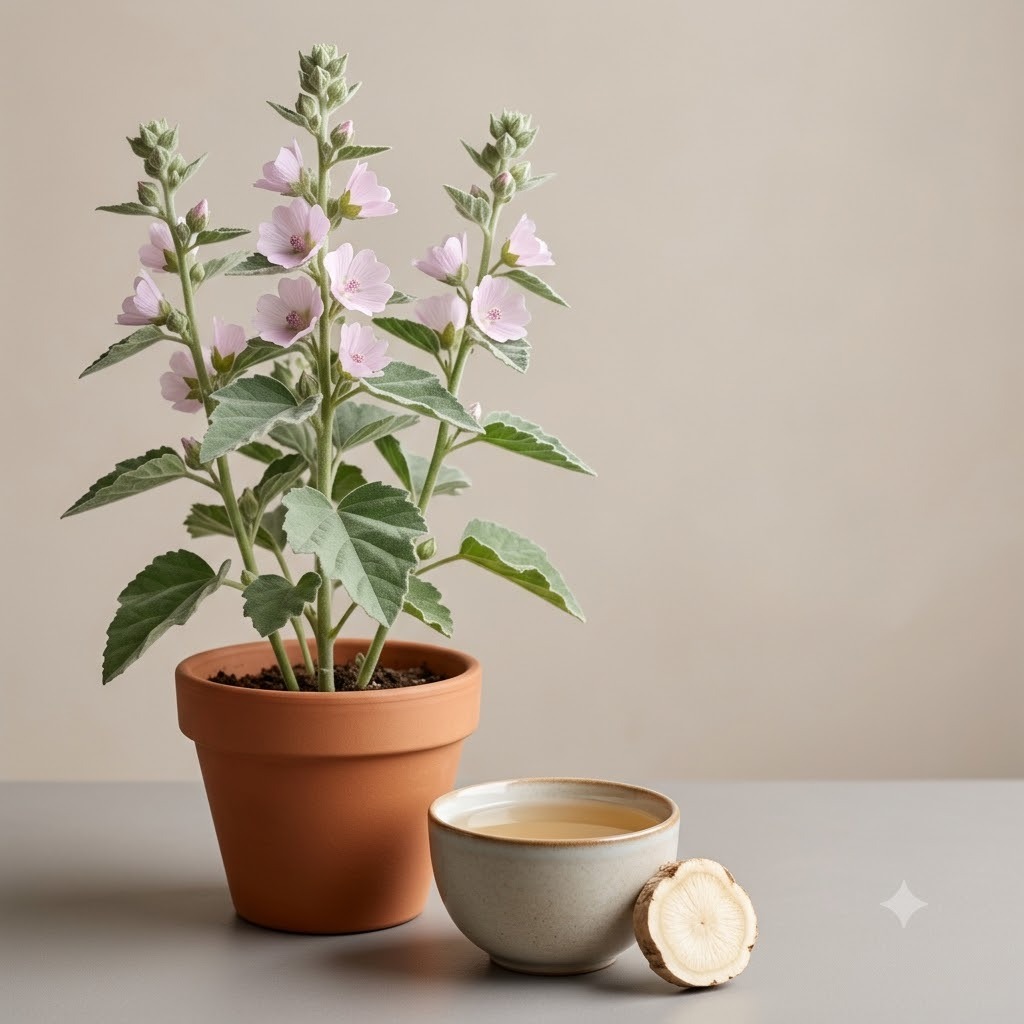
A stately perennial reaching 1.2-2 m tall, marshmallow has an upright, slightly branching habit. The whole plant feels soft and downy - leaves and stems are covered in fine grey-green velvety hairs. Leaves are broad, roughly heart-shaped to lobed, with toothed edges. From mid to late summer it carries pale pink to whitish five-petalled flowers, typical of the mallow family, clustered in the leaf joints. The root is long, tapering, pale cream to white inside, and distinctly fleshy and sticky when cut.
Where It Grows
Marshmallow is native to Europe, western Asia, and North Africa, and has naturalised in parts of North America. Its name gives away its habitat: it favours damp, marshy ground - salt marshes, riverbanks, ditches, and coastal meadows. It thrives where soil stays moist and where many drier-loving herbs would fail, tolerating a little salt and seasonal wetness.
How to Grow at Home
Marshmallow is straightforward to grow from seed or division. Sow seed in autumn or spring - a period of cold helps germination, so autumn sowing outdoors, or a spell of chilling in the fridge before spring sowing, often works well. It can be slow to start and germination is sometimes patchy, but the plant is reliably perennial once settled and will more than repay the initial wait. Give it a moist, sunny spot with room to reach its full height, ideally near the back of a border or beside a pond or damp ditch where its tall stems will not shade smaller plants. It returns each year from the crown, growing a little larger and clumping up over time. Divide established clumps in early spring, or take root cuttings, to make new plants and to keep older clumps vigorous. If your main aim is a strong root harvest, grow plants on for two to three years before digging, and keep them well fed and watered so the roots bulk up. In a container it will grow, but it resents drying out, so a large pot and frequent watering are essential.
Growing Conditions
Light
Full sun is ideal, though it tolerates light partial shade.
Watering
Keep the soil consistently moist - marshmallow dislikes drying out and is one of the few herbs happy in damp, even boggy ground.
Soil & Temperature
It prefers rich, moisture-retentive soil and copes with heavy or slightly saline ground. Fully hardy in cold-winter climates, it dies back in autumn and reshoots from the roots in spring.
Harvesting & Brewing
Roots are lifted in autumn of the second or third year, once the top growth has died back and the roots are thick enough to be worthwhile. Dig carefully with a fork to avoid snapping the long taproot, then wash, peel, and slice or chop them into small, even pieces so they dry evenly. Spread them out in a warm, airy place, or use a low oven or dehydrator, until they are hard and snap cleanly; properly dried root stores for a long time in a sealed jar. Leaves and flowers can be gathered through summer and dried the same way for a gentler brew.
The key to marshmallow tea is temperature. The soothing mucilage that gives the tea its value breaks down in boiling water, so the root is best made as a cold-water infusion: steep a tablespoon of dried root in a cup of cold or lukewarm water for several hours or overnight, stirring once or twice, then strain out the pieces. The result is a slightly viscous, near-flavourless brew with a distinctly smooth, coating texture - people drink it for the feel rather than the flavour, and a little honey or a milder herb can be added to taste. Leaf and flower tea, being less mucilage-rich, can be brewed conventionally with hot water for a lighter, more everyday cup.
Health & Benefits
Marshmallow has been traditionally used as a demulcent - a soothing herb - thanks to its high mucilage content, which coats and soothes irritated surfaces. Folk and herbal traditions have long used marshmallow root and leaf tea for dry, tickly coughs and sore throats, and for general digestive soothing, valuing it as one of the gentlest herbs available. Its mildness is part of its appeal: it has no strong flavour, no caffeine, and a soft, comforting character. These are traditional uses, however, not proven medical treatments, and marshmallow tea is not a substitute for medical care. Because the mucilage can slow the absorption of medicines taken at the same time, it is sensible to take it well apart from other medications - an hour or more either side is a common precaution. Anyone pregnant, breastfeeding, diabetic, or managing a health condition should check with a professional before using it regularly, and as with any new herb it is wise to start with a modest amount.
Common Problems
- Root too thin to harvest - the plant needs two to three years of growth before roots are worth lifting.
- Wilting in dry spells - marshmallow hates drought; mulch and water in hot, dry weather.
- Rust or leaf spots - like other mallows it can catch fungal leaf diseases; remove affected leaves and improve airflow.
- Slow germination - seed benefits from a cold spell; be patient with autumn-sown batches.
Pros & Cons
Pros
- Thrives in damp spots where many herbs struggle.
- Handsome, tall, soft-textured perennial with pretty flowers.
- Root, leaf, and flower are all usable.
- Reliably perennial and low-maintenance once established.
Cons
- Roots take two to three years before a real harvest.
- Needs consistently moist soil.
- Root tea is nearly flavourless - valued for texture, not taste.
- Can grow tall and may need space or support.
Best Suited For
- Gardeners with a moist or damp corner to fill.
- Herbal-tea enthusiasts interested in soothing, demulcent brews.
- Patient growers happy to wait for a root harvest.
Not ideal for dry gardens or anyone wanting a strongly flavoured tea.
FAQ
Is this the plant that marshmallow sweets are named after? Yes - the original confection was made from the mucilage of marshmallow root. Modern marshmallows are made from gelatin and sugar and contain no actual marshmallow plant.
Why brew the root in cold water instead of hot? The soothing mucilage is best preserved in cold or lukewarm water. Boiling water breaks it down and reduces the silky, coating quality that makes the tea worthwhile.
Can I use the leaves and flowers too? Yes. Leaves and flowers also contain mucilage, though less than the root, and make a gentler tea that can be brewed with hot water in the usual way.