Meadowsweet
Meadowsweet (Filipendula ulmaria) is a tall, graceful perennial of damp meadows and streamsides, crowned in midsummer by frothy clusters of tiny cream flowers that smell of almond and wintergreen.
🗓️ Last reviewed: July 2026
Overview
Meadowsweet (Filipendula ulmaria) is a tall, graceful perennial of damp meadows and streamsides, crowned in midsummer by frothy clusters of tiny cream flowers that smell of almond and wintergreen. It has been gathered for centuries to flavour drinks and to make a gentle, honeyed herbal tea, and it was once strewn on floors of homes and halls for its sweet scent, earning old country names like "queen of the meadow" and "meadwort." Easy to grow where the ground stays moist, it rewards you with a cloud of fragrant bloom in high summer and a supply of leaves and flowers for the teapot. It is a hardy, undemanding plant that thrives in the sort of wet corner where little else looks happy, and its airy flower heads draw bees and hoverflies, making it as useful to the garden as it is to the cup.
Identification & Appearance
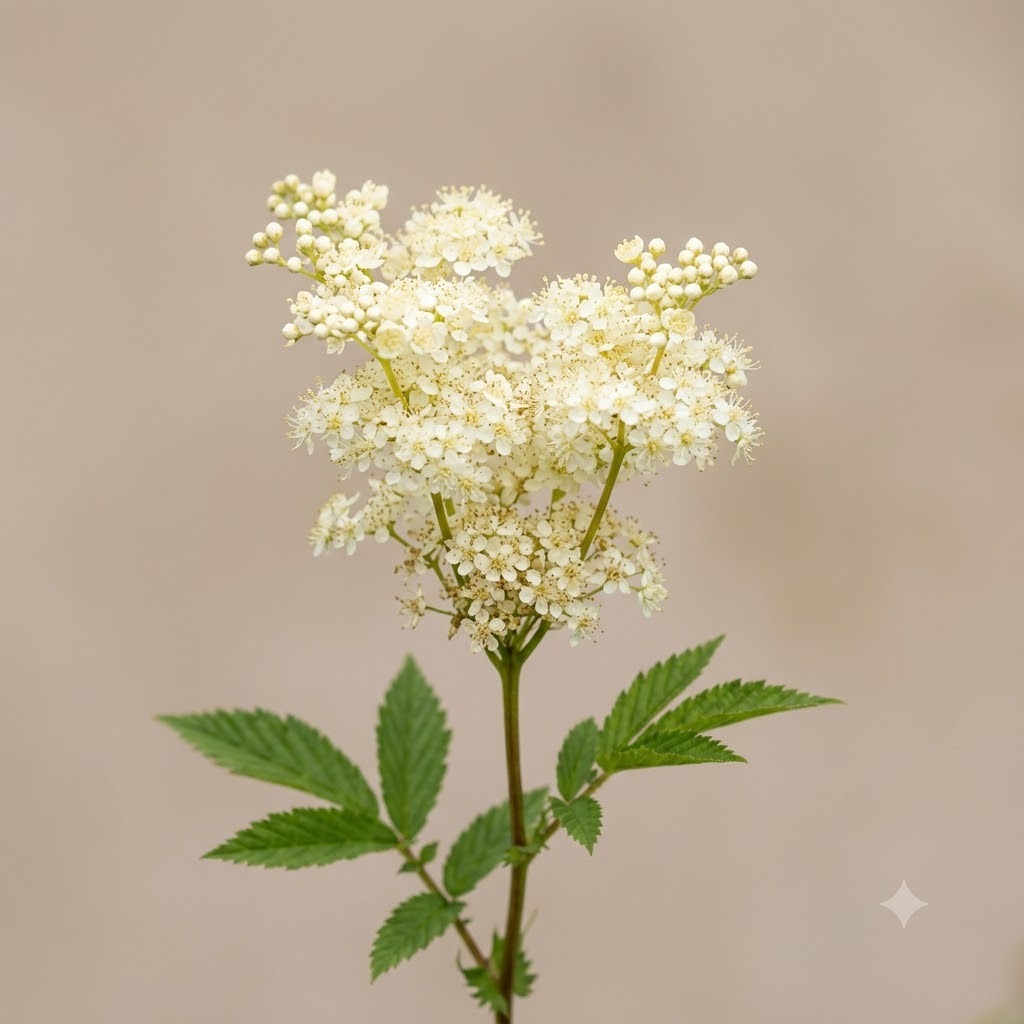
An upright perennial reaching 1 to 1.5 metres, with reddish, wiry stems. The leaves are dark green above and often pale, downy grey beneath, divided into several toothed leaflets along the stalk. In midsummer the plant carries dense, foamy sprays of small five-petalled cream flowers held above the foliage. The whole plant, and especially the crushed leaves and flowers, gives off a distinctive sweet almond-and-wintergreen scent that makes meadowsweet easy to confirm once you know it.
Where It Grows
Meadowsweet is native across Europe and much of western Asia, and is naturalised in parts of North America. It favours damp ground - wet meadows, ditches, riverbanks, marshy field edges, and the margins of ponds. It thrives in the kind of moist, fertile soil that stays reliably wet through the growing season, and is often found in bright, open, low-lying spots.
How to Grow at Home
Meadowsweet is simple to grow from seed sown in autumn, which benefits from the cold of winter to break dormancy, or more quickly from division of an established clump in spring or autumn. Give it a spot that never dries out - a boggy border, a pond edge, a ditch, or a large container stood in a saucer of water so the roots stay damp. Set young plants around 30 to 40 cm apart and they will knit together into a handsome clump. It settles quickly, comes back reliably each year, and needs little attention beyond moisture. Cut the old stems back to the ground in late autumn once they have died down, and lift and divide congested clumps every few years to keep them vigorous. The main task is keeping it wet; in a dry summer it will flag and the leaf edges may brown if the roots go thirsty, so mulch generously to lock in moisture.
Growing Conditions
Light
Full sun to partial shade. It flowers most freely in an open, sunny position but tolerates light dappled shade, which can help in hot climates.
Watering
Keep the soil constantly moist to wet - this is a plant of damp ground and it will not thrive if allowed to dry out. Water generously in dry spells, or grow it where the ground stays naturally wet.
Soil & Temperature
Prefers moist, fertile, neutral to slightly alkaline soil, and is happy in heavy, damp clay. Fully hardy in cold-winter climates, dying back in autumn and reshooting in spring.
Harvesting & Brewing
Gather the flowers when they first open in summer, on a dry morning after the dew has lifted, snipping the frothy heads at their peak; young leaves can be picked through the growing season for a greener, more astringent brew. Dry them in a warm, airy, shaded place, spread thinly on racks or paper until crisp, then store in an airtight jar out of the light, where they keep their scent for many months. To brew, steep a teaspoon of the dried flowers or leaves in a cup of just-off-the-boil water for around five minutes, then strain. The result is a pale, delicately sweet, almond-scented tea, best enjoyed plain or with a little honey. The flowers were also traditionally used to flavour mead, cordials, wine, and stewed fruit, and a few fresh heads dropped into a jug of water make a fragrant summer drink.
Health & Benefits
Meadowsweet has a long folk history as a soothing herb, traditionally taken as a tea for aches, feverish colds, and upset stomachs, and valued for its pleasant flavour. The plant naturally contains salicylates, aspirin-like compounds, which is partly why it was so prized in traditional remedies. This is exactly why caution matters: anyone allergic to aspirin, taking blood thinners, pregnant, or giving it to children should avoid it, since the same salicylate content that made it useful also carries the same risks. These are traditional uses, not proven medical treatments, and meadowsweet tea is not a substitute for medical care. If you have a health concern, are already taking medication, or are unsure whether it is safe for you, see a doctor before drinking it regularly.
Common Problems
- Browning leaf edges - almost always the soil drying out; keep it consistently wet.
- Powdery mildew - a whitish coating in dry, still air; improve airflow and moisture at the root.
- Flopping stems - very rich soil or shade can make growth lax; give it sun and, if needed, light support.
Pros & Cons
Pros
- Beautiful frothy cream flowers with a lovely almond scent.
- Thrives in wet spots where many plants fail.
- Hardy, long-lived, and easy once established.
Cons
- Needs constantly moist ground and dislikes drought.
- Salicylate content means it is unsafe for some people.
- Can spread and self-seed freely in ideal conditions.
Best Suited For
- Gardeners with a damp border, bog garden, or pond edge.
- Anyone who loves fragrant, old-fashioned wildflower teas.
- Cool-climate gardens with reliably moist soil.
Not ideal for dry gardens, or for anyone allergic to aspirin or on blood-thinning medication.
FAQ
Why does meadowsweet smell of almonds? The leaves and flowers contain aromatic compounds that give a sweet almond-and-wintergreen scent, most noticeable when the plant is crushed or the flowers are drying.
Is meadowsweet tea safe for everyone? No. Because it contains natural salicylates - aspirin-like compounds - it should be avoided by anyone allergic to aspirin, taking blood thinners, pregnant, or giving it to young children. Check with a doctor if unsure.
Will it grow in a normal garden bed? Only if that bed stays reliably moist. In a dry, free-draining border it will struggle; it is happiest at a pond edge, in a bog garden, or in a pot stood in water.
When is the best time to pick meadowsweet for tea? Pick the flowers just as they open in midsummer, on a dry morning, when their almond fragrance is strongest. Leaves can be gathered anytime through the growing season, but the flowers give the sweetest, most aromatic tea.