Mullein
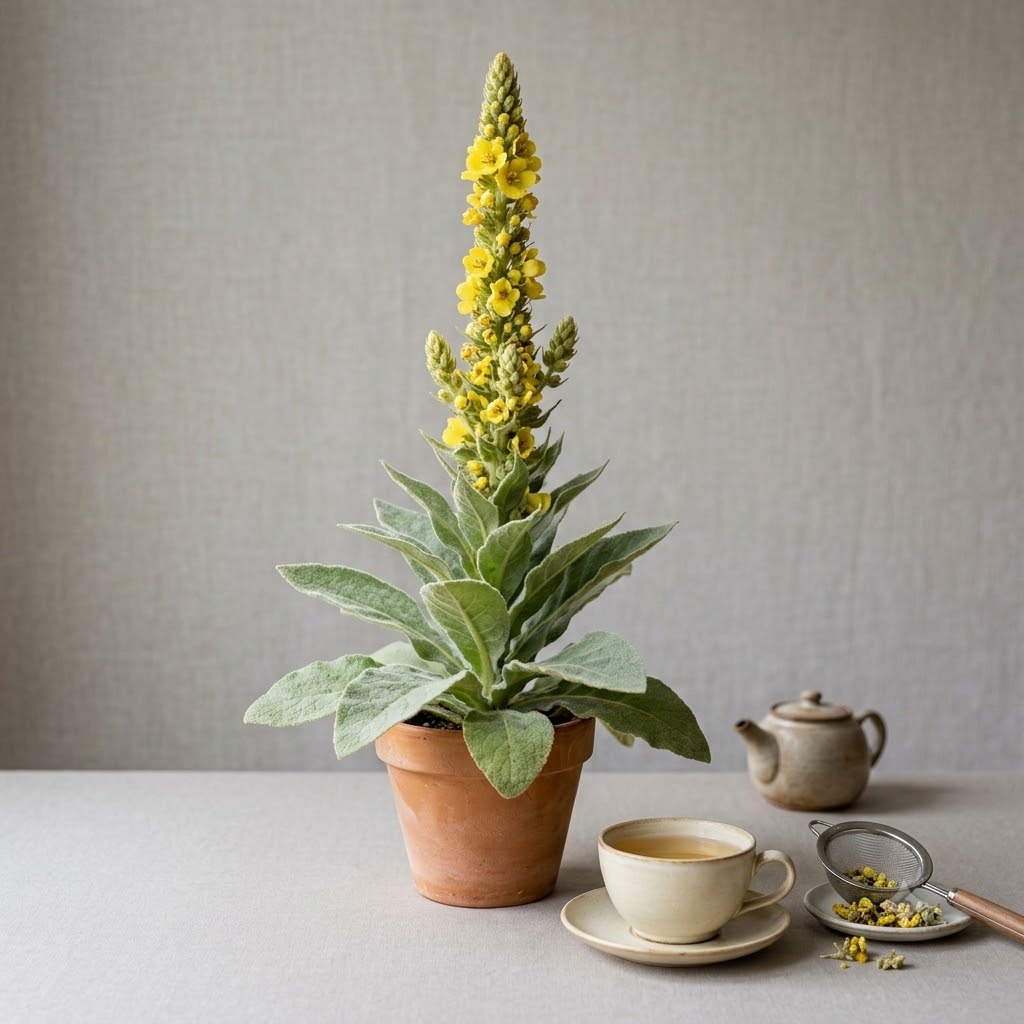
Mullein (Verbascum thapsus) is a tall, striking biennial known for its soft, woolly leaves and a dramatic spire of yellow flowers that can tower well above head height.
🗓️ Last reviewed: July 2026
Overview
Mullein (Verbascum thapsus) is a tall, striking biennial known for its soft, woolly leaves and a dramatic spire of yellow flowers that can tower well above head height. It is one of the great survivors of poor, dry ground, turning up on roadsides, waste places, and gravelly banks with no help at all. For the home grower it is almost effortless - it practically plants itself - and its leaves and flowers have a long history of use in soothing herbal teas, particularly for coughs and chesty complaints. Its statuesque form and silvery foliage also make it a favourite in cottage and wildlife gardens, where the tall spikes draw bees all summer and stand as bold silhouettes into autumn. One important habit to learn from the very start: mullein tea must always be strained carefully, because the fine hairs on the leaves can irritate the throat if they are left in the cup.
Identification & Appearance
Mullein is a biennial, meaning it lives two years. In the first year it forms a low rosette of large, pale, felt-like leaves, thick and soft to the touch, covered in a dense coat of fine woolly hairs. In the second year it sends up a single tall, stout flower spike, often 1-2 m high and sometimes taller, studded with soft five-petalled yellow flowers that open a few at a time from summer into autumn. The whole plant has a silvery-grey, velvety appearance that is unmistakable once you know it.
Where It Grows
Native to Europe, North Africa, and Asia, mullein has spread widely and naturalised across North America, Australia, and beyond. It is a classic coloniser of disturbed, sunny, poor ground - roadsides, railway banks, quarries, gravel, and neglected corners. It thrives precisely where the soil is thin, dry, and stony, and where richer plants would not bother competing.
How to Grow at Home
Mullein could hardly be easier, and it is a good choice for anyone new to growing herbs. Scatter the tiny seeds on the surface of poor, well-drained soil in a sunny spot in autumn or spring - they need light to germinate, so press them down but do not bury them. The first year gives you the flat leafy rosette; the second year gives the tall flower spike, after which the plant sets seed and dies. If you want a supply every year, sow a few seeds two years running so you always have both a rosette and a flowering plant on the go. Left alone it self-seeds generously, so once you have it in the garden you tend to keep it without effort. It needs no feeding, no rich soil, and very little water once established - in fact spoiling it with rich, damp conditions does more harm than good, encouraging soft growth and rot. Give it the poorest, sunniest, sharpest-draining corner you have and it will be perfectly happy.
Growing Conditions
Light
Full sun - mullein is a sun-lover and will not thrive in shade.
Watering
Very drought-tolerant once established; it prefers dry conditions and dislikes soggy soil.
Soil & Temperature
Poor, gritty, free-draining soil suits it best; rich soil is unnecessary. It is fully hardy, overwintering as a rosette before flowering in its second year.
Harvesting & Brewing
Gather the soft leaves in the first or second year, choosing clean, healthy ones, and pick the yellow flowers individually as they open through summer - they appear only a few at a time along the spike, so collecting a good quantity of flowers takes patience over several weeks. Dry both in a warm, airy place out of direct sun; the flowers in particular hold their colour better dried gently. Store the dried material in a sealed jar away from light.
To brew, steep a spoonful of dried leaf or flower in hot water for about 10 minutes and keep the pot covered to hold in the aromatic flower oils. The single most important step is straining: the tiny hairs from the leaves must be filtered out through a fine cloth, a coffee filter, or a very fine muslin, as they can irritate the throat if swallowed. A standard tea strainer is not fine enough on its own. The resulting tea is mild, faintly sweet from the flowers, and pale gold in colour, and it blends well with honey or a little lemon.
Health & Benefits
Mullein leaf and flower tea has a long traditional reputation as a soothing herb for the respiratory system, used in folk medicine for dry coughs, hoarseness, and chesty complaints, and the flowers in particular were valued for their gentle, mild character. These are traditional uses passed down through herbal practice, not proven medical treatments, and mullein tea is not a substitute for medical care. The most important practical caution is a simple one: always strain the tea thoroughly to remove the irritating leaf hairs, as these are the main hazard of the plant rather than any strong active effect. As with any herb, anyone pregnant, breastfeeding, taking medication, or managing a health condition should seek professional advice before using it regularly, and it is wise to start with a small amount to see how you get on.
Common Problems
- Irritating throat from unstrained tea - always filter out the fine leaf hairs through cloth or a coffee filter.
- No flower spike - remember mullein is biennial; the tall spike only appears in the second year.
- Rots in wet soil - it needs sharp drainage and dislikes sitting in moisture.
- Self-seeds everywhere - deadhead the spike before it sets seed if you want to control its spread.
Pros & Cons
Pros
- Extremely easy - thrives in poor, dry, neglected ground.
- Dramatic architectural plant with a tall golden flower spike.
- Soft leaves and cheerful flowers, both usable for tea.
- Needs no feeding, little water, and self-seeds freely.
Cons
- Biennial - you wait until the second year for flowers.
- Tea must always be strained to remove irritating hairs.
- Can self-seed aggressively and spread if not managed.
- Dies after flowering, so needs reseeding each cycle.
Best Suited For
- Gardeners with a dry, sunny, poor-soil spot to fill.
- Those wanting a bold, tall structural plant with little effort.
- Herbal-tea makers interested in traditional respiratory brews.
Not ideal for damp, shady gardens or anyone unwilling to strain their tea carefully.
FAQ
Why do I have to strain mullein tea so carefully? The leaves are covered in tiny hairs that can break off into the brew and irritate the throat if swallowed. Filtering through a fine cloth or coffee filter removes them and makes the tea smooth to drink.
Why did my mullein not flower this year? Mullein is biennial. In its first year it makes only the leafy rosette; the tall flower spike appears in its second year, after which the plant sets seed and dies.
Will mullein take over my garden? It can. A single spike produces enormous numbers of seeds. If you want to limit it, cut the spike before it sets seed and let only a few flowers mature.