Red Clover (Trifolium pratense)
Red clover (Trifolium pratense) is a familiar meadow legume with rounded pinkish-purple flower heads, long gathered and dried to make a mild, slightly sweet herbal tisane.
🗓️ Last reviewed: June 2026
Overview
Red clover (Trifolium pratense) is a familiar meadow legume with rounded pinkish-purple flower heads, long gathered and dried to make a mild, slightly sweet herbal tisane. It is a tough, easygoing plant that thrives in lawns, pastures, and wildflower patches, fixing nitrogen in the soil and drawing in bees and butterflies. Easy to grow from seed and happy in ordinary ground, it is as much a useful garden and pasture plant as a source of flowers for the teapot.
Identification & Appearance
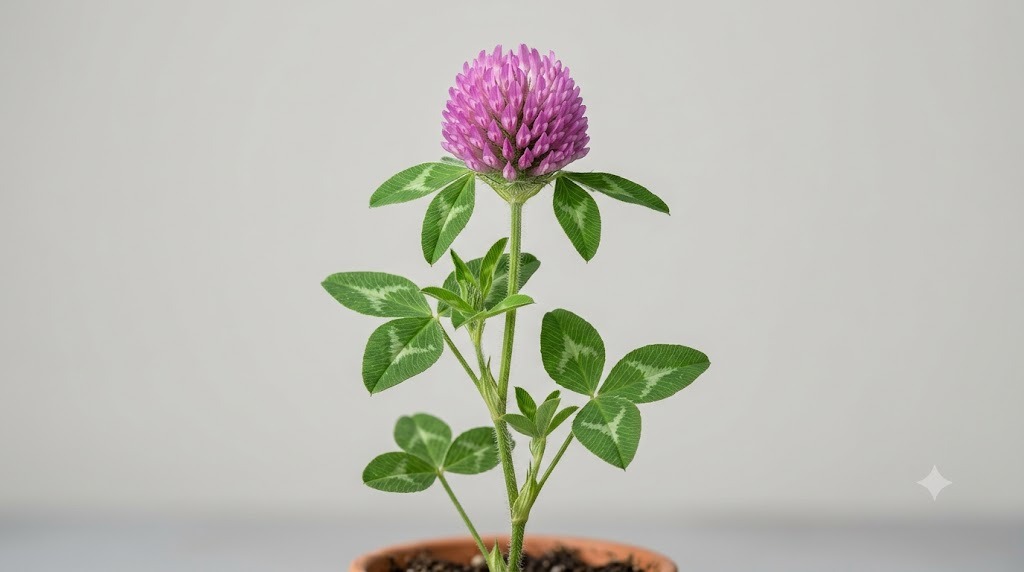
A short-lived perennial growing in a loose clump up to about 40-60 cm tall, with the classic three-part clover leaves, each leaflet often marked with a pale crescent. The flowers are dense, globe-shaped heads of many tiny tubular florets in shades of rose-pink to magenta, sitting just above a pair of leaves. The whole plant has a soft, slightly hairy texture and a sprawling, informal habit.
Where It Grows
Native to Europe, western Asia, and northwest Africa, red clover has been carried around the world and is now naturalised across temperate regions, where it grows in meadows, field edges, and grassland. As a nitrogen-fixing legume it tolerates a wide range of soils and is often sown deliberately to enrich the ground and feed pollinators. It prefers open, sunny ground with reasonable moisture.
How to Grow at Home
Red clover is very easy from seed, simply scattered onto prepared soil in spring or autumn and lightly raked in; it needs no special treatment. Give it an open, sunny patch with ordinary, reasonably moist soil, and it will establish quickly. It is often grown in wildflower areas, as a cover crop, or along borders to attract bees. Cutting it back after flowering encourages a fresh flush of blooms.
Growing Conditions
Light
Full sun to light shade; the most abundant flowering comes in an open, sunny position.
Watering
Prefers reasonably moist soil and dislikes prolonged drought, though established plants are fairly resilient.
Soil & Temperature
Adaptable to most soils, from loam to clay, ideally neutral; as a legume it is not fussy about fertility. Hardy and frost-tolerant, dying back in winter and returning in spring.
Harvesting & Brewing
Gather the flower heads when freshly opened and at their brightest, ideally on a dry morning, picking the blooms with little or no stem. Use them fresh or spread them in a single layer to dry until crisp, then store. For a tisane, steep a small handful of fresh heads or a spoonful of dried flowers in hot water for around 5 to 10 minutes and strain; the result is gentle, grassy, and faintly sweet.
Composition & Character
Red clover flowers contain plant compounds known as isoflavones, a group of naturally occurring polyphenols common in legumes, along with the sugars that give the bloom its mild sweetness. As a tisane it is naturally caffeine-free and valued for its soft, hay-like, lightly floral character. It has a long history as a meadow and pasture plant and as a traditional country infusion enjoyed simply for its gentle flavour.
Common Problems
- Sparse flowering - usually too much shade; move to a sunnier, more open spot.
- Short lifespan - it is naturally short-lived; let some flowers set seed to self-sow and persist.
- Powdery mildew - can appear in crowded, humid conditions; thin plants for better airflow.
Pros & Cons
Pros
- Extremely easy from seed and undemanding to grow.
- Enriches soil as a nitrogen-fixing legume.
- Magnet for bees and butterflies, with flowers for a mild tisane.
Cons
- Short-lived and may need re-sowing.
- Can spread freely and look untidy in a formal bed.
- Flavour is very gentle and subtle.
Best Suited For
- Wildflower patches, meadows, and pollinator gardens.
- Gardeners wanting an easy, soil-enriching cover plant.
- Anyone who enjoys a mild, grassy floral infusion.
Not ideal for tidy formal borders or very dry, shaded sites.
FAQ
Can I use clover from my lawn for tea? Use only flowers from ground you know has not been treated with chemicals, picking fresh, clean heads. Many people simply grow a dedicated patch for the purpose.
Why is my red clover not flowering well? Most often it needs more sun. Move it to an open position, keep the soil reasonably moist, and trim after the first flush to encourage more blooms.
Does red clover come back every year? It is a short-lived perennial, so it returns for a few years and often self-sows. Letting some heads set seed helps it persist in the garden.