Rooibos
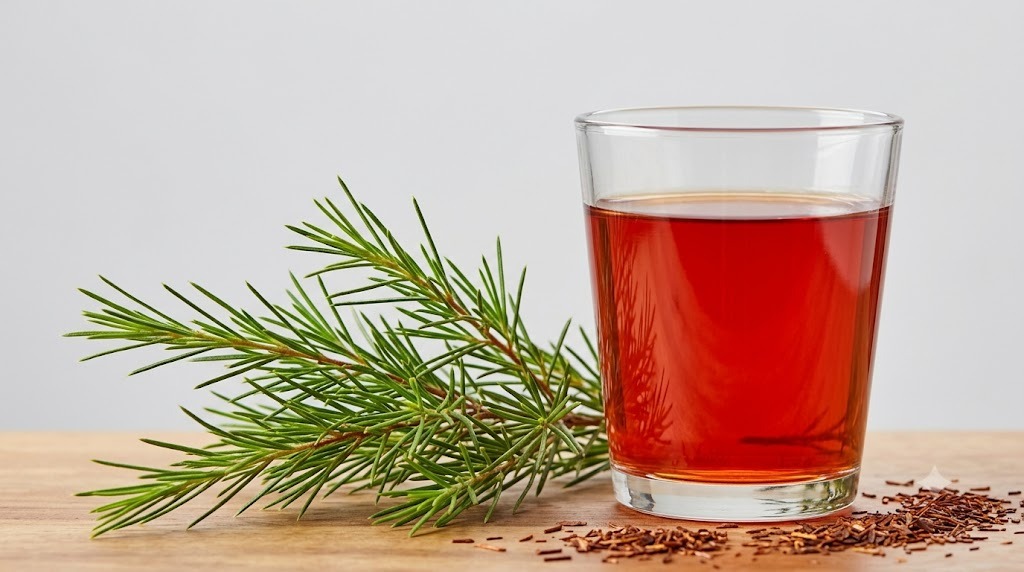
Rooibos - "red bush" in Afrikaans - is the plant behind South Africa's famous red tea: a smooth, naturally sweet, caffeine-free infusion with a mellow, slightly woody flavour.
🗓️ Last reviewed: June 2026
Overview
Rooibos - "red bush" in Afrikaans - is the plant behind South Africa's famous red tea: a smooth, naturally sweet, caffeine-free infusion with a mellow, slightly woody flavour. It is one of the most distinctive tea plants in the world, and one of the most place-bound: rooibos grows commercially only in a small region of South Africa, which makes growing it elsewhere a genuine specialist challenge.
Identification & Appearance
A low, bushy, broom-like shrub up to about 1.5 metres, with very fine, soft, needle-like green leaves and slender green stems. It bears small yellow pea-like flowers. When the leaves are bruised and oxidised during processing, they turn the rich red-brown colour that gives the tea its name; unoxidised "green rooibos" stays greenish.
Where It Grows
Rooibos is found naturally only in the Cederberg region of South Africa's Western Cape - a small area of acidic, sandy soil and a hot, dry Mediterranean climate. This extreme specificity is why rooibos is grown commercially nowhere else on Earth, despite many attempts.
How to Grow at Home
Growing rooibos outside its native range is difficult and best seen as an experimental project. It needs full sun, very sandy, acidic, sharply drained soil, dry heat, and a frost-free climate. In most regions it can only be attempted in a pot, with an acidic gritty mix, kept warm and bright - and even then, success is far from guaranteed.
Growing Conditions
Light
Full sun - rooibos is adapted to intense, dry sunshine.
Watering
Water very sparingly; rooibos is adapted to dry conditions and quickly rots in moist soil.
Soil & Temperature
Sandy, sharply drained, acidic soil. Frost-tender and demanding - needs dry heat to have any chance.
Harvesting & Brewing
On the rare home plant, snip the fine leafy stems. Traditionally rooibos is processed by bruising the cut leaves and stems, then leaving them to oxidise in the sun until red-brown, before drying - this develops the colour and the sweet, mellow flavour. For tea, steep a teaspoon in hot water for 5-7 minutes; rooibos can be brewed long without turning bitter.
Health & Benefits
Rooibos tea is naturally caffeine-free and very low in tannins, so it is smooth, never bitter, and gentle enough for any time of day. It is rich in antioxidants and a popular choice for those avoiding caffeine. Its natural mild sweetness means it is pleasant with no sugar added.
Common Problems
- Plant simply fails - rooibos is extremely region-specific; outside South Africa, treat it as an experiment.
- Rotting - soil too moist or not acidic and sandy enough; it needs dry, sharp drainage.
- No red colour - the colour comes from oxidising the cut leaves, not from the fresh plant.
Pros & Cons
Pros
- Naturally caffeine-free and never bitter.
- Smooth, mellow, naturally sweet flavour.
- Rich in antioxidants; gentle any time of day.
Cons
- Extremely hard to grow outside South Africa.
- Needs very specific soil and dry heat.
- Best regarded as a specialist or novelty grow.
Best Suited For
- Caffeine-free tea drinkers (as a tea to enjoy).
- Adventurous growers in hot, dry, frost-free climates.
- Anyone curious about a famously place-bound crop.
Not ideal for cool, damp climates - here rooibos is one to drink, not to grow.
FAQ
Can I grow rooibos at home? Realistically, only in a hot, dry, frost-free climate with sandy acidic soil. Elsewhere it is an experimental pot project - most tea lovers simply buy rooibos and grow other tea plants.
Why is rooibos only grown in South Africa? It is adapted to one small region - the Cederberg - with a very particular soil and climate. Commercial growing has never succeeded elsewhere.
Is rooibos really caffeine-free? Yes - rooibos is naturally caffeine-free and low in tannins, which is a large part of its appeal.