Sage
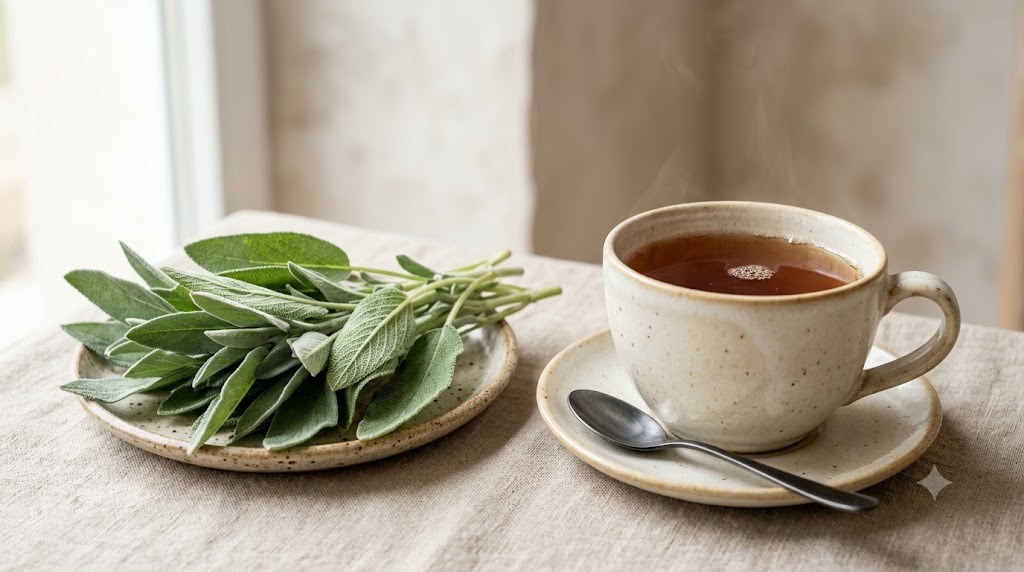
Sage is best known as a kitchen herb, but its aromatic grey-green leaves also brew a warm, savoury, slightly peppery tea with a long medicinal history - especially as a traditional gargle and soother for sore throats.
🗓️ Last reviewed: June 2026
Overview
Sage is best known as a kitchen herb, but its aromatic grey-green leaves also brew a warm, savoury, slightly peppery tea with a long medicinal history - especially as a traditional gargle and soother for sore throats. It is a tough, handsome evergreen shrub that thrives on sun and poor soil, supplying both the kitchen and the teapot from a single low-maintenance plant.
Identification & Appearance
A woody evergreen sub-shrub 40-70 cm tall, with soft, oval, finely textured grey-green leaves that are slightly furry and intensely aromatic. In early summer it bears spikes of purple-blue flowers loved by bees. Common sage (Salvia officinalis) is the type used; purple, golden, and variegated forms also exist.
Where It Grows
Native to the Mediterranean, sage grows wild on dry, rocky, sun-baked hillsides. It is cultivated worldwide as a culinary and medicinal herb and thrives in hot, dry conditions on poor, free-draining soil - much like lavender and rosemary, its Mediterranean neighbours.
How to Grow at Home
Plant sage from a nursery plant or cutting in a hot, sunny, well-drained spot or a pot. It dislikes rich, wet soil and hates winter wet most of all. Trim it lightly each spring to keep it bushy and stop it going woody and sparse; replace tired plants every few years, as old sage becomes leggy.
Growing Conditions
Light
Full sun - sage needs heat and light for the best aromatic leaves.
Watering
Water sparingly; sage is drought-tolerant once established and rots in soggy soil.
Soil & Temperature
Poor, gritty, free-draining soil. Common sage is hardy, but dislikes cold, wet winters.
Harvesting & Brewing
Pick leaves any time; flavour is best just before flowering. Use them fresh or dried - sage holds its flavour well dried. For tea, steep 4-6 fresh leaves, or a teaspoon of dried, in hot water for 5 minutes. The cup is warm, herbal, and savoury. Sage tea is strong, so it is usually drunk in modest amounts rather than by the litre.
Health & Benefits
Sage tea has a long tradition as a remedy for sore throats and mouth irritation, often used as a warm gargle, and for general digestive comfort. It is caffeine-free and rich in aromatic oils with antiseptic qualities. Because it is potent, sage tea is best enjoyed in moderation rather than in large daily quantities.
Common Problems
- Woody, sparse plant - not trimmed; cut back lightly each spring, never into old bare wood.
- Rotting in winter - soil too wet; improve drainage with grit.
- Overpowering tea - use only a few leaves; sage is strong.
Pros & Cons
Pros
- Tough, drought-tolerant, low-maintenance.
- Doubles as a valued kitchen herb.
- Traditional sore-throat remedy.
Cons
- Strong flavour - easy to overdo.
- Hates wet soil and cold, damp winters.
- Goes woody; needs replacing every few years.
Best Suited For
- Dry, sunny gardens and Mediterranean-style beds.
- Cooks who want a dual-purpose herb.
- Anyone wanting a soothing sore-throat tea.
Not ideal for damp, shady gardens or those who want a mild, drink-all-day tea.
FAQ
Which sage is best for tea? Common sage (Salvia officinalis) - the standard culinary type. The coloured-leaf forms are usable too, but common sage is the traditional choice.
Why is sage tea drunk in small amounts? Sage is potent and strongly aromatic, so a few leaves go a long way. It is traditionally enjoyed in modest amounts rather than large daily quantities.
How is it used for a sore throat? Traditionally, cooled sage tea is used as a warm gargle, as well as being sipped, to soothe a sore or irritated throat.