Stevia
Stevia is a tender herb whose leaves are many times sweeter than sugar, yet with virtually no calories.
Last reviewed: October 2026
Overview
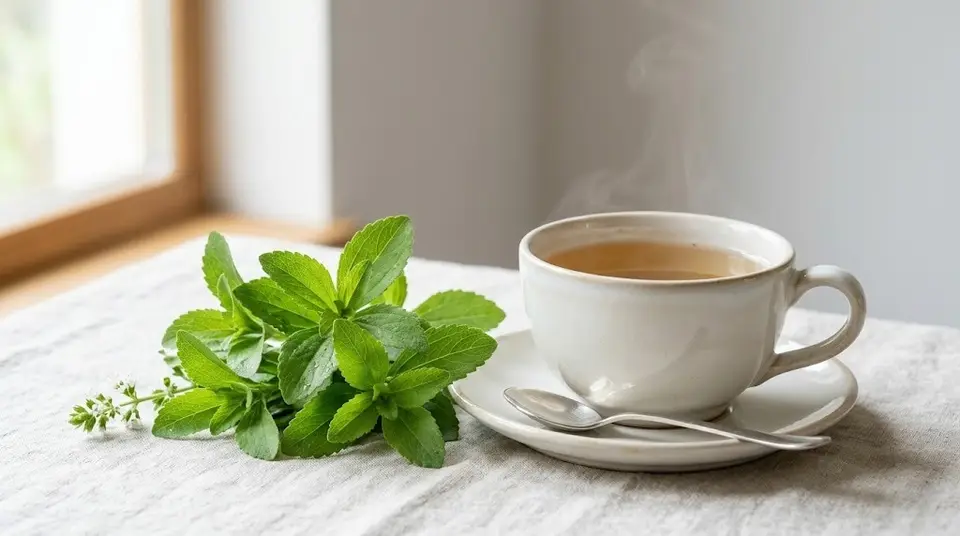
Stevia is a tender herb whose leaves are many times sweeter than sugar, yet with virtually no calories. While it makes only a mild green tea on its own, its real value is as a sweetening leaf: a single fresh stevia leaf dropped into any herbal tea sweetens the whole cup. For anyone cutting back on sugar, it is a remarkable plant.
Identification & Appearance
A small, bushy tender perennial 30-60 cm tall, with slender stems and narrow, slightly toothed, soft green leaves arranged in pairs. The leaves are unremarkable to look at but intensely sweet to taste. In late summer it produces tiny white flowers; pinching these out keeps the leaves at their sweetest.
Where It Grows
Native to the highlands of Paraguay and Brazil, stevia has been used by the Guaraní people for centuries. It is now grown commercially worldwide as a sweetener crop. It is frost-tender and favours warm, humid conditions with steady moisture.
How to Grow at Home
Stevia is easiest from a nursery plant or cutting, as seed germinates erratically. Grow it in a pot of rich, well-drained soil in full sun. Pinch the tips regularly to keep it bushy and to delay flowering. It is frost-tender, so in cool climates treat it as an annual or overwinter it indoors.
Growing Conditions
Light
Full sun - strong light builds the sweetest leaves.
Watering
Keep the soil evenly moist; stevia has shallow roots and dislikes both drying out and waterlogging.
Soil & Temperature
Rich, well-drained soil. Frost-tender - protect from cold and overwinter indoors below about 5°C.
Harvesting & Brewing
Pick leaves any time through the season; sweetness is highest just before flowering, so pinch out flower buds. Leaves can be used fresh or dried - dried stevia is even sweeter and easy to crumble into a jar. Add a leaf or two directly to a pot of herbal tea, or brew the dried leaf as a mild, sweet tea in its own right.
Health & Benefits
Stevia's sweetness comes from steviol glycosides in the leaf, and the plant is caffeine-free. One thing to know before sweetening a pot with it: the US Food and Drug Administration (FDA) has not questioned the safety conclusions for high-purity steviol glycosides, but it says the use of stevia leaf and crude stevia extracts is not considered GRAS (generally recognized as safe), and their import into the US is not permitted for use as sweeteners. Growing the plant and tasting a leaf is a gardener's curiosity, and we make no health claim for it. If you are pregnant, breastfeeding, taking medication, managing a health condition, or brewing for a child, ask a doctor or pharmacist first.
Common Problems
- Bitter aftertaste - over-strong dose; use less, and pinch out flowers which can sharpen the flavour.
- Leggy plant - not pinched; pinch tips often for bushy, leafy growth.
- Wilting - shallow roots dry out fast; keep moisture steady.
Pros & Cons
Pros
- A natural, calorie-free sweetener you can grow.
- Sweetens any other herbal tea with one leaf.
- Compact - fits a small pot.
Cons
- Frost-tender; annual in cool climates.
- Seed is unreliable - start from a plant.
- Can taste bitter if overdosed.
Best Suited For
- Anyone reducing sugar who drinks herbal tea.
- Container and windowsill growers.
- Gardeners who like a novelty with real use.
Not ideal for cold gardens without indoor space, or seed-only growers.
FAQ
Is stevia tea sweet on its own? The brewed leaf is mildly sweet and grassy. Its real strength is as a sweetener - drop a leaf into another herbal tea and it sweetens the whole cup.
Fresh or dried leaves? Both work. Dried stevia is actually sweeter and easier to store, crumbled into a jar.
Why does mine taste slightly bitter? Usually too much leaf, or the plant has flowered. Use a smaller dose and pinch out flower buds.
Grow it or brew it: stevia
Links go to Amazon or a partner store (such as Adagio Teas) and may earn us a commission at no extra cost to you. As an Amazon Associate we earn from qualifying purchases. We link gear types, not sponsors' picks: you choose the exact product.