Stinging Nettle
The stinging nettle is usually treated as a weed, but it is one of the most nourishing tea plants there is.
🗓️ Last reviewed: June 2026
Overview
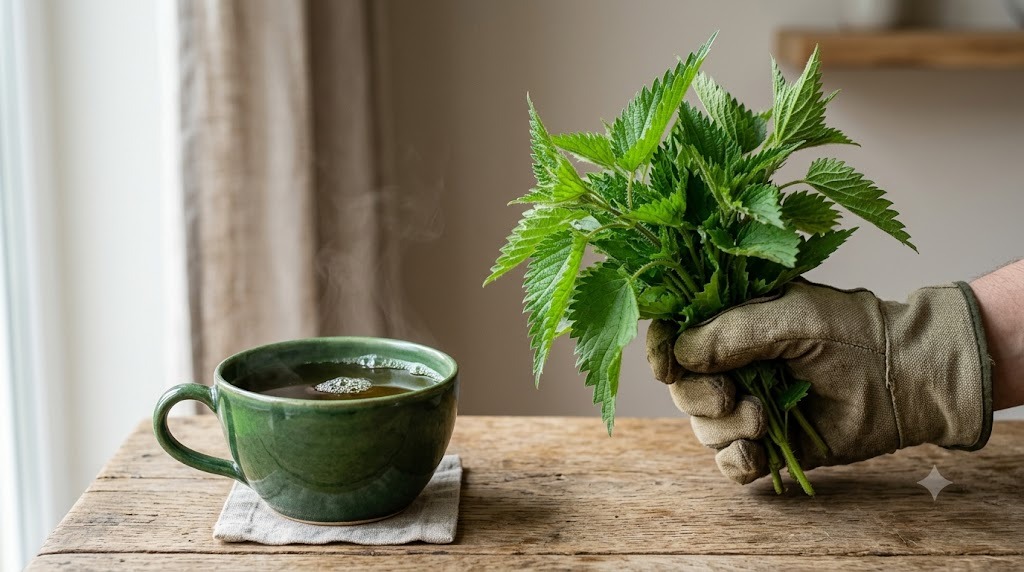
The stinging nettle is usually treated as a weed, but it is one of the most nourishing tea plants there is. Once dried or brewed, the sting vanishes entirely, leaving a deep green, earthy, mineral-rich tea long valued as a spring tonic. It grows so readily that the main task is not growing it but harvesting it safely - and it costs nothing.
Identification & Appearance
An upright perennial 1-2 metres tall, with square stems and toothed, pointed, heart-based green leaves arranged in pairs. Both stems and leaves are covered in fine hollow hairs that inject an irritating sting on contact. Tassels of small greenish flowers hang from the leaf axils in summer. It spreads by creeping yellow roots.
Where It Grows
Native across Europe, Asia, and North America, the stinging nettle is one of the most widespread plants in the temperate world. It thrives on rich, disturbed, nitrogen-heavy soil - field edges, hedgerows, gardens, and waste ground - preferring some moisture and shelter.
How to Grow at Home
Most gardeners already have nettles, or can find them nearby. If you want a dedicated patch, plant a root division in a contained corner with rich, moist soil - and contain it, as it spreads vigorously. Wear gloves for all handling. Cut it back through the season for a steady supply of tender young leaves.
Growing Conditions
Light
Sun to partial shade; nettles tolerate a wide range of light.
Watering
Keep the soil moist; nettles grow lushest in rich, damp ground.
Soil & Temperature
Rich, nitrogen-heavy, moist soil. A very hardy perennial across temperate climates.
Harvesting & Brewing
Always wear gloves. Pick the top few pairs of young, tender leaves in spring and early summer, before the plant flowers - older leaves develop gritty particles and are best avoided. Drying or brewing destroys the sting completely. For tea, steep a generous handful of fresh, or a tablespoon of dried, leaves in hot water for 5-10 minutes.
Health & Benefits
Nettle tea is a traditional spring tonic, rich in iron, calcium, magnesium, and vitamins. It is caffeine-free and earthy, with a deep grassy-green flavour. It has long been taken to support general vitality and is sometimes used to ease seasonal allergy symptoms.
Common Problems
- Getting stung - always wear gloves; the sting is gone only after drying or brewing.
- Gritty older leaves - harvest only young top leaves before flowering.
- Spreading roots - contain the patch, as nettles colonise quickly.
Pros & Cons
Pros
- Free, abundant, and very easy.
- Exceptionally nutrient-rich tea.
- Sting disappears once brewed or dried.
Cons
- Must be handled with gloves.
- Spreads aggressively by root.
- Earthy flavour is not for everyone.
Best Suited For
- Foragers and frugal gardeners.
- Anyone wanting a nutritious spring tonic tea.
- Wild corners and rich, damp ground.
Not ideal for small tidy gardens, or anyone unwilling to handle a stinging plant.
FAQ
Does nettle tea sting your mouth? No - drying and brewing completely neutralise the sting. Only the fresh, raw plant stings.
When should I harvest? In spring and early summer, taking only the young top leaves before the plant flowers. Older leaves can be gritty.
Can I just use nettles from the garden? Yes - wild nettles are fine, just pick from a clean spot away from roadsides and spray, and wear gloves.