Thyme (Thymus vulgaris)
Thyme (Thymus vulgaris) is a small, woody Mediterranean herb best known for the kitchen, but its tiny aromatic leaves also make a fragrant herbal tisane that people have steeped for centuries.
🗓️ Last reviewed: June 2026
Overview
Thyme (Thymus vulgaris) is a small, woody Mediterranean herb best known for the kitchen, but its tiny aromatic leaves also make a fragrant herbal tisane that people have steeped for centuries. It is one of the easiest herbs to grow at home, thriving on neglect in a sunny pot or a dry corner of the garden, and a single established plant gives you a steady supply of leaves to dry or use fresh. Tough, drought-loving, and evergreen in mild climates, it is a forgiving plant that rewards a sunny, well-drained spot.
Identification & Appearance
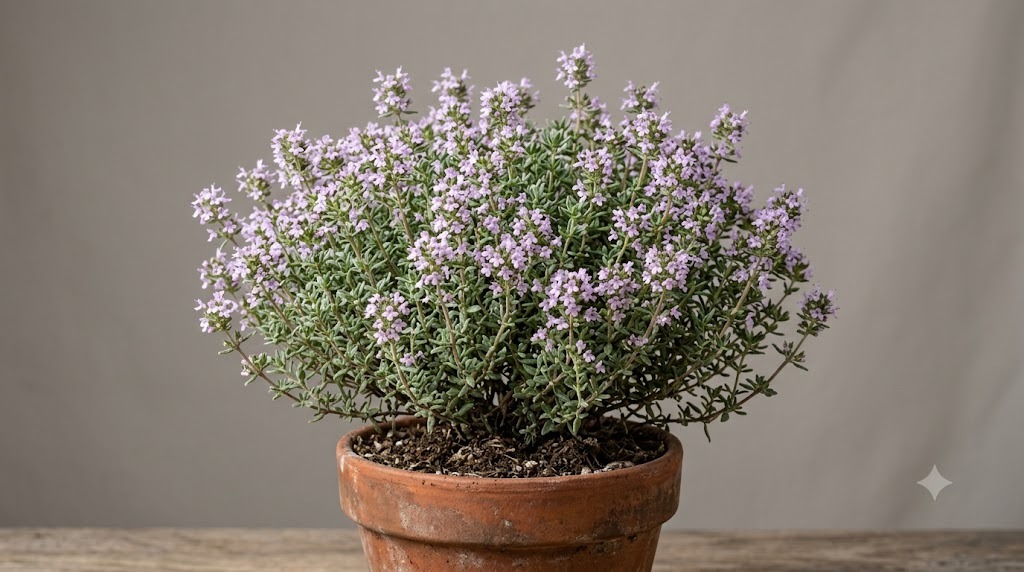
A low, spreading sub-shrub rarely taller than 30 cm, with thin woody stems and very small, narrow grey-green leaves that release a sharp, savoury scent when brushed. In early summer it is covered in clusters of tiny pink to pale-mauve flowers that bees adore. The whole plant has a dense, cushiony habit, and older stems become woody at the base while fresh green growth pushes from the tips.
Where It Grows
Thyme is native to the dry, rocky hillsides of the western Mediterranean and southern Europe, where it grows in poor, stony soil under full sun. It has since naturalised and been cultivated across temperate regions worldwide. It favours lean, sharply drained ground, plenty of heat, and dislikes rich soil or damp - classic sun-baked hillside conditions.
How to Grow at Home
Thyme grows easily from a nursery plant, cuttings, or seed, though seed is slow to establish. Give it a gritty, free-draining pot or a hot, dry spot in the garden, and resist the urge to pamper it - it performs best in poor soil. Trim it lightly after flowering to keep it compact and stop it going leggy and woody. It is largely trouble-free once settled and will often stay green through mild winters.
Growing Conditions
Light
Full sun is essential; thyme grown in shade becomes sparse, weak, and far less aromatic.
Watering
Water sparingly and let the soil dry between waterings; thyme tolerates drought far better than soggy roots.
Soil & Temperature
Lean, gritty, free-draining soil, ideally alkaline to neutral. Hardy to roughly -10°C in well-drained ground; wet winter soil is more dangerous to it than cold.
Harvesting & Brewing
Snip sprigs any time in the growing season, ideally in the morning just before the plant flowers, when the leaves are most aromatic. Use the leaves fresh, or hang small bundles to dry and then strip the leaves from the woody stems for storage. For a tisane, steep a small handful of fresh sprigs or a teaspoon of dried leaves in hot water for around 5 minutes, then strain; the result is warm, savoury, and faintly minty.
Composition & Character
Thyme owes its powerful aroma to volatile oils, chiefly thymol and carvacrol, the same compounds that give it its sharp, herbal scent and warming flavour. As a tisane it is caffeine-free and prized mainly for its bold, savoury character. It has a long place in Mediterranean cooking and traditional household use, and is valued today simply as a fragrant culinary herb and aromatic infusion.
Common Problems
- Leggy, woody growth - lightly trim after flowering to keep it bushy and productive.
- Root rot - almost always from heavy or waterlogged soil; add grit and ease off watering.
- Weak aroma - usually too much shade or overly rich soil; move it to full sun and lean ground.
Pros & Cons
Pros
- Extremely easy and drought-tolerant once established.
- Useful in both the kitchen and as a fragrant tisane.
- Evergreen in mild climates and loved by pollinators.
Cons
- Dislikes wet, rich, or heavy soil.
- Goes woody and sparse if never trimmed.
- A small plant yields modest quantities of leaf.
Best Suited For
- Beginners wanting a tough, low-maintenance herb.
- Sunny balconies, windowsills, and dry garden corners.
- Cooks and tea-lovers who enjoy savoury, aromatic flavours.
Not ideal for shady, damp gardens or anyone wanting a large leafy harvest.
FAQ
Can I use thyme straight from the garden for tea? Yes - rinse a few fresh sprigs and steep them in hot water. Fresh and dried both work; dried is simply more concentrated.
Why has my thyme gone woody? It is natural with age, but a light trim after flowering each year keeps fresh green growth coming and slows the woodiness.
Can I grow thyme indoors? Yes, on a bright, sunny windowsill with gritty soil and careful watering, though it is happiest outdoors in full sun.