Zygopetalum Orchid
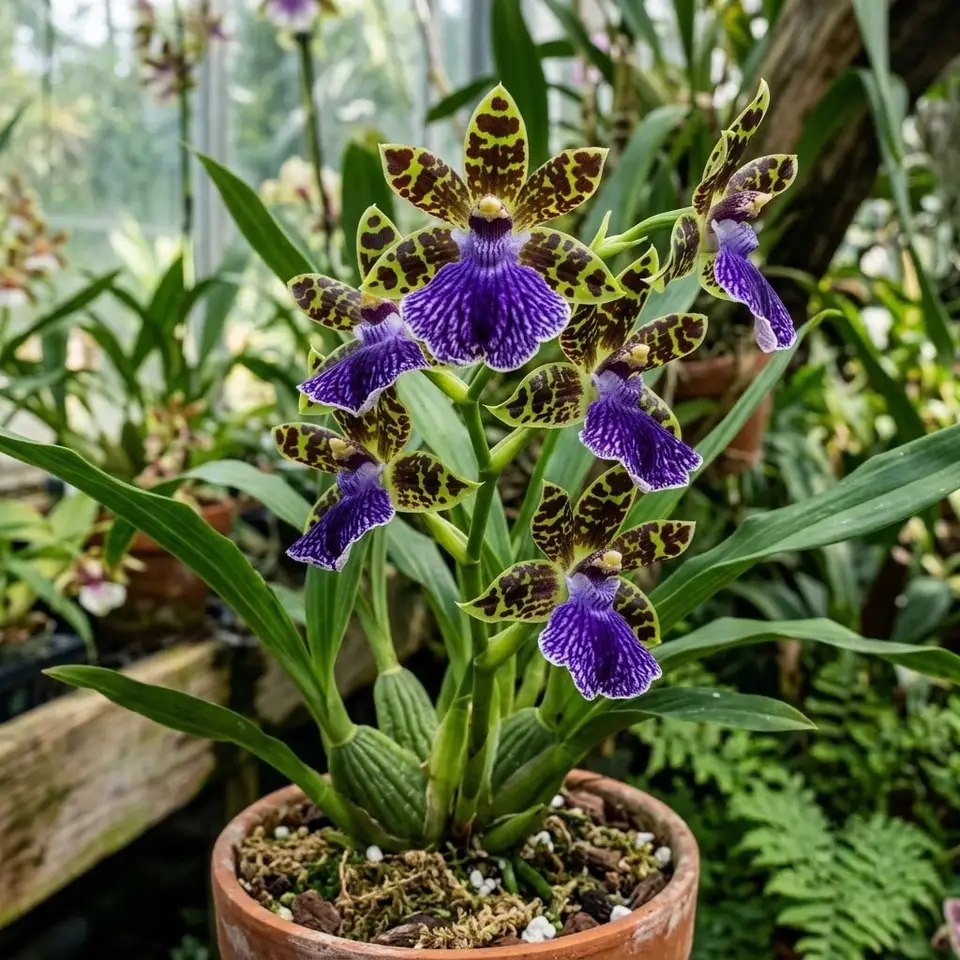
Zygopetalums are orchids with green petals leopard-blotched in mahogany over lips painted indigo-violet, with a hyacinth fragrance that fills rooms.
Last reviewed: October 2026
 AI illustration
Overview
Zygopetalums are orchids with green petals leopard-blotched in mahogany over lips painted indigo-violet, with a hyacinth fragrance that fills rooms. A compact, cool-friendly Brazilian that gives exotic looks without exotic difficulty. (Zygopetalum.)
Origin & Natural Habitat
Brazilian highland forests - bright, humid, with cool nights; terrestrial-ish in mossy leaf litter.
Appearance
Glossy strap leaves from clustered pseudobulbs, 30-60 cm; spikes of 5-10 waxy 6-8 cm blooms (green/bronze leopard patterning with veined blue-purple lips) strongly hyacinth-scented, several weeks, often twice yearly.
Why People Grow It - Qualities & Benefits
- True purple-blue lips: rare palette
- Room-filling hyacinth perfume
- Cool-to-intermediate easy temperatures
- Blooms young and often for an 'exotic'
Care
Light: Bright indirect with gentle morning sun; slightly more than a paph, less than a cattleya. Light leaf-yellow-green = right.
Water: Evenly moist in growth with slight drying between; hates both swamp and drought (modest pseudobulb reserves).
Potting medium: Fine-medium bark with some moss/perlite - moisture-retentive but open.
Temperature & Humidity: 13-27°C with cool nights appreciated - a comfortable-home orchid; humidity 50%+.
Feeding: Half-strength every two weeks in growth; flush monthly - leaf-tip burn signals salt buildup, its known tell.
Rest & rebloom: Brief post-bloom pause; new growths bring the next spikes. Steady is the method.
Propagation
Division (3+ bulbs) at spring repotting; establishes quickly by orchid standards.
Common Problems & Pests
- Black leaf-tips from salts/hard water: flush more, feed less
- Spotting on leaves in cold-wet-stagnant air
- Occasional scale
- Nothing temperamental beyond that: a genuinely reasonable orchid
Toxicity & Safety
Not on the ASPCA lists. The ASPCA Animal Poison Control Center's plant lists for cats and dogs have no entry for this plant, and we have no other checked source either way. If a pet chews it and seems unwell, call your vet or a pet poison helpline.
Pros & Cons
Pros
- Unique colors + top-tier scent
- Undemanding temperatures
- Fast to establish and rebloom
Cons
- Leaf-tips telegraph every salt sin
- Blooms weeks not months
- Big older plants need space
Best Suited For
- Scent-first growers
- Cooler modern homes
- Windowsill collectors expanding palette
- Cut-spike lovers (they vase well)
FAQ
What does the fragrance resemble?
Hyacinth-narcissus - sweet, heady, strongest mornings; one spike announces itself from across the room.
Why do leaf tips keep blackening?
The genus's salt sensitivity: use rain/filtered water if hard, quarter your feed, flush pots monthly - tips stop dying on the new growth.
Gear for growing zygopetalum orchid
Links go to Amazon or a partner store (such as Adagio Teas) and may earn us a commission at no extra cost to you. As an Amazon Associate we earn from qualifying purchases. We link gear types, not sponsors' picks: you choose the exact product.