Anise Hyssop
Anise hyssop is a beautiful, easy perennial with the sweet, liquorice-like fragrance of aniseed in every leaf and flower.
Last reviewed: October 2026
Overview
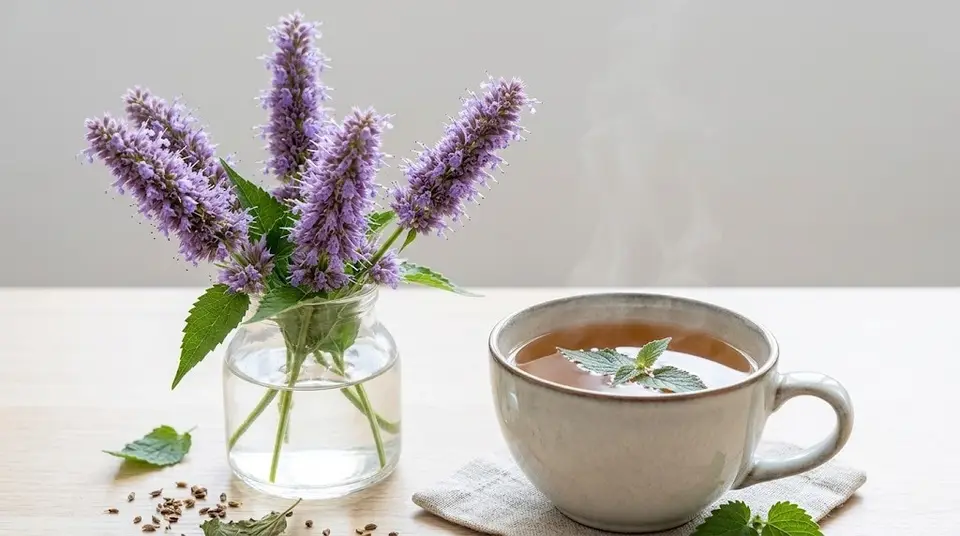
Anise hyssop is a beautiful, easy perennial with the sweet, liquorice-like fragrance of aniseed in every leaf and flower. It brews into a naturally sweet, gentle tea that needs no sugar, and the plant itself is a magnet for bees and butterflies. Despite its name it is neither true anise nor true hyssop - it is a North American prairie herb, and one of the most rewarding tea plants to grow.
Identification & Appearance
An upright clump-forming perennial 60-120 cm tall, with soft, toothed, slightly downy green leaves and dense, fluffy spikes of small lavender-purple flowers held above the foliage all summer. Crushed leaves smell sweetly of aniseed with a minty edge. The flower spikes are showy and long-lasting.
Where It Grows
Native to the prairies and dry uplands of central and northern North America, anise hyssop grows in open, sunny grassland. It is widely planted in gardens for its long flowering season and pollinator appeal, and tolerates heat, drought, and poor soil.
How to Grow at Home
Anise hyssop grows readily from seed, division, or a nursery plant. Give it full sun and well-drained soil; it is undemanding and drought-tolerant once established. It flowers in its first or second year and self-seeds gently. Cut it back after flowering for a fresh flush of leaves.
Growing Conditions
Light
Full sun - anise hyssop flowers most generously in bright light.
Watering
Water to establish, then water sparingly; it is drought-tolerant and dislikes wet soil.
Soil & Temperature
Well-drained soil of average or poor fertility. A hardy perennial in temperate climates.
Harvesting & Brewing
Pick leaves and flower spikes through the growing season; both are used for tea, and the flowers are especially pretty in the cup. Use fresh or dried - anise hyssop dries well and keeps its sweet aroma. For tea, steep a small handful of fresh leaves and flowers, or a teaspoon dried, in hot water for 5 minutes.
Health & Benefits
Anise hyssop tea is caffeine-free and naturally sweet, with a liquorice flavour from its aromatic oils. Traditionally it was drunk after meals and for coughs - a folk use, not a tested one. If you are pregnant, breastfeeding, taking medication, managing a health condition, or brewing for a child, ask a doctor or pharmacist first. These are traditional uses, not proven medical treatments, and anise hyssop tea is not a substitute for medical care.
Common Problems
- Few flowers - too much shade; give it full sun.
- Short-lived clumps - anise hyssop can be a short-lived perennial, but self-seeds to replace itself.
- Powdery mildew - improve airflow; cut back if affected.
Pros & Cons
Pros
- Naturally sweet - no sugar needed.
- Beautiful and superb for pollinators.
- Easy from seed; dries well.
Cons
- Individual plants can be short-lived.
- Self-seeds around the garden.
- Needs sun to perform.
Best Suited For
- Anyone wanting a naturally sweet, gentle tea.
- Pollinator gardens and sunny borders.
- Beginners who want easy success from seed.
Not ideal for shady or constantly damp gardens.
FAQ
Is anise hyssop related to anise? No - the name comes from its aniseed scent. It is actually a North American prairie herb in the mint family, unrelated to true anise and a different genus from true hyssop.
Can I use the flowers in tea? Yes - both leaves and flower spikes are used, and the purple flowers look lovely floating in the cup.
Does it need sweetening? Rarely - anise hyssop has a natural sweetness, which is one of its great charms as a tea herb.
Grow it or brew it: anise hyssop
Links go to Amazon or a partner store (such as Adagio Teas) and may earn us a commission at no extra cost to you. As an Amazon Associate we earn from qualifying purchases. We link gear types, not sponsors' picks: you choose the exact product.