Bee Balm
Bee balm, also called bergamot or Oswego tea, is a showy North American perennial whose leaves and flowers brew into a fragrant, citrus-and-thyme-scented tea.
Last reviewed: October 2026
Overview
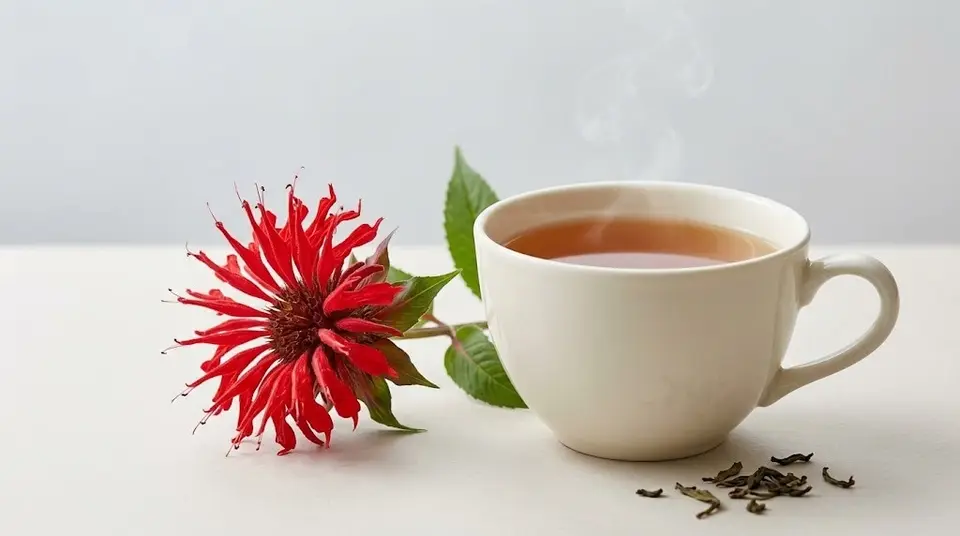
Bee balm, also called bergamot or Oswego tea, is a showy North American perennial whose leaves and flowers brew into a fragrant, citrus-and-thyme-scented tea. Its common name "Oswego tea" recalls its use by the Oswego people and later by American colonists. With dramatic shaggy flowers in red, pink, or purple, it is as much a star of the border as it is a tea herb.
Identification & Appearance
An upright clump-forming perennial 60-120 cm tall, with square stems and aromatic, toothed, lance-shaped leaves. The flowers are unmistakable - shaggy, tufted heads of tubular blooms in scarlet, pink, mauve, or purple, irresistible to bees, butterflies, and hummingbirds. Crushed leaves smell of citrus and oregano.
Where It Grows
Native to eastern North America, bee balm grows in moist meadows, woodland edges, and stream banks. It is widely cultivated as an ornamental and tea herb. It favours moist, fertile soil and sun, and spreads steadily by underground runners.
How to Grow at Home
Grow bee balm from a nursery plant or by division. Give it sun to light shade and moist, fertile soil. It spreads by runners, though far less aggressively than mint - divide it every few years to keep it vigorous. Good airflow is important, as bee balm is prone to powdery mildew in still, crowded conditions.
Growing Conditions
Light
Full sun to light shade; full sun gives the best flowering.
Watering
Keep the soil reliably moist - bee balm is a moisture-lover and stress from dryness invites mildew.
Soil & Temperature
Moist, fertile, well-drained soil. A hardy perennial in temperate climates.
Harvesting & Brewing
Pick leaves before and during flowering, and use the colourful flowers too. Both can be used fresh or dried. For tea, steep a small handful of fresh leaves and flowers, or a teaspoon dried, in hot water for 5 minutes. The cup is aromatic and citrusy - the flowers also add a pretty colour.
Health & Benefits
Bee balm tea is caffeine-free and was traditionally drunk for sore throats and colds. Its scent comes from thymol, the aromatic compound also found in thyme. Those uses are folk tradition, not tested treatments. If you are pregnant, breastfeeding, taking medication, managing a health condition, or brewing for a child, ask a doctor or pharmacist first. These are traditional uses, not proven medical treatments, and bee balm tea is not a substitute for medical care.
Common Problems
- Powdery mildew - the main issue; give it space, airflow, and steady moisture, and choose mildew-resistant varieties.
- Spreading clumps - divide every few years to control and reinvigorate.
- Poor flowering - too much shade; move to sun.
Pros & Cons
Pros
- Spectacular flowers; superb for pollinators.
- Aromatic, citrusy tea.
- Both leaves and flowers usable.
Cons
- Very prone to powdery mildew.
- Spreads by runners - needs dividing.
- Needs consistent moisture.
Best Suited For
- Pollinator and cottage gardens.
- Anyone wanting beauty and a useful tea together.
- Sunny, moist borders.
Not ideal for dry gardens or cramped, airless spots.
FAQ
Why is "bergamot" in its name if it is not the citrus? Its scent resembles the bergamot orange used in Earl Grey tea, so it borrowed the name - but the plants are unrelated.
What is Oswego tea? It is a historic name for bee balm tea, after the Oswego people who used it; colonists adopted it, especially after the Boston Tea Party.
How do I avoid mildew? Give plants room and airflow, keep the soil moist (not dry-stressed), and grow modern mildew-resistant varieties.
Grow it or brew it: bee balm
Links go to Amazon or a partner store (such as Adagio Teas) and may earn us a commission at no extra cost to you. As an Amazon Associate we earn from qualifying purchases. We link gear types, not sponsors' picks: you choose the exact product.