Catnip
Catnip is famous for the joyful effect it has on cats, but it is also a long-used herbal tea plant for people - and for people it is simply a mild evening tea.
Last reviewed: October 2026
Overview
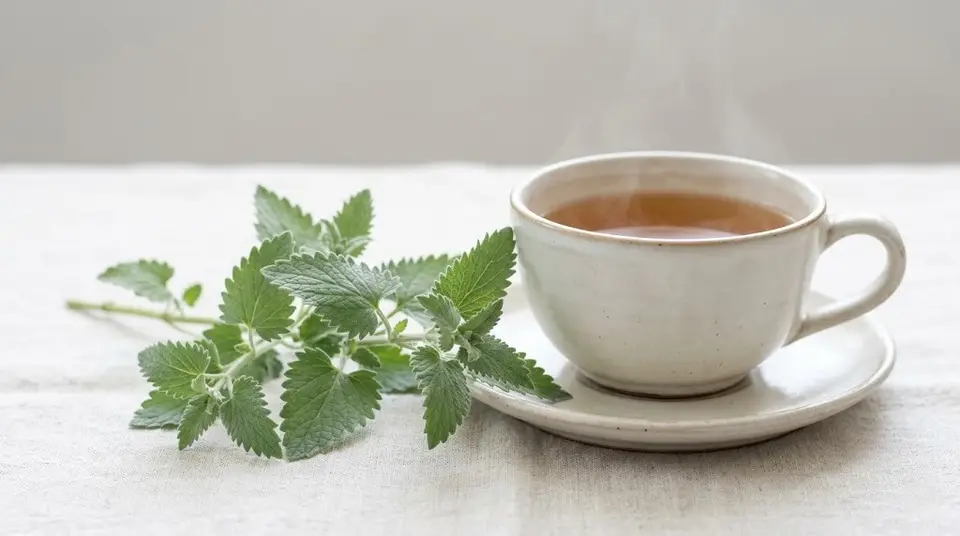
Catnip is famous for the joyful effect it has on cats, but it is also a long-used herbal tea plant for people - and for people it is simply a mild evening tea. Its leaves brew into a mild, minty, slightly grassy tea traditionally drunk in the evening. It is a tough, easy member of the mint family that grows almost anywhere.
Identification & Appearance
An upright clump-forming perennial 50-100 cm tall, with square stems and soft, grey-green, heart-shaped, scallop-edged leaves covered in fine down. Spikes of small white flowers spotted with pale purple appear in summer. The whole plant has a slightly musty, minty scent that cats find irresistible.
Where It Grows
Native to Europe and Asia, catnip has naturalised widely across North America and other temperate regions. It grows on roadsides, waste ground, and field edges, thriving in dry, sunny, well-drained sites and tolerating poor soil.
How to Grow at Home
Catnip grows easily from seed, division, or a nursery plant. Give it full sun and well-drained soil; it is undemanding and drought-tolerant. It self-seeds freely. One warning: cats may roll on and flatten young plants - a low cage or twiggy cover protects seedlings until they are established.
Growing Conditions
Light
Full sun to light shade; full sun gives the most aromatic leaves.
Watering
Water young plants to establish, then water sparingly - catnip is drought-tolerant.
Soil & Temperature
Well-drained soil, even poor; avoid heavy, wet ground. A hardy perennial in temperate climates.
Harvesting & Brewing
Pick leaves and flowering tops before or during flowering, when the aroma is strongest. Use fresh or dried; catnip dries well. For tea, steep a teaspoon of dried leaves, or a small handful of fresh, in hot water for 5 minutes, covered. The cup is mild and minty - and it has none of the effect on people that it has on cats.
Health & Benefits
Catnip tea is caffeine-free and traditionally drunk as a mild evening tea. The nepetalactone that excites cats does not act on people that way. That it helps anyone relax or sleep is tradition, not evidence. If you are pregnant, breastfeeding, taking medication, managing a health condition, or brewing for a child, ask a doctor or pharmacist first. These are traditional uses, not proven medical treatments, and catnip tea is not a substitute for medical care.
Common Problems
- Cats flattening plants - protect young plants with a cage until established.
- Self-seeding everywhere - deadhead before seed sets if you want to limit it.
- Sprawling, untidy growth - cut back after flowering for a fresh, neat flush.
Pros & Cons
Pros
- Very easy and drought-tolerant.
- Mild, gentle tea for people.
- A bonus treat for the household cat, though the ASPCA lists catnip as toxic to cats: it can cause vomiting and diarrhea.
Cons
- Cats may damage young plants.
- Self-seeds freely.
- Flavour is mild - some find it bland.
Best Suited For
- Anyone wanting an easy, mild evening tea.
- Cat owners who like a dual-purpose plant.
- Dry, sunny, low-maintenance gardens.
Not ideal for gardens where roaming cats will crush the seedlings unprotected.
FAQ
Does catnip tea affect people like it affects cats? No - the compound that excites cats has no such effect when brewed as tea for humans. For people it is just a mild herbal tea.
Will it attract every cat in the neighbourhood? It may well attract cats, who enjoy rolling in it. Protect young plants; established clumps usually shrug off the attention.
Is it related to mint? Yes - catnip is in the mint family, which is why the tea has a mild minty character.
Grow it or brew it: catnip
Links go to Amazon or a partner store (such as Adagio Teas) and may earn us a commission at no extra cost to you. As an Amazon Associate we earn from qualifying purchases. We link gear types, not sponsors' picks: you choose the exact product.